

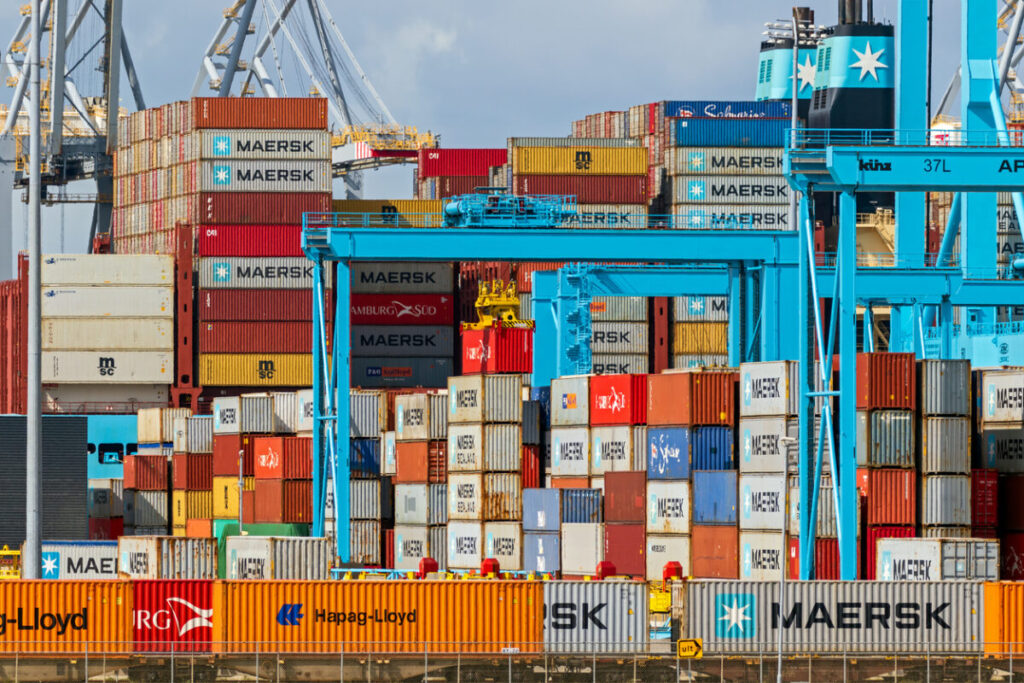
October 2025 distinguished itself through intensive investment, automation, and digital transformation projects across global maritime trade and port operations. DP World's new initiatives in Africa and Europe, expectations for Suez Canal reopening, and the impact of labor strikes exposed both opportunities and vulnerabilities within the sector.
Summary (approximately 610 words)
The global port sector throughout October 2025 was shaped by both operational challenges and digital transformation opportunities. Investments, automation projects, and strategic expansions demonstrated that ports continue to develop innovative solutions despite mounting environmental pressures, labor crises, and capacity bottlenecks.
Trade connectivity and strategic investments
Projects announced in October signaled the strengthening of regional and global trade connections.
DP World launched a new Port Community System (PCS) at Kenya's Port of Mombasa. The system will digitalize import and export operations, enhancing transparency and integration across East African supply chains.
The potential reopening of the Suez Canal following an Israel–Hamas ceasefire could release 2.1 million TEU in annual capacity on Asia–Europe lanes. This development would alleviate congestion on rerouted lanes, reducing delays and fuel costs at European ports.
The completion of part of a historic channel-widening project at the United States' Houston Port has enabled larger vessels to enter, boosting the competitiveness of U.S. ports in the Gulf of Mexico.
Operational disruptions and labor crises
October also laid bare the vulnerability that labor and pilot strikes at European ports create across the sector.
The Antwerp–Zeebrugge pilot strike caused vessel delays and berth congestion, disrupting operations at the Antwerp-Bruges complex, which handles a critical share of European energy imports. Although the strike ended, full recovery at the terminal handling 230 million tons of cargo annually took several days.
At Rotterdam Port, the strike action between October 8–10 by two independent lashing companies contracted to Maersk disrupted container security operations. This incident underscored that ports, facing rising workloads, need contingency scenarios in workforce planning.
Automation and smart port technologies
Automation investments gained momentum throughout October.
DP World launched a 170 million pound ($210 million) automation project at London Gateway Terminal. The new system incorporates intelligent container handling, AI-enabled warehouse management, and autonomous vehicle integrations.
At PTI's Container Terminal Automation Conference (CTAC) in Kuala Lumpur, the TOPX Intelligent 3D Platform, developed by Realtime Business Solutions (RBS), was unveiled.
The platform, powered by "super-intelligent AI agents," is shifting port operations from reactive to proactive management modes.
This system delivers predictive maintenance, route optimization, AI-driven resource management, and autonomous terminal operations, capable of increasing port efficiency by up to 20 percent.
These investments demonstrate that ports have made digitalization a core strategic priority to enhance competitiveness and operational resilience.
Market outlook and governance developments
According to analysts, the global container market is entering a period in which oversupply will peak by 2027. As new vessel deliveries outpace trade growth, declining freight rates and increased competition are expected.
For this reason, both vessel operators and terminal operators must place greater focus on efficiency, cost control, and investment in digital infrastructure.
On the governance front, the dispute between DP World and the Government of Djibouti over the Doraleh Container Terminal has been resolved.
The London Court of International Arbitration ruled that the 2018 terminal seizure decision was unlawful.
The decision confirmed the validity of DP World's 50-year concession while finding the Djibouti government directly responsible for breach of contract.
The company's previously awarded $685 million compensation claim remains unpaid, yet the decision has set an important precedent for investor protection and the integrity of international contracts.
Conclusion: A year focused on innovation-driven transformation
October 2025 emerged as a watershed moment in which the port sector rapidly developed innovative solutions in response to challenges.
Although environmental pressures, labor issues, and market imbalances persist, automation, digitalization, and investment-focused strategies are reshaping the future of ports.
Key Takeaways:
DP World launched a PCS system in Mombasa and a $210 million automation project at London Gateway.
Suez Canal reopening could deliver 2.1 million TEU capacity growth on Asia–Europe lanes.
Antwerp–Zeebrugge and Rotterdam strikes highlighted port labor risks.
Smart port technologies (AI, automation, 3D platforms) are spreading rapidly.
Container market oversupply will peak in 2027.
DP World achieved a legal victory in the Djibouti case.
Overall picture: Despite headwinds, innovation strengthens port resilience.
Author: SedatOnat.com
We would be delighted to hear your feedback.
Wishing you happy reading.

