

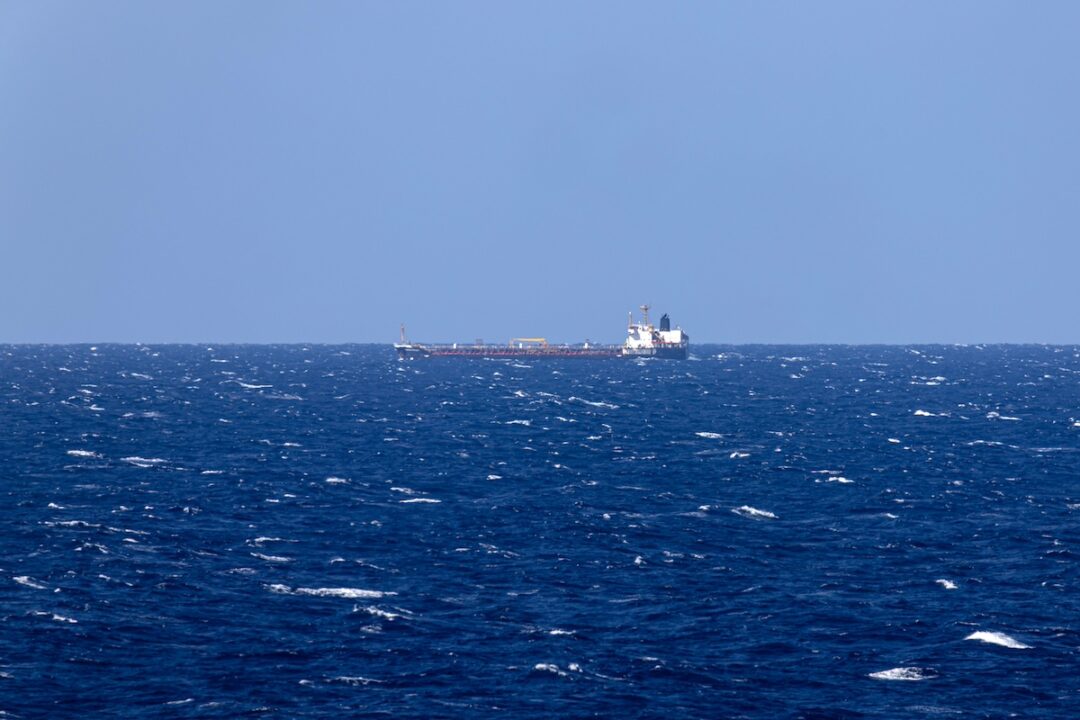
Following commitments by Yemen's Houthi militia to halt attacks on vessels linked to the United States and the United Kingdom, ships from these nations are cautiously returning to the Red Sea. This development signals that maritime traffic in one of the world's primary trade arteries could normalize after more than a year of disruptions.
\nAccording to data from the Joint Maritime Information Center (JMIC), six vessels linked to the U.S. and UK have successfully transited the region without incident since January 19. The JMIC, which compiles information on militant attacks against various navies, stated in its latest report: "With progress on the peace agreement and the non-targeting of vessels and infrastructure, increased stability is expected; however, risks in the Red Sea and Gulf of Aden remain elevated."
\nThe Houthis announced they would partially suspend attacks in response to the ceasefire agreement reached between Israel and Hamas in Gaza. This declaration came after more than a year of operations that disrupted global commerce. The group specified that U.S. and UK-affiliated vessels would be permitted safe passage beginning January 19. However, vessels that are wholly owned by Israeli nationals or companies, or those sailing under the Israeli flag, remain at risk.
\nIf this secure passage continues, it could restore confidence among other shipping companies that have been avoiding the region. Industry leaders such as A.P. Moller-Maersk A/S, MSC Mediterranean Shipping Co. SA, and Mitsui OSK Lines Ltd. have stated they will not immediately resume transits through the area despite the assurances, citing ongoing security uncertainties. The attacks forced numerous vessels to bypass the Red Sea and take longer routes around Africa, extending transit times and driving up shipping costs.
\nKey Points:
\n- \n
Houthi insurgents committed to halting attacks on U.S. and UK-affiliated vessels beginning January 19.
\n Following this commitment, six vessels from these nations successfully transited the Red Sea safely.
\n The Joint Maritime Information Center noted that risks in the region remain elevated, but increased stability is expected.
\n Major shipping companies including A.P. Moller-Maersk A/S, MSC Mediterranean Shipping Co. SA, and Mitsui OSK Lines Ltd. announced they will not immediately resume transits through the region due to security concerns.
\n The attacks forced many vessels to take longer routes, increasing shipping costs.
\n
These developments are viewed as a significant turning point for the normalization of maritime traffic in the Red Sea and the stability of global commerce. However, additional time will be needed before the security situation in the region fully returns to normal.
\n---
\n\n-------------------
\n
