

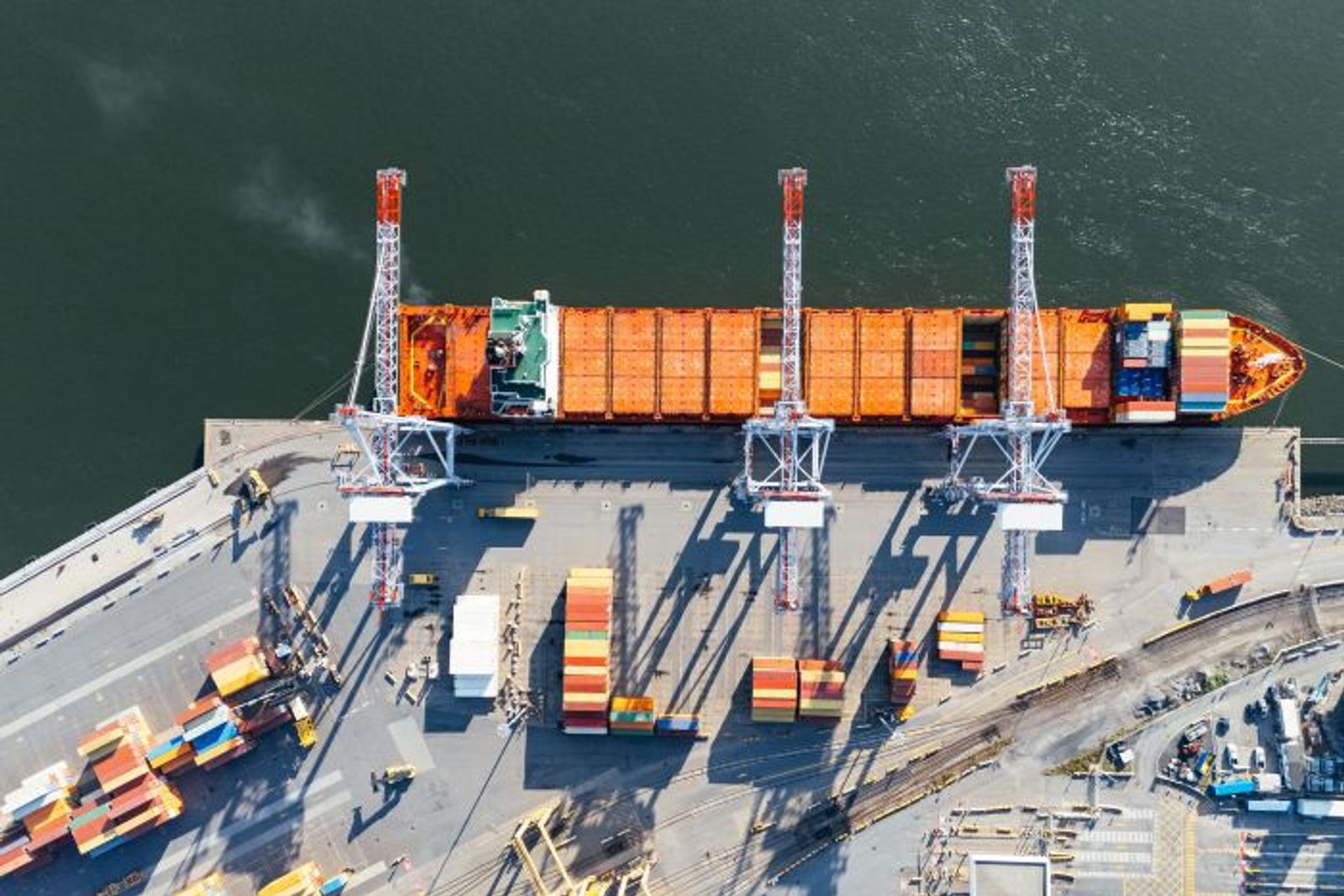
The Canadian government has launched a new strategic program under the Corridors Fund to strengthen the national supply chain amid heightened global geopolitical risks and protectionist policies from its southern neighbor complicating trade. The program aims to reduce the country's dependence on U.S. border crossings and conventional North American logistics corridors for foreign trade. Officials speaking in Ottawa emphasized that the plan seeks to enhance the Canadian economy with sovereignty, autonomy, and supply chain resilience.
According to the Minister of Finance, the government is prioritizing the conversion of inland ports along the St. Lawrence and Great Lakes routes into fully authorized inland gateways rather than routing containers exclusively through coastal ports such as Vancouver, Montreal, and Halifax. "Canada cannot remain dependent on a single logistics corridor for its goods to reach global markets. This investment is part of our determination to diversify the critical nodes of the supply chain," the assessment states.
The Canada Border Services Agency (CBSA) sits at the center of the plan. Traditionally, the bulk of container-transported cargo has been processed by the CBSA at ocean ports. With the new strategy, the government aims to grant federal authority to inland ports such as Hamilton, Windsor, and Quebec City to enable them to conduct full-capacity screening, container clearance, and customs processing. This reduces the necessity for vessels to pass through U.S. ports or U.S. rail connections and creates new international entry gateways closer to the Ontario–Quebec industrial region.
The Great Lakes–St. Lawrence Seaway system has long operated below its potential. A recent report by the Chamber of Marine Commerce indicates that expanding CBSA capacity to inland ports could generate economic benefits exceeding 130 million Canadian dollars annually and would result in a significant reduction in truck traffic at border crossings. This finding forms one of the primary arguments supporting the government's decision to modernize the corridor.
Canada's approach extends beyond merely diversifying physical capacity; it also seeks to mitigate uncertainties in U.S. trade policy. Washington's recent return to tariff discussions and increasing unpredictability in trade practices have strengthened Ottawa's imperative to establish a "non-U.S. trade backbone." Trade analyst Sarah Miller notes that the new strategy aims to diversify not only supply partners but also the routes that goods follow. Containers arriving from Europe or Asia could reach an Ontario port without ever touching U.S. soil, providing Canada with both operational and geopolitical advantages.
Other measures under the program include dredging operations, depth increases at certain points along the St. Lawrence Seaway, port infrastructure modernization to accommodate larger feeder vessels, establishment of digital customs processing systems, and stronger connections between Great Lakes ports and the Canadian National (CN) and Canadian Pacific Kansas City (CPKC) rail networks. The aim is to reduce congestion at coastal ports and create a more direct, flexible logistics flow to inland regions.
The government announced that the first request-for-proposals (RFP) process for corridor modernization will commence in early 2026. The program targets achieving at least a 20% increase in non-US trade volume by 2030. This approach demonstrates that Canada views the issue not merely as an infrastructure investment but as a long-term matter of supply chain sovereignty.
Key Takeaways:
Canada is transitioning to an inland gateway model under the Corridors Fund.
The CBSA will be able to conduct full-authority customs processing at inland ports such as Hamilton, Windsor, and Quebec City.
Effective utilization of the Great Lakes–St. Lawrence corridor could generate CAD 130 million in annual economic benefits.
The strategy aims to reduce U.S.-sourced trade uncertainty and establish alternative logistics networks.
The program encompasses dredging, digital customs infrastructure, and rail connections.
The first RFP process begins in early 2026; the target is to increase non-U.S. trade volume by 20% by 2030.
Author: SedatOnat.com
We would be delighted to receive your feedback.
We wish you happy reading in advance.

