

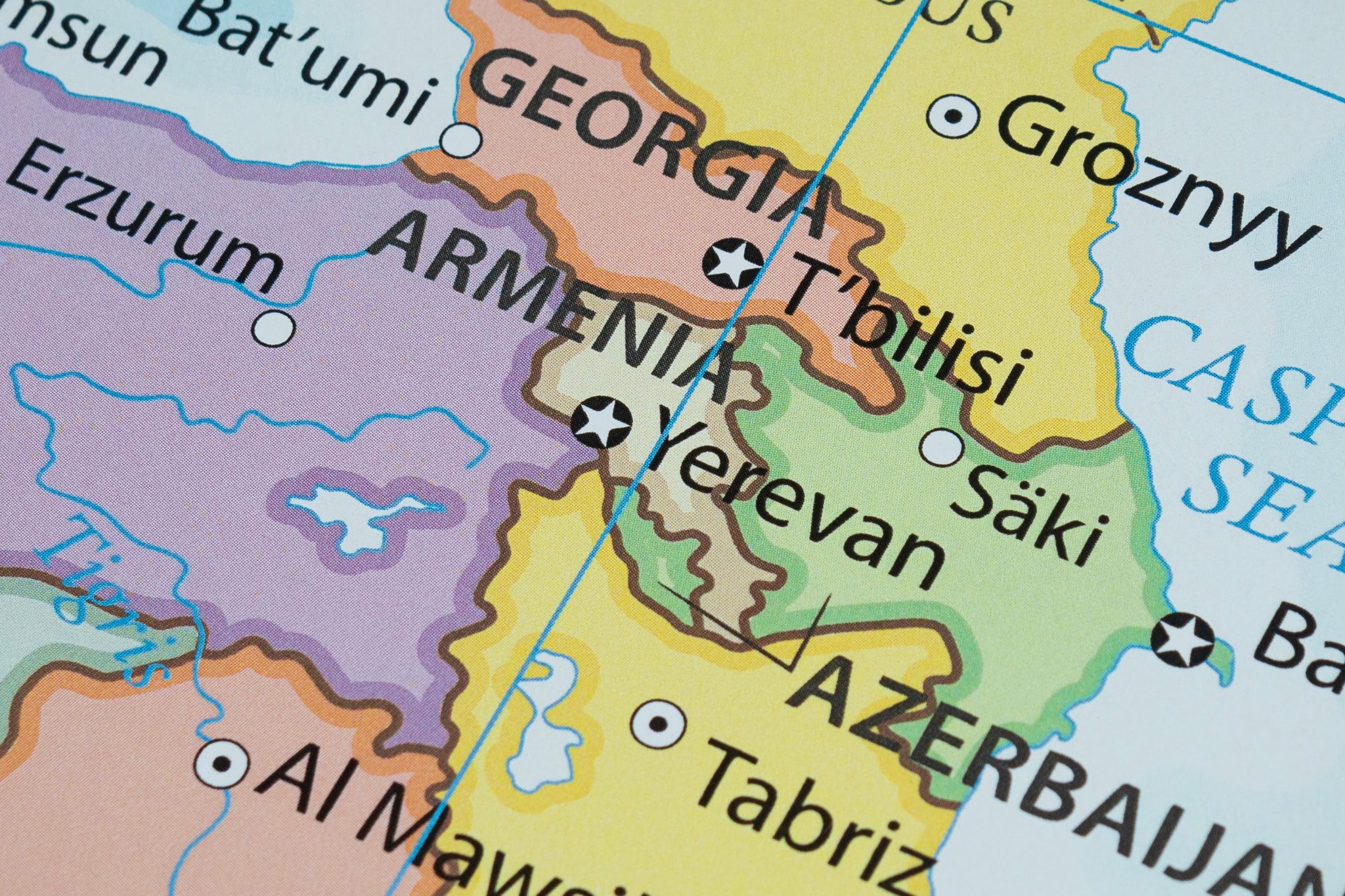
The political rapprochement between Armenia and Azerbaijan is fundamentally transforming the Caucasus' geostrategic transportation map. Decades of border closures and transit restrictions are coming to an end with the opening of new trade and transit corridors between the two countries.
\nThis development represents a watershed moment for cargo transportation between Europe and Central Asia.
\nCaucasus: From Geographic Obstacle to Logistics Opportunity
\nThe mountainous Caucasus region has historically been a crossroads of Europe–Asia trade routes. However, the long-running political tensions between Armenia and Azerbaijan, particularly following the Karabakh War, had effectively closed all land and rail passages between the two countries.
\nThis situation left the region as a "missing link" in logistics chains. Now, the two countries' diplomatic steps toward normalization are beginning to fill this critical gap.
\nAccording to officials, reopening railway and road lines as part of the accord will enable new trade connections along the Armenia–Azerbaijan–Georgia axis.
\nThe Importance of New Transit Corridors
\nAccording to experts, the reopened routes represent a major strategic gain, especially for transportation routes stretching from Central Asia and the Caspian region to Europe (the Middle Corridor).
\nIn this context:
\n- \n
The revival of the Baku–Nakhchivan–Yerevan line will create a direct railway corridor across South Caucasus.
\n This corridor will facilitate access to Central Asia and China via Azerbaijan, and to Georgian ports via Armenia.
\n Meanwhile, opening the Türkiye–Azerbaijan–Central Asia link (also known as the Zangezur Corridor) for civilian and commercial transportation is also on the agenda.
\n
This development could create a complementary alternative route to the Baku–Tbilisi–Kars line in the Türkiye–Georgia–Azerbaijan triangle.
\nEconomic and Political Implications
\nThe accord carries major significance not only for transportation but also for regional stability and economic integration.
\n- \n
For Armenia: Long isolated economically, the country now has the opportunity to establish connections with both Azerbaijan and Türkiye.
\n For Azerbaijan: New transit routes will strengthen the country's goal of becoming an East–West logistics hub.
\n For Russia and Iran: The opening of alternative transit routes could reshape energy and logistics balances in the region.
\n
Experts note that this agreement could create strategic synergies aligned with projects such as the European Union's "Global Gateway" and China's "Belt and Road Initiative (BRI)."
\nRailway Transport Reviving
\nArmenia and Azerbaijan have launched efforts to restore Soviet-era railway lines in the region. These steps will both reduce freight transport times and lower carbon emissions by reducing road traffic.
\nThe reopening of the South Caucasus railway network will drive major changes not only at the regional level but also in international logistics flows. European logistics firms are already viewing this new route as a shorter and more economical option for reaching Central Asia and China.
\nConclusion: A New Era of Trade in the Caucasus
\nThe Armenia–Azerbaijan accord is unlocking the Caucasus' gatekeeper role in international transportation. The restoration of previously closed corridors could position the region as one of the strategic transition points between Europe, Central Asia, and the Middle East.
\nExperts stress that the success of this process depends on maintaining political stability, modernizing infrastructure, and strengthening regional cooperation mechanisms.
\nKey Takeaways:
\n- \n
The Armenia–Azerbaijan accord has enabled the opening of new trade corridors in the Caucasus.
\n Railway and road transit lines are being restored to operation.
\n The Baku–Nakhchivan–Yerevan line will accelerate Central Asia–Europe transportation.
\n The accord could strengthen regional projects such as the Middle Corridor and Zangezur Corridor.
\n Armenia is emerging from isolation, while Azerbaijan is strengthening its logistics hub role.
\n The development aligns with the EU's Global Gateway and China's Belt and Road initiatives.
\n The Caucasus is on track to become a strategic gateway for Europe–Asia trade once again.
\n
----------
\n\n--------------------
\nAuthor: SedatOnat.com
\n--------------------
\n\nYour feedback would make us happy.
\nWishing you good reading ahead.
\n
