

Neil Shearing, chief economist at Capital Economics and author of The Fractured Age, emphasizes in his latest analysis that globalization has not died, but rather changed direction.
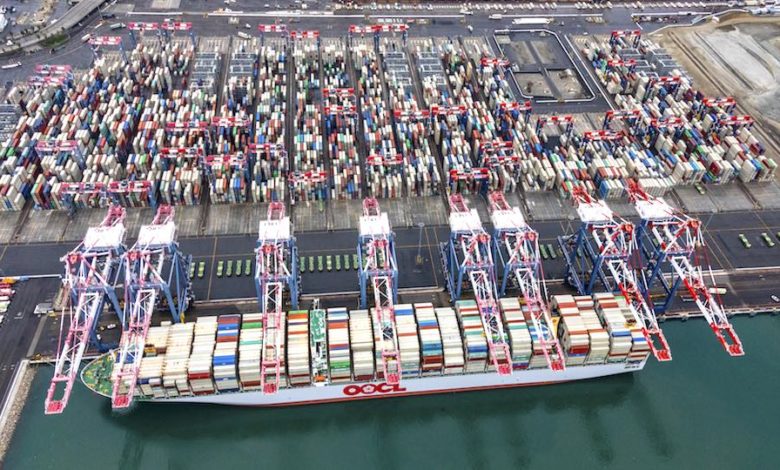
Trade volumes continue to reach historic highs; ports are full, ships are operating.
Yet today, the fundamental dynamics determining the flow of trade have shifted from economic efficiency to geopolitical strategy.
According to Shearing, the period we are in is not the "end of globalization" but rather the "fracturing of trade" era.
This transformation creates new opportunities and risks for maritime shipping and supply chains.
Globalization Did Not Die, It Changed Direction
Despite proclamations that globalization is dead, the data tells a different story:
Global trade volume is tracking near record levels.
Port operations continue at high intensity.
Goods flows are not declining, merely shifting toward new routes.
Shearing explains this as follows:
"Trade is not declining; it is changing direction, fragmenting, and being reshaped."
In other words, we are witnessing geopolitical-driven restructuring, not "deglobalization."
Trade Order Fragmented Along the US–China Axis
Today, the global trade system is being reshaped around two major economic blocs:
The Western bloc led by the US
The rising economy network centered on China
According to Shearing, this means not a collapse of trade, but a division of trade.
This division is particularly evident in strategic sectors:
Semiconductors
Pharmaceutical ingredients
Dual-use goods – technologies that can be used for both civilian and military purposes.
Production and supply chains in these sectors are rapidly being repositioned due to security concerns.
New manufacturing hubs are rising in India, Vietnam, Mexico, and Southeast Asian countries.
From Smartphones to Drones: Emerging Manufacturing Hubs
Shearing's example clearly demonstrates the scale of the change:
Five years ago, 70% of smartphones sold in the US were manufactured in China.
Today, that figure has dropped to 25%.
More than half of smartphones imported into the US now come from India and Vietnam.
Over the same period, the share of total US imports from China has fallen from 20% to 10%.
The US now purchases more from Vietnam, Mexico, and India.
Meanwhile, China has redirected its exports toward Russia and other emerging economies.
The result: Trade does not end, only routes change.
The Return of Geopolitics: From Economic Decision to Strategic Decision
The fundamental reason for the reshaping of trade flows is economic rationale being replaced by strategic priorities.
Both Washington and Beijing are now setting their policies not only on the basis of cost and efficiency, but on geopolitical security.
As part of this transformation, the concept of "friend-shoring" is also gaining traction.
The US is moving to establish supply chains through "allied nations."
China is increasing its integration with Russia and Central Asia for energy and raw material supply.
This situation benefits countries like Vietnam, India, and Mexico; as the global manufacturing network is now concentrating in these regions.
Implications for Global Maritime Shipping: Routes Are Being Redrawn
The most concrete impact of this geopolitical restructuring is seen in the changing of maritime shipping routes.
Shearing makes the following observations:
Trade is diversifying rather than declining:
While new lines emerge in strategic products, volume growth generally continues.New routes are longer:
As manufacturing shifts from Asia to Mexico or India, shipping times lengthen — which increases transport demand.While some cargo flows smoothly, volatility in strategic loads is increasing.
Flexibility becomes a competitive advantage in the freight sector.
In short, global shipping does not end — it is being reshaped.
Volatility Becomes the New Normal
The most distinctive feature of the new era: volatility.
Geopolitical competition, sudden sanctions, embargoes, or political crises can change established trade flows overnight.
Shearing warns:
"New tariffs, sanctions, or political ruptures can overturn established flows in an instant.
Shipowners must invest in fleets that can respond quickly to demand fluctuations and route changes."
Consequently, for the maritime sector, flexible fleet management, route diversification, and geopolitical awareness are becoming strategic requirements.
Conclusion: Globalization Did Not End, It Took a New Form
The era of borderless, frictionless trade growth has ended.
In its place is emerging a global trade network redirected among geopolitical blocs and shaped by strategic products.
In Shearing's words:
"Trade did not die – it is changing direction, fragmenting, and being redirected."
The task for the maritime sector is clear:
To understand not the death of globalization, but its rebirth, and to adapt to this new fragmented world order.
Key Takeaways:
Globalization has not ended; it has entered a process of geopolitical-driven restructuring.
Two economic blocs centered on the US and China are forming.
Manufacturing is shifting from China to India, Vietnam, and Mexico; trade flows are changing.
Strategic sectors (chips, pharmaceuticals, defense products) are being transported via new routes.
Friend-shoring is strengthening the US strategy of sourcing from allied nations.
Shipowners and freight operators must shift toward flexible fleet and route planning to counter demand volatility.
Conclusion: Trade has not died; it continues to flow across a map redrawn by geopolitics.

