

The Swiss Federal Administrative Court has suspended a long-contentious regulation in the rail freight transportation sector, providing temporary relief to the industry. Following a lawsuit filed by major wagon leasing companies Ermewa, GATX, and VTG, the court ruled that new wagon safety rules unilaterally introduced by the Federal Office of Transport (FOT) must remain unapplied until the legal proceedings are concluded.
\nAt the heart of the decision is the court's assessment that Switzerland's measures—taken without coordination with the European Union—violate the principle of interoperability, a fundamental tenet of rail transportation. The plaintiffs argued that the regulations also conflicted with the EU-Switzerland Land Transport Agreement. Taking these arguments into account, the court temporarily suspended the FOT's regulations.
\nSuspension of Process and Regulations
\nWith the court's ruling, all relevant regulations published in September and revised in October have been suspended pending the conclusion of judicial proceedings. This step temporarily eliminates operational uncertainty, particularly for international freight operators. The risk of sudden restrictions on freight trains crossing Switzerland has been temporarily averted.
\nBackground of the Contested Rules
\nThe FOT's regulations were based on a serious derailment accident in the Gotthard Base Tunnel in August 2023, caused by a broken wheel. Swiss authorities used this accident as justification to implement stricter national measures regarding wagon safety.
\nTwo key regulations were prominent in this context:
\nWheel Diameter Requirement:
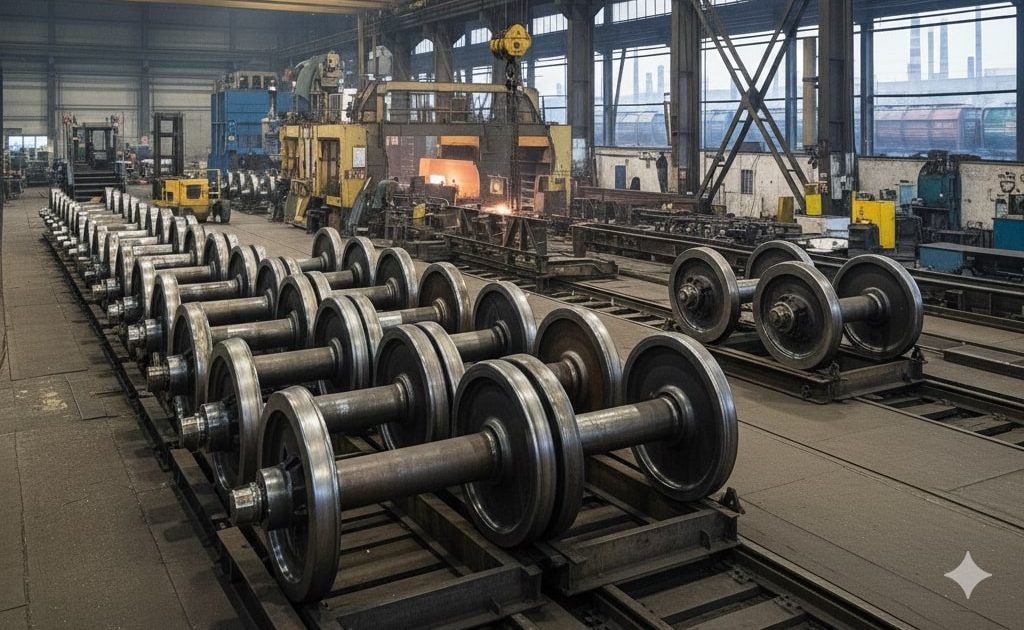
\nThe minimum wheel diameter was to be increased from 860 mm to 864 mm. While technically a small change, in practice this could prevent approximately 46,000 freight wagons across Europe from entering the Swiss network. This posed a serious bottleneck risk for European freight transportation due to Switzerland's critical transit role over Alpine passages.
Tightened Technical Inspections:
\nWagons would have been required to undergo technical checks at much shorter kilometer intervals. Beyond increasing maintenance costs, this would have reduced wagon availability and complicated fleet planning.
Industry Response
\nThe International Union of Wagon Keepers UIP welcomed the court decision openly. In its statement, UIP emphasized that the ruling offers an opportunity to focus on a common European solution for all parties, including Switzerland. According to the union, rail safety must be addressed through harmonized standards across the continent, not through single-country national reflexes.
\nWagon leasing companies and operators have long warned that Switzerland acting unilaterally would create a fragmentation risk in the European rail network. The court ruling demonstrates that these concerns now have legal backing.
\nFocus on Joint European Mechanisms
\nThe industry has now turned its attention to wheel safety recommendations expected to be published by year-end by the Joint Network Secretariat (JNS). The JNS is viewed as a structure that facilitates coordination on technical harmonization and safety matters across the European rail network.
\nExpectations center on Switzerland adopting common security standards valid across the continent—determined through the JNS and relevant European mechanisms—rather than unilateral regulations. Such an approach is critical both for enhancing safety and for preserving the continuity of international freight transportation.
\nGeneral Assessment
\nThe Swiss Federal Administrative Court's decision brings back into focus the delicate balance between safety and interoperability in rail freight transportation. While the measures sought after the Gotthard accident are understandable from a safety perspective, unilateral implementation risks compromising the integrity of the European rail system. In the short term, the court ruling provides relief to the sector, while in the medium term, it clearly demonstrates the inevitability of common European solutions.
\nKey Points:
\n- \n
The Swiss Federal Administrative Court suspended the FOT's wagon rules.
\n Reason: Lack of EU coordination and interoperability violation.
\n The contested rule increased the minimum wheel diameter from 860 mm to 864 mm.
\n This change could have excluded ~46,000 wagons from the Swiss network.
\n UIP viewed the ruling as an opportunity for continent-wide common solutions.
\n Attention is now on JNS recommendations on common safety standards.
\n
----------
\n\n--------------------
\nAuthor: SedatOnat.com
\n--------------------
\n\nWe would be delighted to receive your feedback.
\nWishing you good reading in advance.
\n
