

Months of attack threats along the Red Sea and Suez Canal route have eased somewhat following announcements by Houthi forces in Yemen that they would suspend attacks on commercial vessels and Israel-linked targets. This development offers hope that one of the most critical Asia-Europe container shipping routes could be reopened.
However, the risk level in the region remains elevated. Jack Kennedy, S&P Global Market Intelligence Director of Country Risk for the Middle East and North Africa, notes that the absence of attacks over the past six weeks should not create a false sense of security. According to Kennedy, Houthi forces are using this period to repair infrastructure, rearm, and strengthen prospective attack capacity. While the situation may be characterized as de-escalation, the threat has not entirely dissipated.
Carriers maintain cautious stance
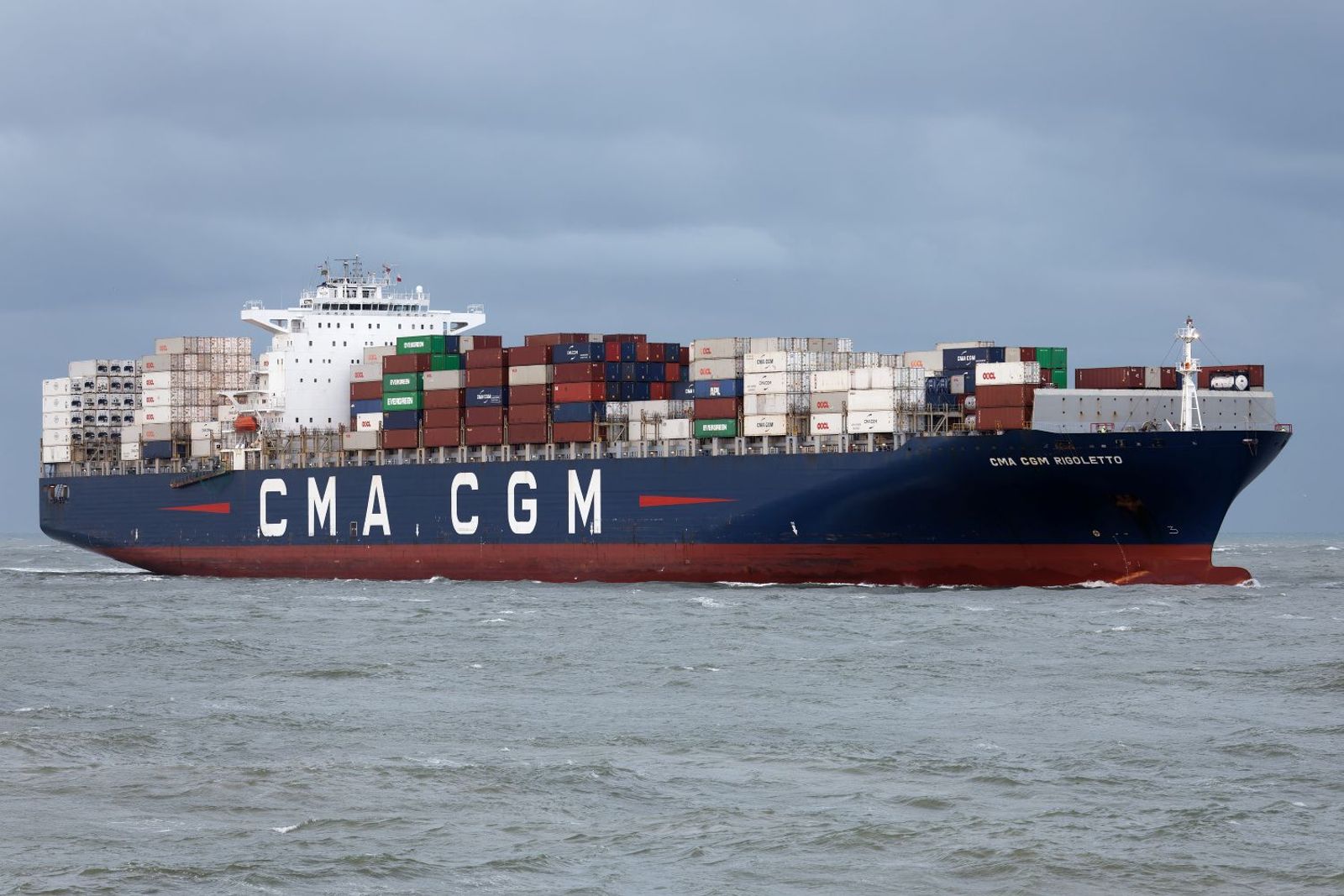
Among container lines, CMA CGM is the only major operator continuing limited sailings under EU naval escort. Several smaller lines are making restricted transits. However, global carriers such as MSC, Maersk, Hapag-Lloyd, COSCO, and Evergreen are still routing through the Cape of Good Hope on security grounds.
The main reasons for this cautious approach:
Marine insurance costs are excessively high,
The risk of renewed Houthi attacks persists,
Navigation control in the Red Sea remains fragile,
Naval escort does not provide complete assurance.
What would ships returning to the Red Sea mean?
According to experts, a mass return of major carriers to the Red Sea-Suez route could create a two-way impact on trade networks:
1) Asia-Europe transit times would shorten
The additional 10-14 days caused by the Cape of Good Hope route would be eliminated and costs would fall.
2) Severe congestion would emerge at European, Mediterranean, and Asian ports
Recent schedule disruptions and vessel clustering could trigger sudden port congestion if lines rapidly return to Suez. This could lead to:
bottlenecks at transshipment hubs,
delays in berth discharge and loading,
hinterland capacity constraints
\n.
Insurance remains the critical barrier
Marine insurance providers continue to classify the Red Sea as a high-risk zone. According to data from Inchcape, BIMCO, and various brokers:
Premiums remain near crisis-period levels,
Open ocean operational risks have not fully subsided,
Carriers will not return without lower insurance premiums.
While the Houthis' pause on attacks is a positive sign, normalization has not begun across the industry.
Market outlook
Whether container vessels return to Suez will depend on in the coming weeks:
Insurance premium trends,
Actual cessation of Houthi activity,
The effectiveness of maritime security operations,
Carriers' risk appetite
\n.
Industry experts emphasize that as 2026 approaches, the Red Sea remains the most critical vulnerability point for global shipping.
Key takeaways:
Houthi forces have paused attacks, but risk levels remain high.
Except for CMA CGM, major carriers are not transiting Suez.
Insurance premiums have not normalized, making a mass return unlikely.
Houthi rearmament concerns are mounting.
Should the route fully open, severe congestion risks loom at European and Asian ports.
Author: SedatOnat.com
We would be delighted to receive your feedback.
Wishing you happy reading.

