

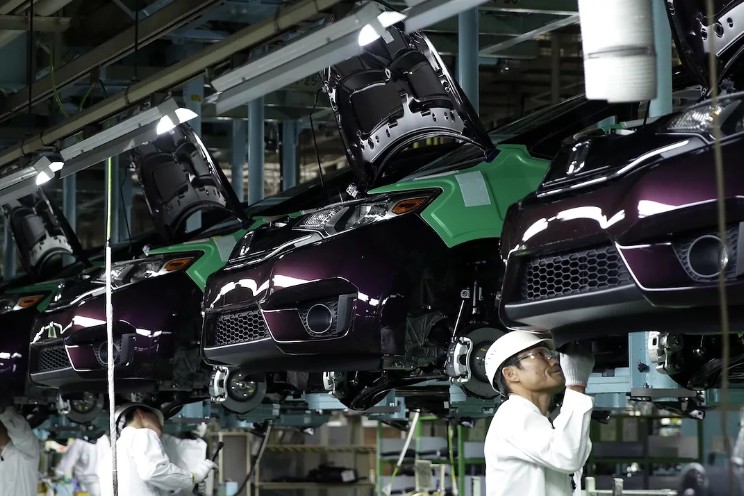
The semiconductor supply crisis that has gripped the global automotive sector for an extended period continues to strain production schedules. Honda has decided to temporarily halt production at certain facilities in Japan and China, revealing that supply chain disruptions have yet to be fully resolved. According to information reported by Bloomberg, the decision will be phased in over the coming weeks.
\nAccording to a company statement, Honda will suspend production operations in Japan on January 5 and 6. While which facilities will be affected by this decision has not been disclosed, the production stoppage is described as short-term but planned. On the China side, all three facilities within Guangqi Honda Automobile Co., Honda's joint venture, will be out of production between December 29 and January 2. This picture points to a concurrent slowdown in Asia-centered production networks.
\nHonda had previously stated that it expected chip supply issues to ease gradually as of the end of November. However, the new production suspension decision indicates that supply chain bottlenecks are more persistent than anticipated. This development has also weakened the company's expectations regarding a near-term production recovery.
\nFollowing the news, Honda shares fell 1.5 percent on the Tokyo Stock Exchange. While Japanese media outlets reported the production suspension before Bloomberg, official confirmation was made by a company spokesman on December 18. The market reaction shows that investors continue to price in the risks posed by the chip crisis.
\nThis new disruption in the automotive sector is being viewed as part of broader supply chain problems occurring on a global scale. In recent months, production plans for many automakers have been reshaped due to regulatory decisions originating from China. In particular, China's blocking of exports of certain products manufactured at Nexperia BV's local facilities has emerged as a primary factor deepening the crisis. Nexperia operates within China-based Wingtech Technology Co.
\nSemiconductors produced by Nexperia play a critical role in vehicle control systems used in automobiles. These chips are used in managing basic functions such as operating windshield wipers and opening windows. While these components may not appear as complex as advanced driver assistance systems, their absence can be critical enough to cause a complete halt in production.
\nHonda has revised its global sales forecast downward due to these chip supply disruptions. The company lowered its previously announced sales expectation of 3.62 million units to 3.34 million units. This revision demonstrates that supply constraints, not only in Asian markets but also globally, are weighing on sales performance. Due to similar reasons, Honda had previously reduced production or temporarily halted output at some facilities in North America.
\nThe emerging picture shows that the semiconductor supply crisis is not merely a temporary issue specific to the pandemic period; rather, it has become a structural risk tied to geopolitical decisions, export restrictions, and regional regulations. The Honda case once again demonstrates how quickly dependence on individual components in automotive supply chains can affect the entire production system.
\nKey Takeaways
\n- \n
Honda is temporarily suspending production at certain facilities in Japan and China.
\n The decision is primarily driven by the ongoing global semiconductor supply disruptions.
\n Guangqi Honda facilities in China will be completely out of production at year-end.
\n China's export restrictions on Nexperia products are deepening the crisis.
\n Honda has revised its global sales forecast downward.
\n The chip crisis has brought structural vulnerabilities in automotive supply chains back into focus.
\n

