

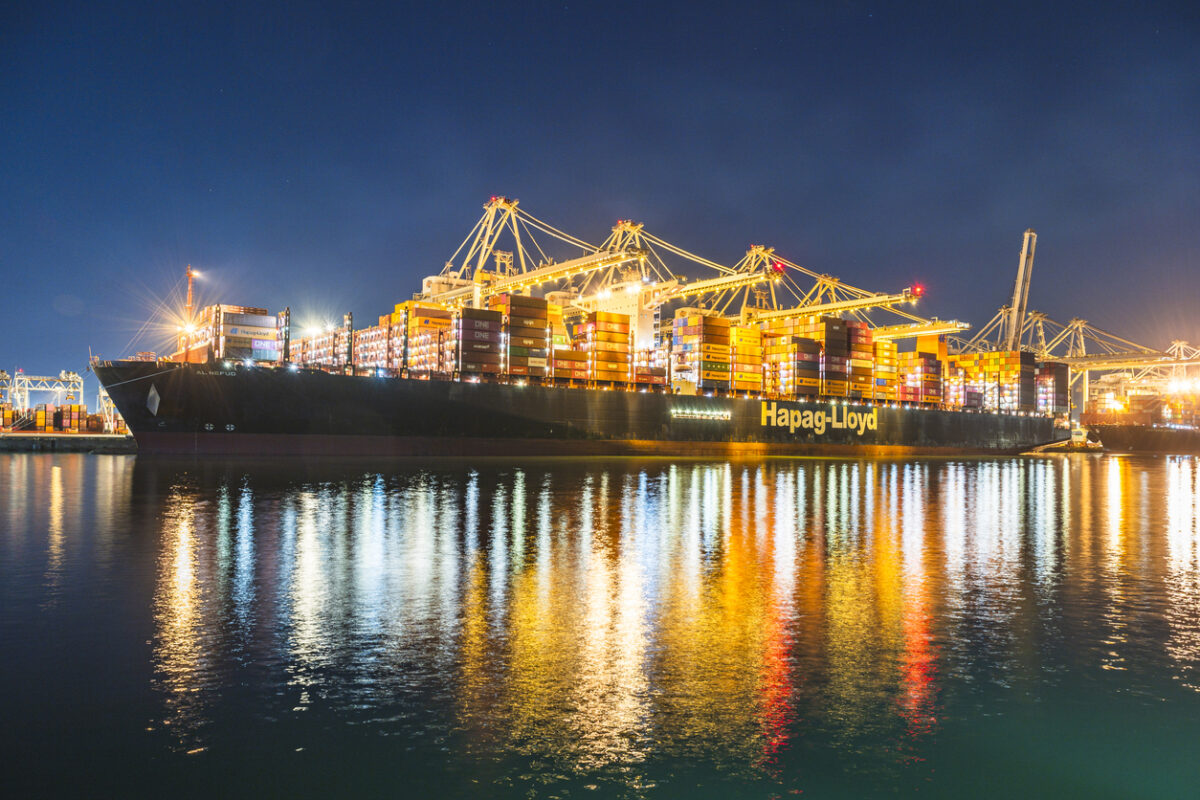
Germany-based global container shipping company Hapag-Lloyd has taken a significant step in fleet transformation by launching its first methanol-centered newbuild program. Under an agreement with Chinese shipyard CIMC Raffles, the company has ordered eight 4,500 TEU container ships. The vessels, scheduled for delivery in 2028 and 2029, represent a total investment exceeding 500 million USD.
The newly constructed ships will be equipped with dual-fuel methanol engines. These systems deliver fuel efficiency improvements of up to 30% compared to existing older tonnage and enable a reduction of up to 350,000 tonnes of CO₂e emissions annually through methanol use. The order is regarded as one of the most concrete steps Hapag-Lloyd has taken in line with its carbon reduction targets.
The Methanol Era Begins
This order marks Hapag-Lloyd's first methanol-focused newbuild programme. To date, the company has primarily focused on LNG in its alternative fuel strategy. Hapag-Lloyd currently operates or holds in its order book 37 LNG-capable vessels. These ships have the capability to run on biomethane as well as LNG.
With the methanol order, Hapag-Lloyd is diversifying its fuel strategy through a multi-fuel pathway approach. This strategy enhances operational flexibility during a period of rapidly changing regulations and fuel availability.
Retrofit and Fuel Supply Initiatives
In addition to the newbuild orders, Hapag-Lloyd continues to transform its existing fleet. The company plans to retrofit five 10,100 TEU vessels during 2026–2027 to operate on dual-fuel methanol. This conversion, alongside the newly built ships, aims to reduce the carbon intensity of the fleet.
On the fuel supply side, Hapag-Lloyd secured a commitment to procure 250,000 tonnes of green methanol annually under an agreement signed with Goldwind in late 2024. This methanol is expected to deliver at least 70% emission reduction compared to conventional fuels. This agreement stands out as a critical element ensuring that alternative fuel-powered ships remain operationally sustainable, not merely technically viable.
Growth in the Sub-5,000 TEU Segment
Hapag-Lloyd is not limiting itself to methanol orders alone; it is also strengthening its presence in the sub-5,000 TEU segment. Under long-term charter arrangements, the company plans to add:
1,800 TEU (4 ships)
3,500 TEU (6 ships)
4,500 TEU (4 ships)
a total of 14 new vessels to its fleet. Delivery of these ships is expected between 2027 and 2029. This brings Hapag-Lloyd's total investment in this segment size to 22 vessels.
This strategy will enable the company to operate with younger, more efficient, and lower-emission tonnage, particularly in regional and feeder trades.
Strategy 2030 and Cost Dimension
Hapag-Lloyd CEO Rolf Habben Jansen emphasized in his remarks on the order that fleet renewal plays a central role within the company's Strategy 2030. According to Jansen, the new ships enable:
gradual replacement of older tonnage,
acceleration of the fleet's decarbonisation process,
reduction of charter market dependence,
achievement of long-term operating cost efficiency
.
The next-generation vessels are expected to create competitive advantage not only environmentally but also economically through their superior fuel efficiency. Given that fuel costs and carbon pricing will become increasingly significant in the years ahead, this investment is viewed as critical for Hapag-Lloyd's risk management perspective.
Overall Assessment
Hapag-Lloyd's order for eight methanol-fueled ships is a strong indicator that methanol is becoming one of the primary alternative fuels in global container shipping. The multi-fuel strategy employing LNG, biomethane, and methanol together aims to balance both regulatory compliance and the company's long-term cost structure. When these vessels enter service after 2028, Hapag-Lloyd's fleet profile will visibly rejuvenate and its carbon intensity will decline.
Key Points:
Hapag-Lloyd ordered eight 4,500 TEU methanol-fueled ships.
Shipyard: CIMC Raffles; deliveries 2028–2029.
Investment value exceeds 500 million USD.
Methanol use offers potential for 350,000 tonnes of annual CO₂e reduction.
Five existing vessels will undergo methanol retrofit in 2026–27.
250,000 tonnes/year green methanol supply is secured through the Goldwind agreement.
The order supports Strategy 2030 targets for fleet renewal and reduction of charter market dependence.
Author: SedatOnat.com
We would be delighted to receive your feedback.
Wishing you happy reading in advance.

