

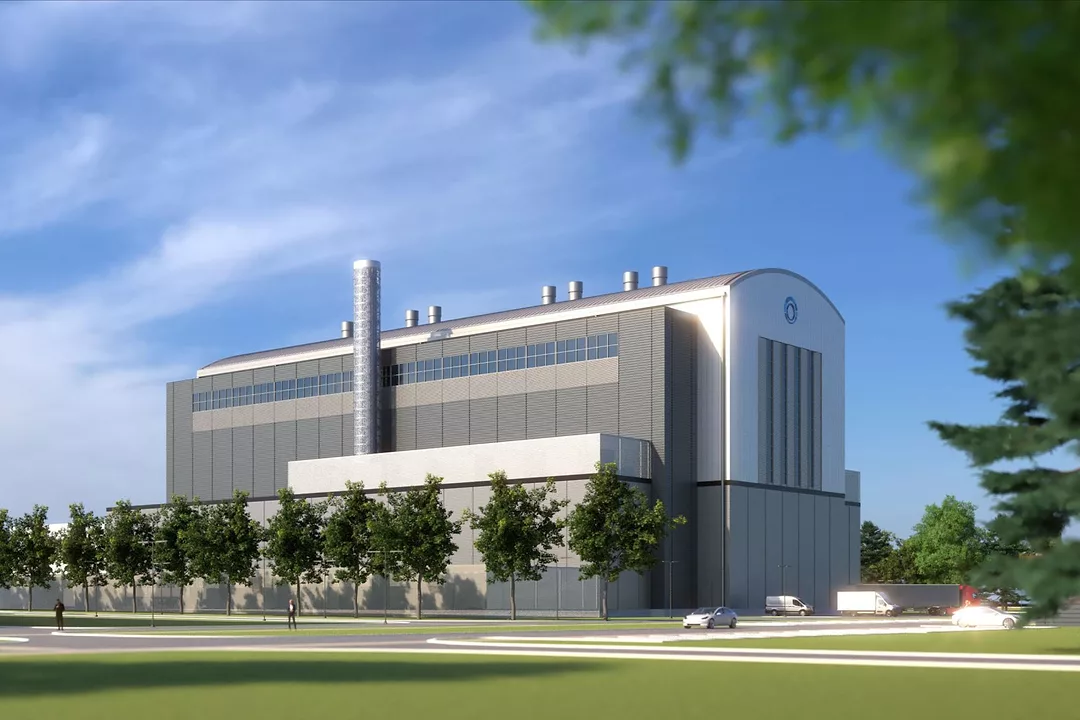
Google has announced plans to establish an energy facility based on advanced nuclear technology in Tennessee. This initiative is viewed as part of the company's strategy to support its rapidly growing data center operations while achieving its goal of providing low-carbon, uninterrupted energy. In this way, Google aims to take another step closer to its goal of achieving 24/7 carbon-free energy for its data centers.
The project is based on SMR (Small Modular Reactor) and other advanced nuclear concepts. This technology, with its small-scale, modular design, offers advantages of more flexible installation, safe operation, and grid integration. From a financial perspective, the initiative is supported by PPA (Power Purchase Agreement) and long-term offtake contracts; these structures guarantee both investor confidence and price stability.
From a supply chain perspective, the project brings a series of critical components and regulatory elements. Reactor component manufacturing, fuel supply (particularly the possibility of HALEU – High-Assay Low-Enriched Uranium), and licensing processes are among the most notable risk areas for the project. In these areas, supply security will play a decisive role in the success of long-term planning.
From a local economy perspective, the facility's construction process and high-skilled employment potential will provide significant contributions. Additionally, the project can support renewable energy integration by providing grid flexibility to the energy infrastructure in the Tennessee region. Thus, the region could become a strategic hub in terms of energy security and sustainability.
In conclusion, Google's Tennessee project is not merely an energy investment; it stands out as a move that intersects technology, sustainability, and infrastructure policy. Advanced nuclear energy has the potential to create a new paradigm in the energy transformation of the digital economy by meeting the increasing power demands of data centers in a carbon-free manner.
Key Points:
Advanced nuclear provides low-carbon power to data centers.
PPA/offtake structures frame financing.
Fuel and licensing processes carry supply risk.
Local employment and grid flexibility impacts are expected.
Aligns with 24/7 carbon-free energy goals.
Your feedback would make us happy.
Wishing you good reading from the start.

