

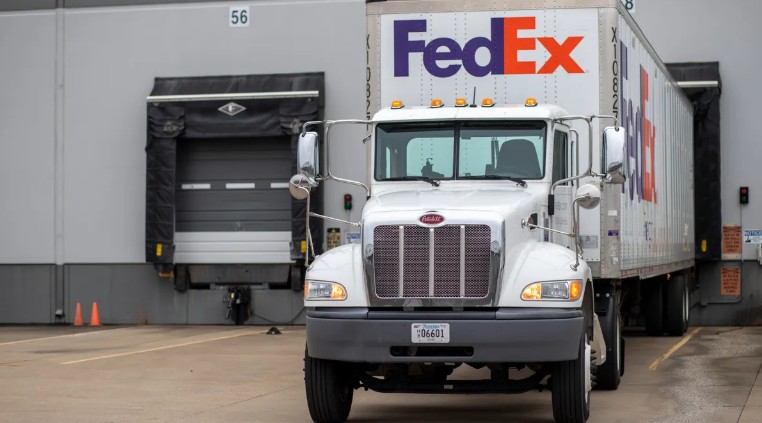
FedEx is preparing to take a significant strategic step to strengthen its competitive position in the logistics sector. The company's FedEx Freight unit, which provides Less-Than-Truckload (LTL) services, is planned to operate as a separate entity independent from the parent company. This move is expected to support FedEx's long-term growth strategy and contribute to more efficient management of all operational activities. Additionally, shifts in industry trends and dynamism in the LTL market are among the factors shaping this decision.
FedEx has been closely monitoring the rapid transformations occurring in the logistics sector recently. The rise of e-commerce, customer expectations for faster and more flexible delivery, and the need for cost optimization are prompting companies to reconsider different business models. FedEx has prepared a series of restructuring plans accordingly. Among the most important pieces of these plans is the transformation of FedEx Freight into an independent firm, with its operational and financial objectives determined within a separate framework.
FedEx Freight holds a strong position in the LTL segment of the U.S. market. LTL is defined as a model that distributes shipments smaller than a truck's full capacity collectively to different customers, and FedEx Freight operates a high-volume operation in this space. The company uses this model to provide fast, cost-effective, and reliable transportation between different regions. It seeks to gain competitive advantage through customized solutions for customers, scheduling, and traceability services.
The potential spin-off decision is expected to provide FedEx Freight with greater freedom to manage its own capital structure and investment opportunities. At the same time, the other divisions of the parent company, FedEx Corporation—namely FedEx Express and FedEx Ground—will have the opportunity to focus on their core operations and improve efficiency. Following the separation, FedEx Freight is expected to gain a more flexible management structure and strengthen its competitive position in the LTL segment.
Company management is also considering the risks that a potential separation could bring. The separation of LTL services from the FedEx network could pose a risk of reducing some of the existing synergies. However, experts note that thanks to FedEx Freight's extensive customer base and logistics infrastructure, even if the company experiences some short-term challenges during the independence process, it could achieve higher profitability rates in the long term. The company is reportedly preparing a strong strategic roadmap to attract investor interest and create a positive impact in capital markets.
Meanwhile, there is curiosity about how legal and operational details related to the workforce and customer contracts will be managed during FedEx Freight's separation process. FedEx is conducting comprehensive planning to navigate changes that will affect all stakeholders with minimal disruption. In particular, how the contracts of supply chain partners and subcontractors will be adapted to the new structure stands out as an important agenda item. The company is reportedly planning to invest in technology infrastructure and efficiency-enhancing solutions after the separation to solidify its competitive position in the LTL market.
Analysts assess that competition in the U.S. LTL market could intensify further following FedEx Freight's separation. This move could prompt rival firms to consider similar strategies of separating business divisions and adopting specialization models in their respective fields. While global consolidation and merger trends are observed in the logistics sector, FedEx's decision, if managed properly, could open new windows of opportunity in the LTL segment.
All these developments appear aligned with FedEx's goal of strengthening its global logistics network. The company is working to reallocate resources to meet changing customer expectations and accelerate the digital transformation process. An independent FedEx Freight structure has the potential to influence industry direction through faster decision-making processes in LTL services, innovative technologies, and more focused investment plans.
In conclusion, the separation of FedEx Freight, the company's LTL unit, represents a significant turning point in the logistics world. With this development, increased efficiency and strategic clarity are targeted across FedEx's other business divisions. This move, which will have effects across a wide spectrum from corporate restructuring to customer experience, is viewed as a step taken to further strengthen the company's future position.
Key Points:
FedEx Freight is planned to be transformed into an independent company in the LTL segment.
The rise of e-commerce and competitive pressure are driving FedEx toward restructuring.
The separation will support the growth strategies of both FedEx Freight and FedEx Corporation.
Operational efficiency, separate business models, and specialized management structures stand out.
The transition process is of critical importance for employees, the supply chain, and customers.
We would be happy to receive your feedback.
We wish you happy reading in advance.

