

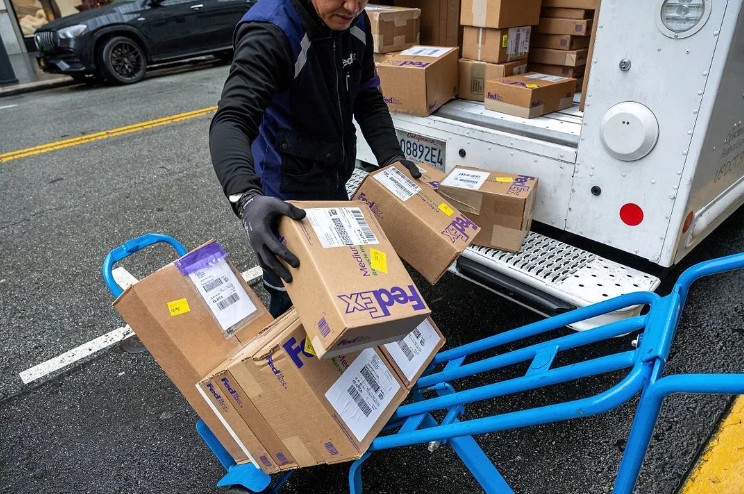
FedEx Corp. has shared the first concrete results of a comprehensive transformation program led by CEO Raj Subramaniam with investors. Financial results announced on December 18, 2025, revealed that the company's long-running extensive network restructuring and cost reduction initiatives are beginning to show tangible effects. The company raised the lower end of its full-year profit guidance while fourth-quarter earnings came in above Wall Street estimates.
According to the disclosed results, the performance improvement is being driven largely by rising volumes and pricing power in the U.S. domestic market. This picture demonstrates that FedEx's strategy to consolidate its ground and air transportation networks is beginning to generate operational efficiency. The strategy targets the integration of ground and air-freight networks, which the company has managed as separate operations for years, along with eliminating billions of dollars in costs from the system.
According to assessments relayed by Bloomberg, weak demand throughout the year and uncertainty created by U.S. President Donald Trump's trade and tariff policies delayed a clear view of the transformation's effects. Nevertheless, fourth-quarter data pointed to the plan's progress. The company's adjusted earnings per share came in at $4.82, exceeding the $4.12 market expectation compiled by Bloomberg.
FedEx raised its full-year adjusted profit guidance to a range of $17.80 to $19.00 per share. While the midpoint of this range sits above analyst expectations, it represents a more cautious increase compared to the strong performance in the second quarter. This reflects management's awareness of risks despite near-term gains.
Investor perception of the transformation process has strengthened notably in recent months. FedEx is targeting $1 billion in permanent cost reductions by 2026. With this expectation, FedEx shares gained more than 28 percent over the six-month period through the December 18 close. Over the same period, major competitor United Parcel Service Inc. shares posted a gain of less than 3 percent.
However, the transformation is proceeding amid new challenges. FedEx expects an unfavorable impact of approximately $600 million on adjusted earnings in the second half of the fiscal year. A significant portion of this impact stems from cost increases related to the grounding of MD-11 cargo aircraft. Those aircraft were taken out of service on safety grounds following a UPS crash near Louisville, Kentucky, in November that killed 14 people.
Company CFO John Dietrich stated that this situation could result in operating profit losses of up to $175 million in the second half of the fiscal year. MD-11 aircraft make up approximately 4 percent of FedEx's fleet, and this situation raises the risk of service disruptions, particularly during peak seasons.
Additionally, FedEx is grappling with persistent global shipment demand weakness that has become permanent since the pandemic. Erratic tariff policies implemented during the Trump era have particularly hurt high-margin shipments on the China-U.S. corridor. The company has previously stated that this volatility generated a $1 billion negative impact on adjusted operating profit. Nevertheless, FedEx is painting a more optimistic picture by raising its annual revenue growth guidance to a range of 5 to 6 percent.
Among analysts, cautious optimism prevails. Citi analyst Ariel Rosa emphasizes that progress signals toward long-term margin improvement goals are evident, but the process could advance unevenly due to macroeconomic conditions and cost pressures.
Key Takeaways
FedEx has disclosed the first financial results of its network integration and cost reduction strategy.
The lower end of full-year profit guidance was revised upward.
The consolidation of ground and air-freight networks is generating operational efficiency.
The grounding of MD-11 aircraft is pressuring near-term profitability.
Volume declines on the China-U.S. corridor have adversely affected high-margin shipments.
Investor confidence is rising, though macro and operational risks continue to persist.

