

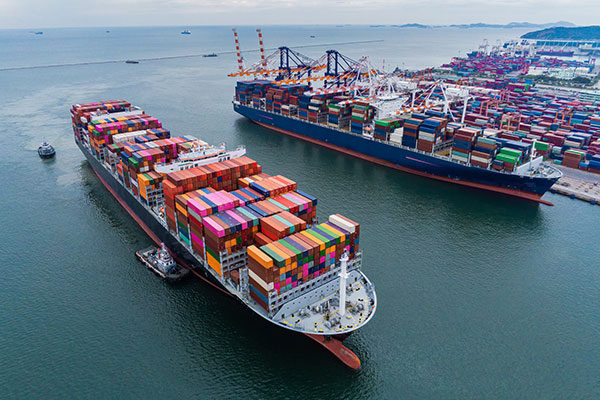
Container shipping has long accepted an assumption: "new ships are more environmentally friendly." However, VesselBot's Decoding Maritime Emissions Q3 2025 report seriously challenges this understanding.
Analysis of more than 73,000 container vessel transits worldwide reveals that the cleanest voyages are being conducted by vessels aged 11–15 years old.
This finding demonstrates that despite billions of dollars in fleet renewal investments, operational parameters—speed, loading rate, route selection—are more critical than ship age.
Cleanest voyages: Vessels aged 11–15 years
According to the analysis, vessels in this age group, compared to newer ships:
demonstrate superior fuel efficiency,
maintain more balanced operational speeds,
employ more optimized route and loading strategies
resulting in lower CO₂ emissions.
This indicates that focus must be placed not only on technology, but also on operational management decisions.
Key trends: Operations, not age, are the deciding factor
1. Transit volumes increased, total emissions remained unchanged
While annual transit volumes have risen, there has been no significant increase in total emissions.
This demonstrates the effectiveness of fleet optimization and speed reduction practices.
2. Larger vessels are more eco-friendly
Large, fully-loaded vessels,
with lower carbon intensity per unit
traveling continuously over long distances
are far more efficient than smaller, frequently stopping-and-starting vessels.
Small feeder vessels, meanwhile, generate greater emissions due to short, irregular routes and low loading rates.
3. South Korean-built vessels stand out
Vessels constructed in South Korea are delivering better results than Chinese-built ships due to their design and deployment strategies.
The reasons behind this difference include:
hull design,
engine efficiency,
deployment on more appropriate routes.
Industry implication: The "new = clean" era is ending
The report emphasizes that fleet renewal investments alone do not reduce emissions.
What actually makes the difference:
slow steaming,
cargo optimization,
route management,
speed planning,
operational efficiency.
These findings raise important questions for investors and carriers:
Is investing only in new vessels sufficient?
Where can operations be optimized for better emission outcomes?
Should deployment strategies for small vessels be redesigned?
According to the report, the cumulative impact of operational improvements on emissions reduction may exceed that of new ship technologies.
Strategic takeaways:
Reducing fleet age alone does not guarantee environmental performance.
Operational optimization—particularly the combination of speed and loading—represents the largest improvement opportunity.
Large vessels deliver the most eco-friendly per-unit results on long routes.
Short-distance transits using small feeder vessels represent the weakest link in carbon intensity.
South Korean shipyards' efficiency advantage in vessel design stands out.
Key points:
The cleanest voyages are conducted by vessels aged 11–15 years old.
Transit volumes increased but total emissions remained flat.
Large, fully-loaded vessels are far more efficient than small feeder ships.
South Korean-built vessels demonstrate more eco-friendly performance than Chinese-built vessels.
Operational optimization is as critical as technology for emissions reduction.
Author: SedatOnat.com

