

Range anxiety and charging times, long viewed as major barriers to electric heavy-duty trucking, have taken on a new dimension with a groundbreaking test conducted in the United States. Researchers at Purdue University have successfully charged an electric heavy-duty truck while in motion on a short highway segment in Indiana. This test represents a historic milestone, marking the first time a U.S. highway has transferred energy to a moving electric truck.
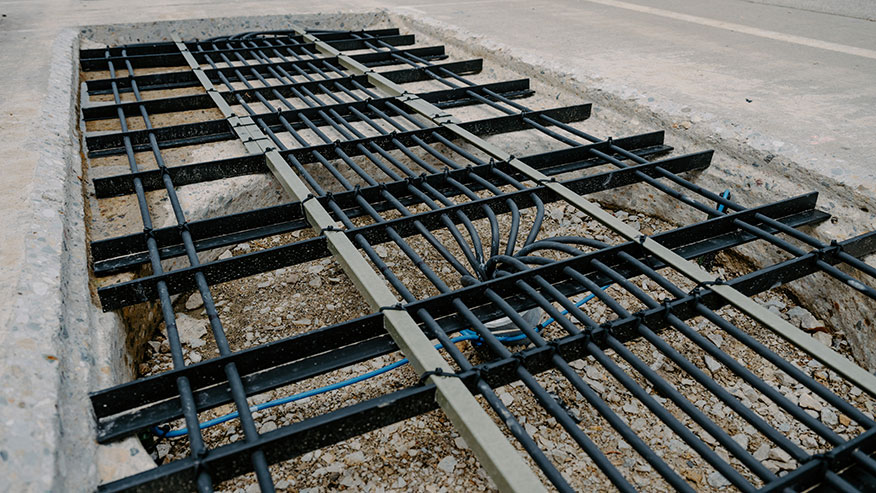
The system developed for the project is based on the principle of wireless power transfer. Magnetic coils embedded beneath the road surface transmit energy to receiver systems mounted on the truck's undercarriage. As the truck travels at highway speeds, it receives power without needing to stop or establish a physical connection. In this respect, the system differs fundamentally from conventional plug-in charging models.
Technical Challenges and Innovation
Dionysios Aliprantis, Professor of Electrical and Computer Engineering at Purdue University, articulated the core challenge behind this technology:
"Transferring power through a magnetic field at these relatively large distances is challenging."
According to Aliprantis, the real difficulty lies in achieving this transfer safely and efficiently for heavy-duty vehicles requiring thousands of times more power than smartphones.
The road segment tested was constructed in collaboration with the Indiana Department of Transportation (INDOT). Coils designed by Purdue were embedded beneath the concrete surface and covered with standard highway pavement, making the system indistinguishable from a conventional roadway in appearance. Energy is transmitted upward from beneath the road to the receiver on the truck's undercarriage.
Test Scope
The trial was conducted on a road segment approximately a quarter-mile in length near the Purdue campus. Researchers emphasized that the system is capable of delivering sufficient power not just for small test platforms or passenger vehicles, but for real-world heavy-duty electric trucks in actual commercial use.
The truck continued to receive power as it traveled at constant speed throughout the test. This demonstrates the technology's potential to be integrated into continuous, high-tempo operations like long-haul trucking.
Why It Matters
Key barriers to widespread electric truck adoption include:
lengthy charging times,
large and heavy battery packs,
range limitations in long-distance operations
According to the Purdue team, roadways capable of charging vehicles in motion could alleviate many of these challenges.
Aliprantis summarized this potential as follows:
"It could allow trucks to charge as they move, which would significantly reduce the need for large onboard batteries."
Smaller battery sizes reduce both vehicle weight and costs. This could enable electric trucks to approach diesel alternatives more rapidly in terms of total cost of ownership (TCO).
Supply Chain and Logistics Implications
If this technology becomes scalable, freight transportation infrastructure could undergo fundamental transformation. Highways could evolve from being merely transportation corridors into active energy-providing infrastructure. This shift could:
reduce dependence on charging stations,
increase operational flexibility for trucks,
accelerate the adoption of electric vehicles in long-distance hauling.
Additionally, logistics planning will need to redefine elements such as charging breaks, route optimization, and energy infrastructure investments.
Next Steps: Scaling
Researchers emphasize that the current road segment remains a test installation. In subsequent phases, the goal is to:
extend the technology to longer road segments,
test it under varying weather conditions,
conduct cost, maintenance, and durability analyses.
Broader deployment on public highways will also require resolution of issues such as regulation, financing, and standardization.
Overall Assessment
Purdue University's demonstration signals an infrastructure-centered paradigm shift in electric heavy-duty trucking. The concept of trucks drawing power directly from roadways rather than relying solely on charging stations is viewed as a game-changer with the potential to unlock electrification in long-distance freight.
Key Takeaways:
For the first time in the U.S., a highway has charged a moving electric truck.
The project was conducted through collaboration between Purdue University and Indiana DOT.
Energy transfer was provided via wireless magnetic coils embedded beneath the asphalt.
The tested road segment was a quarter-mile in length.
Objective: to reduce charging time and minimize battery requirements.
The technology holds potential for long-distance electric truck freight operations.
Author: SedatOnat.com
Your feedback would make us happy.
We wish you happy reading from now on.

