

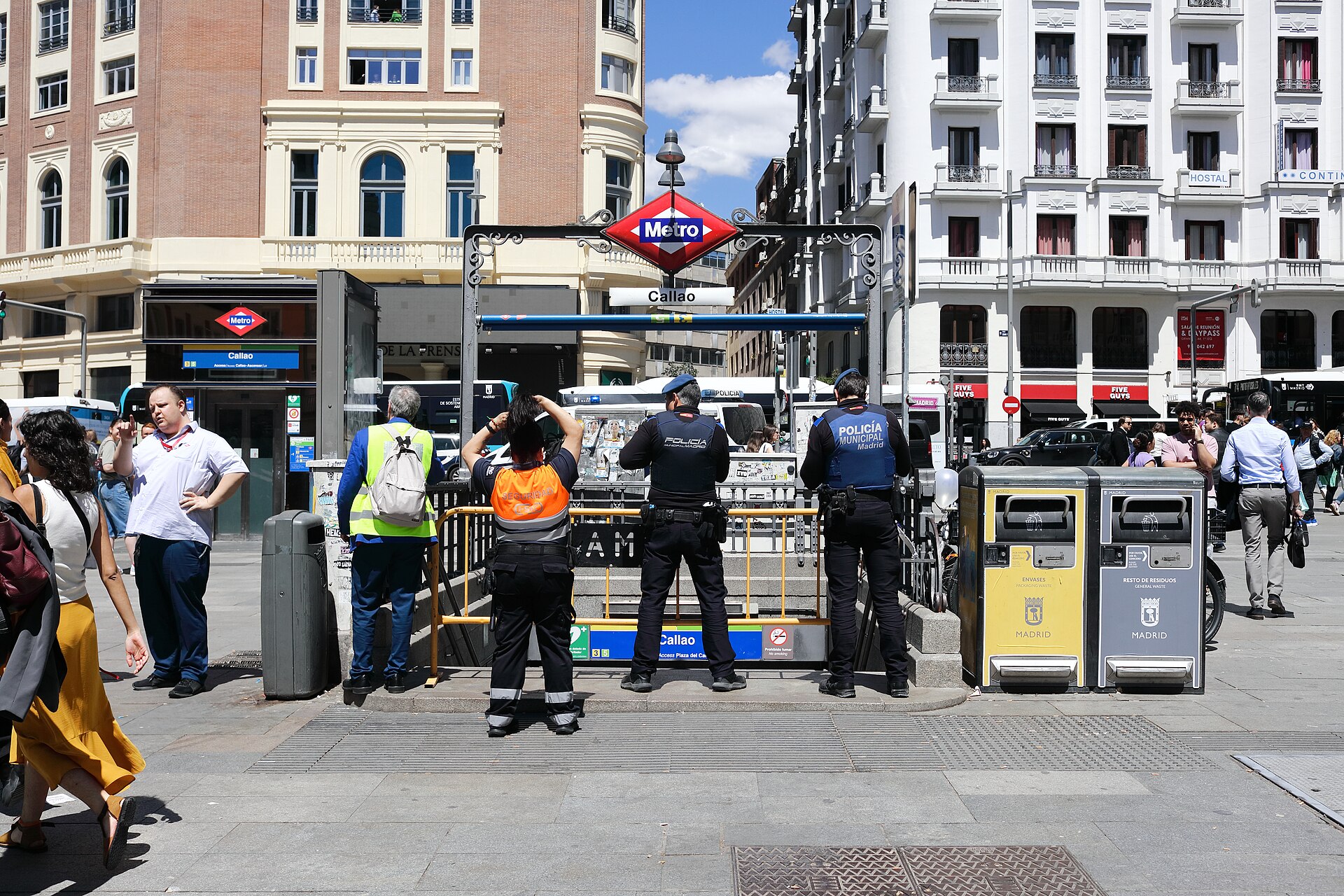
At 12:33 CEST on April 28, 2025, an extraordinary widespread power outage struck the Iberian Peninsula. Electricity was cut off for approximately 10 hours across most regions of mainland Spain and Portugal; Andorra and southwestern France experienced brief outages lasting seconds to minutes. The outage affected telecommunications, transportation, airports, healthcare services, and government institutions across multiple layers. At least ±7 deaths in Spain and ±1 death in Portugal were attributed to indirect causes, including candle fires and poisonings from indoor generator use. ENTSO-E and national sources reported a "total zero" condition in the Iberian power system at the time of the incident.
Pre-event and initial moments:
According to Red Eléctrica de España (REE) data, at 12:30 demand was at 25 GW and generation at 32 GW; the system was exporting 2.6 GW to Portugal, 0.87 GW to France, 0.78 GW to Morocco, and 3 GW was being used for hydro-pumping. Solar accounted for ~59% (19.5 GW), wind ~12%, nuclear ~11% (3.3 GW), natural gas ~5%, and prices had turned slightly negative. Two oscillations were damped between 12:03–12:07 and 12:19–12:21. A generation loss of approximately 2,200 MW was triggered in the Granada, Badajoz, and Seville regions in the 12:32:57–12:33:17 timeframe; between 12:33:18–12:33:21, frequency dropped below 48 Hz, and automatic load shedding (UFLS) activated; the France-Spain AC lines opened at 12:33:21, the HVDC at 12:33:24, and the Iberian system collapsed. On the German side, grid frequency dropped by approximately 150 mHz.
Impacts – Spain:
Renfe halted all trains; metro and suburban lines were evacuated; airports, including Barajas, returned to limited-capacity operations; internet traffic fell to 17% of normal; hospitals switched to generators. Nuclear power plants automatically disconnected from the grid while maintaining safe cooling with backup power. Madrid City Council activated its emergency plan, PEMAM; the city assembly, stock exchange, and government buildings were affected. The business federation CEOE estimated economic losses at ~€1.6 billion. Three family members in Galicia died from CO poisoning; one person in Madrid died in a candle fire.
Impacts – Portugal:
Supermarkets, pharmacies, card payments, and mobile communications systems failed on a wide scale; traffic lights went offline; suburban/metro systems stopped due to signaling problems; Lisbon Airport closed in the afternoon and partially reopened in the evening; hospitals operated on generators. The government declared an energy crisis; it was decided to protect the black start capacity of Tapada do Outeiro and hydroelectric plants, and to extend it to Alqueva and Baixo Sabor. A 77-year-old dependent on a home ventilator lost his life.
Re-energization: French connections were phased back online from 12:44 onwards; support of up to 900 MW from Morocco and 2 GW from France was provided; the Aldeadávila hydroelectric facility accelerated sequential restart with autonomous start. Spain fully returned to load by the morning of April 29; in Portugal, full restoration was achieved after midnight with Castelo do Bode (138 MW) and Tapada do Outeiro (990 MW). Portugal limited imports from Spain to 1 GW between May 8–12.
Investigations and technical findings:
The ENTSO-E preliminary report noted that two inter-area oscillations before the event, voltage increases in the south, rapid ROCOF, and loss of synchronism prevented defense plans from mitigating the collapse. The Spanish government report emphasized cascading effects from minor faults in the south and insufficient synchronous thermal generation capacity being operated at the time of the event. REE stated that "planned voltage control was adequate, and the collapse would not have occurred if conventional power plants had fully fulfilled their duties," while industry representatives argued that safety margins were kept too low. The Comillas IIT report identified inadequate dispatch of synchronous generation with dynamic voltage control and limited resilience of the transmission network among the primary causes. A cyber attack was not confirmed following comprehensive investigations.
Policy and system debates:
The impact of the renewable-heavy energy mix was opened to discussion; the EU Energy Commissioner and various analytical bodies emphasized that the mix was standard and no single source type could be held solely responsible. Experts recommended increasing synchronous condensers, grid-forming batteries, inverter settings, and safety margins to address low inertia, high grid-following inverter prevalence, and limited interconnection. The Spanish Senate established an investigation committee; Portugal announced an additional €400 million investment in the grid, increasing battery capacity from <20 MW to 750 MW, raising black start points from 2 to 4, and strengthening critical infrastructure resilience.
Key Takeaways:
On April 28, 2025, a widespread outage lasting up to 10 hours struck across Spain and Portugal; ~31 GW of load disconnected from the system.
At 12:33, generation reductions in southern Spain, UFLS, opening of French lines, and HVDC caused the system to collapse.
Transportation, airports, telecommunications, and payments were severely affected; deaths and injuries from generator and candle-related incidents were reported.
Restoration was carried out gradually through France/Morocco interconnections, hydro and gas turbines; both countries fully recovered by the morning of April 29.
Initial findings converged on voltage/frequency instability, insufficient synchronous capacity, and limited network resilience; cyber attack was not confirmed.
Policy responses focused on synchronous condensers, grid-forming batteries, expanded black start deployment, and increased safety margins.
Author: SedatOnat.com
Your feedback would make us happy.
Wishing you good reading from the start.

