

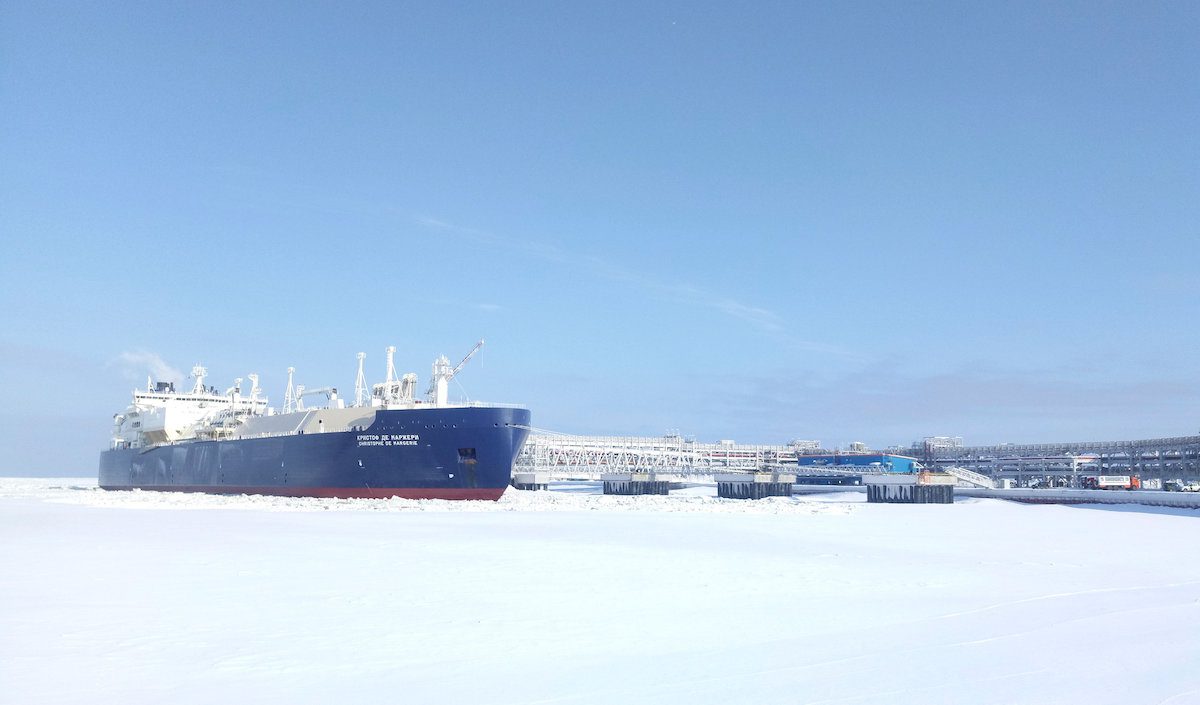
Bloomberg data shows that China continues to import Russian liquefied natural gas (LNG) subject to U.S. sanctions.
Despite U.S. President Donald Trump blacklisting Russian energy giants such as Rosneft and Lukoil, the White House did not introduce new restrictions on LNG trade in its latest sanctions package.
This situation has enabled shipments from Russia's Arctic LNG 2 project to reach China.
The LNG tanker Iris docked at China's Beihai terminal in the south on October 22, 2025.
This shipment was China's 11th sanctioned Russian LNG cargo since late August.
The LNG Loophole in U.S. Sanctions
The latest U.S. sanctions wave targeted Russia's state-controlled oil producers.
However, the White House has not yet expanded sanctions on companies conducting LNG trade indirectly.
This gap creates breathing room for Russia's energy revenues.
Moscow aims to triple LNG exports by 2030 and has placed Asian markets at the center of this strategy.
By contrast, the United Kingdom imposed sanctions on the Beihai terminal last week.
Additionally, the European Union approved a new sanctions package against Russia, targeting 45 organizations.
The list includes 12 Chinese and Hong Kong-based companies.
Beihai: Gateway for Russian LNG into China
The Chinese government has designated the Beihai terminal as a special entry point for shipments from the Arctic LNG 2 projects.
Arctic LNG 2 was sanctioned by the U.S. in 2023.
However, China formally began imports through this terminal following Russian President Vladimir Putin's visit to Beijing in August 2025.
This move demonstrates that China maintains strategic solidarity with Russia despite Western sanctions in its energy security policy.
Beihai has become one of Beijing's most critical LNG hubs in terms of both energy supply security and geopolitical cooperation.
The Iris and Other Vessels: Flow Continues Despite Sanctions
The Iris vessel loaded LNG in early October from a floating storage unit (FSU) in eastern Russia.
The fuel stored at this facility came directly from the Arctic LNG 2 project.
The U.S. Treasury Department had previously placed both this storage facility and the Iris on its sanctions list.
Satellite imagery and vessel tracking data show that at least three additional LNG tankers are heading to the Beihai terminal.
One of them was identified as an LNG vessel belonging to a Hong Kong-based company that fueled from a sanctioned Russian tanker off the Malaysian coast.
This indicates that "shadow fleet" tactics are rapidly expanding into LNG trade as well.
New Tensions in Global Energy Balances
While U.S. sanctions on the Russian oil and LNG sector restrict Moscow's access to Western markets, they enhance the strategic role of countries like China and India in energy imports.
Beijing's persistence in this area carries not only economic but also geopolitical significance.
Although China is seeking diversification in LNG supplies, through this relationship with Russia it aims to ensure long-term supply security.
As long as U.S. sanctions do not cover LNG transportation, Russia's energy flow to Asian markets is expected to continue.
Conclusion: China-Russia Energy Cooperation Deepening
Russia's strategy to protect energy revenues under sanctions pressure is gaining new direction with China's support.
The Beihai terminal has become a symbol of this new "pivot to Asia" strategy.
This development demonstrates that the global impact of Western energy sanctions remains limited and that Asia-centered alternative energy networks are strengthening.
The U.S. failure to expand LNG sanctions provides indirect relief to Moscow and geopolitical advantage to Beijing.
Key Points:
According to Bloomberg data, China accepted its 11th Russian LNG shipment as of October 2025.
The Iris vessel delivered LNG received from the sanctioned Arctic LNG 2 facility to the Beihai terminal.
The U.S. blacklisted oil giants Rosneft and Lukoil, but did not impose additional restrictions on LNG trade.
The United Kingdom added the Beihai terminal to its sanctions list; the EU targeted 45 organizations and 12 Chinese/Hong Kong companies.
At least three new vessels are proceeding to Beihai with sanctioned Russian LNG cargoes.
Through this move, China is strengthening energy solidarity with Russia and expanding Asia-centered energy networks.
The exclusion of LNG transportation from U.S. sanctions is creating strategic breathing room for Russia.

