

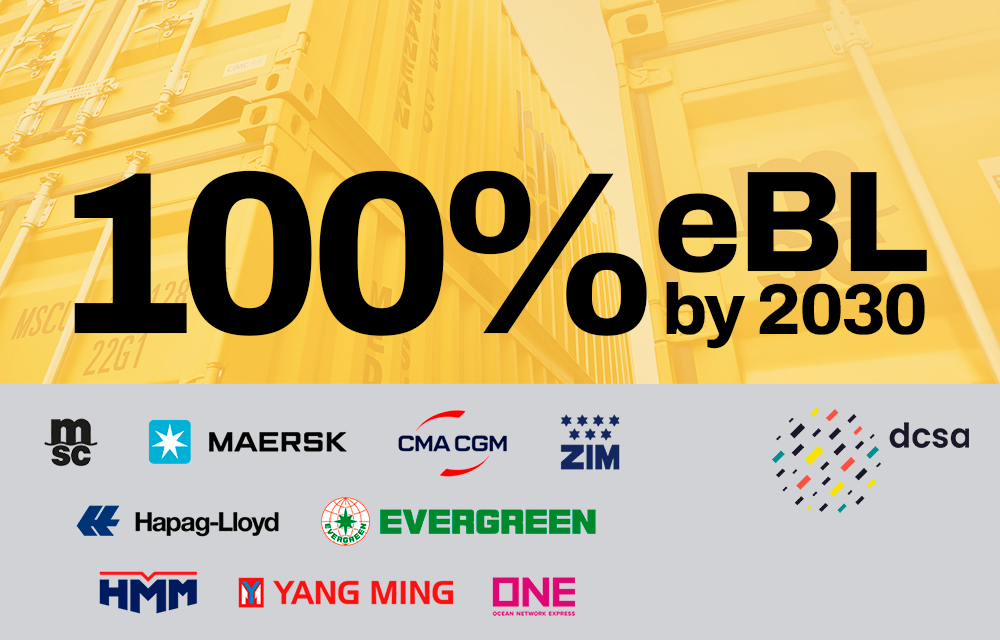
In an interview with Omer Guy, legal counsel at the Digital Container Shipping Association (DCSA), conducted by PTI correspondent Dom Magli at the Commodity Trading Week Europe conference in London, the importance of promoting electronic bill of lading (eBL) adoption across the maritime industry is emphasized.
\nGuy noted that it is surprising that 90 percent of bills of lading—a critical instrument in global trade—are still processed on paper, and stated that eBLs could generate gains of between 30 to 40 billion dollars in the ecosystem.
\nHe further argued that electronic bills of lading should be preferred because, unlike traditional paper-based processes, they eliminate the risk of loss and accelerate transactions. Addressing cybersecurity concerns, Guy noted that fraud occurring in electronic systems carries less risk compared to paper-based processes, since the industry has developed and continues to improve measures against such threats.
\nKey Points
\n- \n
eBLs could potentially generate 30-40 billion dollars in gains across the maritime sector.
\n Currently, 90 percent of bills of lading are still processed on paper.
\n Electronic bills of lading eliminate loss risk and accelerate transactions.
\n Cybersecurity concerns carry less risk compared to paper-based processes.
\n

