

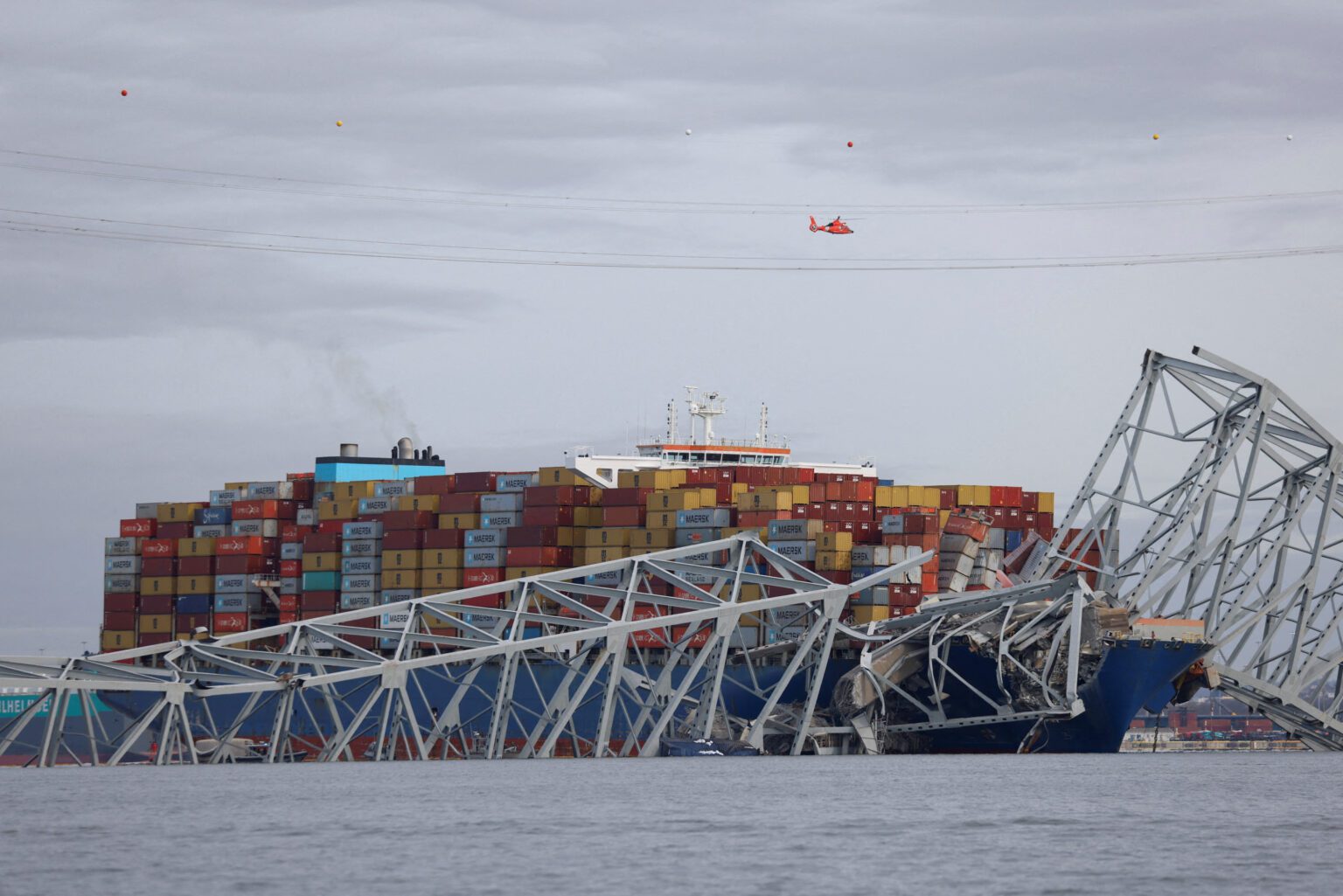
The U.S. National Transportation Safety Board (NTSB) has revealed the ultimate cause of the tragic accident that led to the collapse of the Francis Scott Key Bridge in Baltimore on March 26, 2024: a single loose signal cable in the high-voltage system of the container ship Dali.
According to the report, a label tape on the cable prevented it from fully seating in the spring lock mechanism of the terminal block. This insufficient contact caused the cable to lose its electrical connection at a critical moment, triggering the sudden opening of the high-voltage circuit breaker. This created a domino effect in the ship's electrical system, resulting in a complete blackout, followed by loss of propulsion and steering.
Initial power loss occurred at 0129 hours
During the outage, the ship's critical systems were disabled, including:
steering pumps,
fuel oil flushing pump,
main engine cooling water pumps
and other vital systems.
From this moment, the ship began an uncontrolled turn to port toward Pier 17. Although pilots and bridge crew attempted to correct the course, their efforts proved ineffective without propulsion power. When the Dali struck one of the bridge's main piers, the structure collapsed and a large section fell into the Patapsco River.
Casualties and damage
6 bridge workers lost their lives,
1 worker was seriously injured,
1 of 23 people aboard the Dali was slightly injured,
Damage to Dali: over $18 million,
Bridge reconstruction cost: $4.3 – 5.2 billion,
Approximately 34,000 daily vehicles now diverted to alternative routes.
NTSB: "This accident was entirely preventable"
NTSB Chair Jennifer Homendy stated that finding the fault in a single cable was like "searching for a loose rivet in the Eiffel Tower". Nevertheless, the accident demonstrated that limited maintenance practices can create large-scale risks.
The NTSB's findings also point to design and protection shortcomings in the bridge itself. The Key Bridge, opened in 1977, lacked modern protective measures to withstand collisions with today's massive container ships. A vessel that struck the same bridge in 1980 caused only minor damage; the Dali was 10 times larger.
Critical deficiencies: engine, redundancy, and communication
The NTSB also identified additional problems that intensified the accident's severity:
The main engine was configured to automatically shut down due to low cooling water pressure reading (in compliance with current standards but risky).
The flushing pump was being used as a fuel service pump, contrary to its intended design.
Emergency generator radiator dampers remained partially open.
The absence of an emergency communication system to alert roadway workers.
These deficiencies both magnified the impact of the collision and increased loss of life.
National bridge safety alert
The NTSB has launched a nationwide safety assessment not just for this accident, but for all bridges spanning waterways across the nation. In letters sent to 30 bridge owners, the following were requested for urgent evaluation:
existing bridges' collision resistance against large vessels,
emergency closure and driver warning systems,
application of AASHTO standards
and related safety measures.
New safety recommendations
The NTSB issued a total of 18 new recommendations. The recommendations are directed to:
the U.S. Coast Guard,
ClassNK,
ANSI,
HD Hyundai Heavy Industries,
Synergy Marine Group,
WAGO,
and state bridge authorities
with improvements in structural, technical, and operational scope.
Key Points:
Root cause of the accident: a single signal cable that failed to fully seat due to label tape.
Result: Complete power outage → loss of propulsion and steering → bridge collapse → 6 fatalities.
Bridge reconstruction cost: $4.3–5.2 billion.
The NTSB called for nationwide risk assessments of bridge structures.
18 new safety recommendations: ship electrical systems, maintenance, redundancy, bridge protection, and emergency communication.
Author: SedatOnat.com
Your feedback will make us happy.
Wishing you good reading in advance.

