

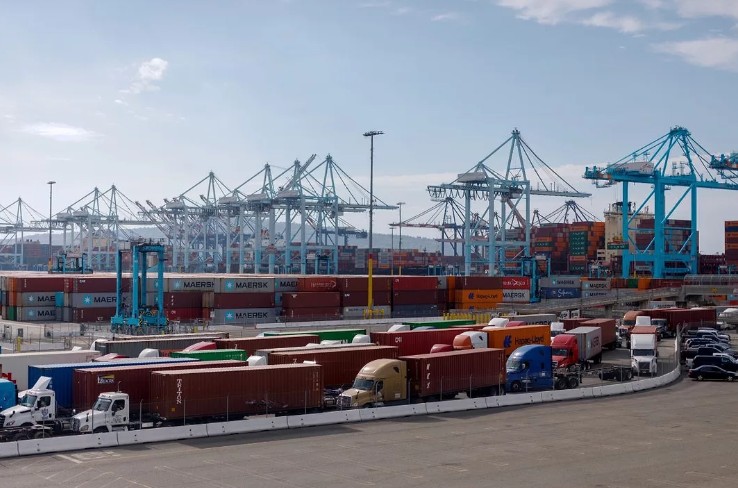
A new wave of threats has emerged in the global logistics sector. According to a report published by Proofpoint Inc., cyber criminals are collaborating with organized crime organizations to steal shipments from trucking companies.
Proofpoint, based in California, reported that attackers are specifically targeting trucking companies and freight brokers. Attacks are being carried out by deploying malware that provides remote access to company networks. The ultimate goal is to seize shipments and sell the stolen goods in online marketplaces or overseas.
"A full-scale supply chain threat"
Selena Larson, senior threat intelligence analyst at Proofpoint, emphasized that these attacks affect not just individual companies but the entire supply chain ecosystem:
"The impact of these attacks extends from ships at ports to truck drivers to retailers. Ultimately, this chain reaches consumers. This is a full-scale supply chain threat."
Attacks are being carried out primarily through load boards. Cyber criminals infiltrate online systems where load bookings are arranged between carriers and brokers. They then send "online setup packet" documents containing malicious links via fake emails.
The software used by attackers typically appears to be legitimate remote access tools, which makes detection difficult.
How do the attacks work?
According to Proofpoint's research, criminals first infiltrate carrier company systems to steal credentials. They then use these credentials to send fake load postings to brokers.
When a carrier responds to one of these postings, hackers send load details containing a malicious link via email. Because carriers must act quickly due to high demand, they typically click on these links, allowing hackers to compromise their networks.
Proofpoint researcher Ole Villadsen explained the process:
"There is enormous pressure to grab loads. Companies move quickly to avoid missing a new load opportunity. This haste makes the attackers' job easier."
Attacks could cost billions
According to National Insurance Crime Bureau (NICB) data, cargo thefts increased by 27% in 2024 with a further 22% increase expected in 2025. Currently, it is estimated that approximately 35 billion dollars in cargo is stolen annually.
Stolen products typically include energy drinks, electronics, and food products. Larson notes that energy drinks in particular have become targets because they are banned or restricted from sale in many countries overseas.
A global problem
Proofpoint emphasizes that attacks are primarily directed at cargo companies in North America but are becoming a global threat. Researchers have findings suggesting that hacker groups may originate from Russia or Eastern Europe.
Villadsen described these attacks as "the marriage of cybercrime and organized crime":
"This represents the point where the digital world intersects with underground criminal networks. Cyber attacks not only steal data, but also target physical goods."
Urgent call for industry-wide action
Experts note that companies must increase cybersecurity awareness against such attacks, better protect load boards, and invest in employee training.
Proofpoint has issued warnings to freight brokers and carrier firms to not open links in incoming emails without verifying their source and to enable load verification systems with two-factor authentication.
Larson noted that countering this threat requires coordinated efforts among law enforcement, the private sector, and users, stating:
"This is no longer just a cyber attack—it's a physical supply chain threat. We can only stop it by working together."
Key Takeaways:
Proofpoint Inc. found evidence that hackers are collaborating with organized crime networks to commit cargo theft.
Attacks are being conducted through load boards and fraudulent email campaigns.
Cargo thefts increased by 27% in 2024, with a further 22% increase expected in 2025.
Annual losses: approximately 35 billion dollars.
Most targeted products: energy drinks, food, and electronics.
Proofpoint: "This is the convergence of cybercrime and organized crime – a new threat model for the global supply chain."
Call to companies: Two-factor authentication, load verification systems, and staff awareness training are critical measures.
Author: SedatOnat.com

