

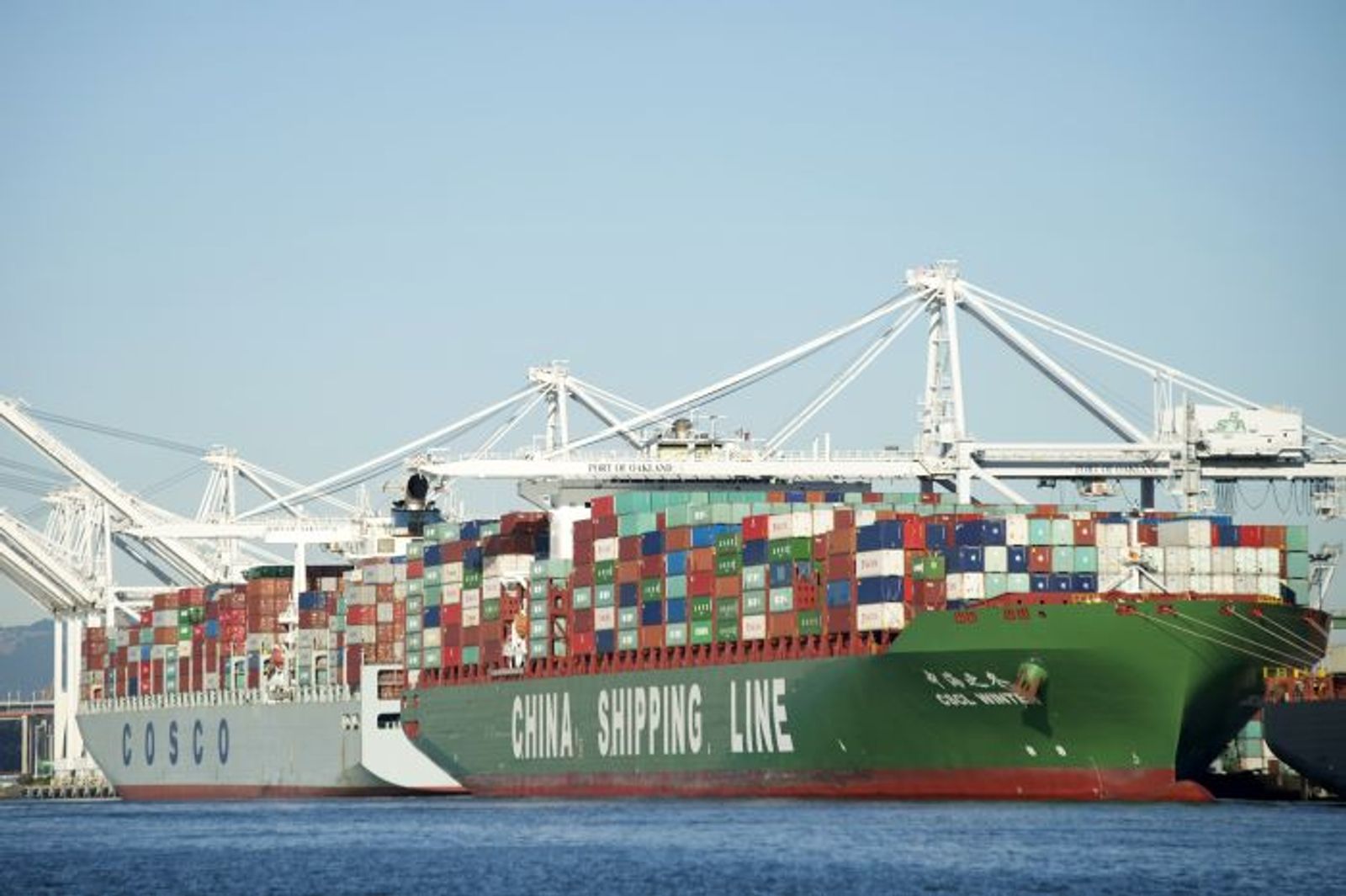
New U.S. port fees targeting China's maritime industry have imposed additional costs exceeding $42 million on Cosco Shipping and its affiliate OOCL (Orient Overseas Container Line) in the first week of implementation.
According to vessel tracking data, post-Panamax-class ships are among the most heavily impacted by these fees.
Post-Panamax Vessels Face $3–4 Million Fees
Under the new regulations, each large container vessel (post-Panamax class) operated by Cosco and OOCL calling at U.S. ports is subject to a port fee ranging between $3 and $4 million.
This creates a significant additional cost burden for vessel operators, particularly those active in high-volume ports such as Los Angeles, Long Beach, and New York-New Jersey.
Apart from Cosco and OOCL, only one small China-based liner operator and five China-built container vessels have been impacted by these fees. However, the total cost for these vessels is estimated to be only several million dollars.
Annual Costs Could Reach $2 Billion
According to experts, if current trends continue, the combined annual fee burden for Cosco and OOCL could reach as high as $2 billion.
This projection strengthens claims that the U.S. government is implementing port fees as an extension of trade restrictions targeting China-based shipbuilding and maritime operations.
The goal of the new fees is to reduce the competitive advantage of Chinese-made or Chinese-controlled vessels at U.S. ports.
However, global shipping experts warn that this measure could increase cargo transport costs, adversely affecting U.S. importers as well.
Scope and Initial Results
The port fees implemented by the U.S. administration in October primarily target vessels built in China or operated by state-affiliated Chinese operators.
Specifically:
Cosco Shipping Lines (state-controlled) and
OOCL (Orient Overseas Container Line) (a subsidiary of Cosco Group)
are the principal carriers directly affected.
According to vessel tracking data, in the first week alone these two operators made a total of 12 calls at U.S. ports, with fees paid for these calls totaling over $42 million.
Global Impact and Industry Reaction
Shipping industry representatives warn that these port fees could create new cost pressures in global freight supply chains.
Many analysts predict that these fees will drive up freight rates on trans-Pacific routes and may ultimately be reflected in consumer prices.
Additionally, the U.S. has effectively made this measure a new component of its ongoing tariff war with China.
This development could create new barriers to market access, particularly for China-based shipbuilders and maritime operators.
Potential Chinese Countermeasures
The Beijing government is expected to respond with reciprocal port fees or administrative restrictions.
Indeed, on October 14, China announced sanctions against five U.S.-linked subsidiaries of Hanwha Ocean, with observers characterizing this decision as a response to U.S. port fees.
Thus, a new trade front in maritime shipping has opened between the U.S. and China.
Conclusion: U.S.-China Shipping Tension Enters New Phase
The port fees implemented by the U.S. are significant enough to affect not only Chinese carriers but also the broader global container shipping market.
Major shipping lines like Cosco and OOCL are expected to pass these costs on to freight rates in the long term.
If trade tensions between the two countries continue to escalate, new route changes in global supply chains, cargo rerouting, and regional capacity imbalances will become inevitable.
Key Takeaways:
The U.S. new port fees specifically target China's maritime sector.
Cosco and OOCL incurred additional costs totaling $42 million in the first week of implementation.
Fees for post-Panamax vessels range from $3–4 million.
Annual costs are projected to reach as much as $2 billion.
The U.S. objective is to limit the competitive power of Chinese-built or state-affiliated vessels.
According to experts, this measure could drive up trans-Pacific freight rates and global shipping costs.
China is expected to respond with reciprocal sanctions and port regulations.
The escalation signals a new trade war in the maritime and logistics sectors.
We would appreciate your feedback.
Wishing you happy reading.

