

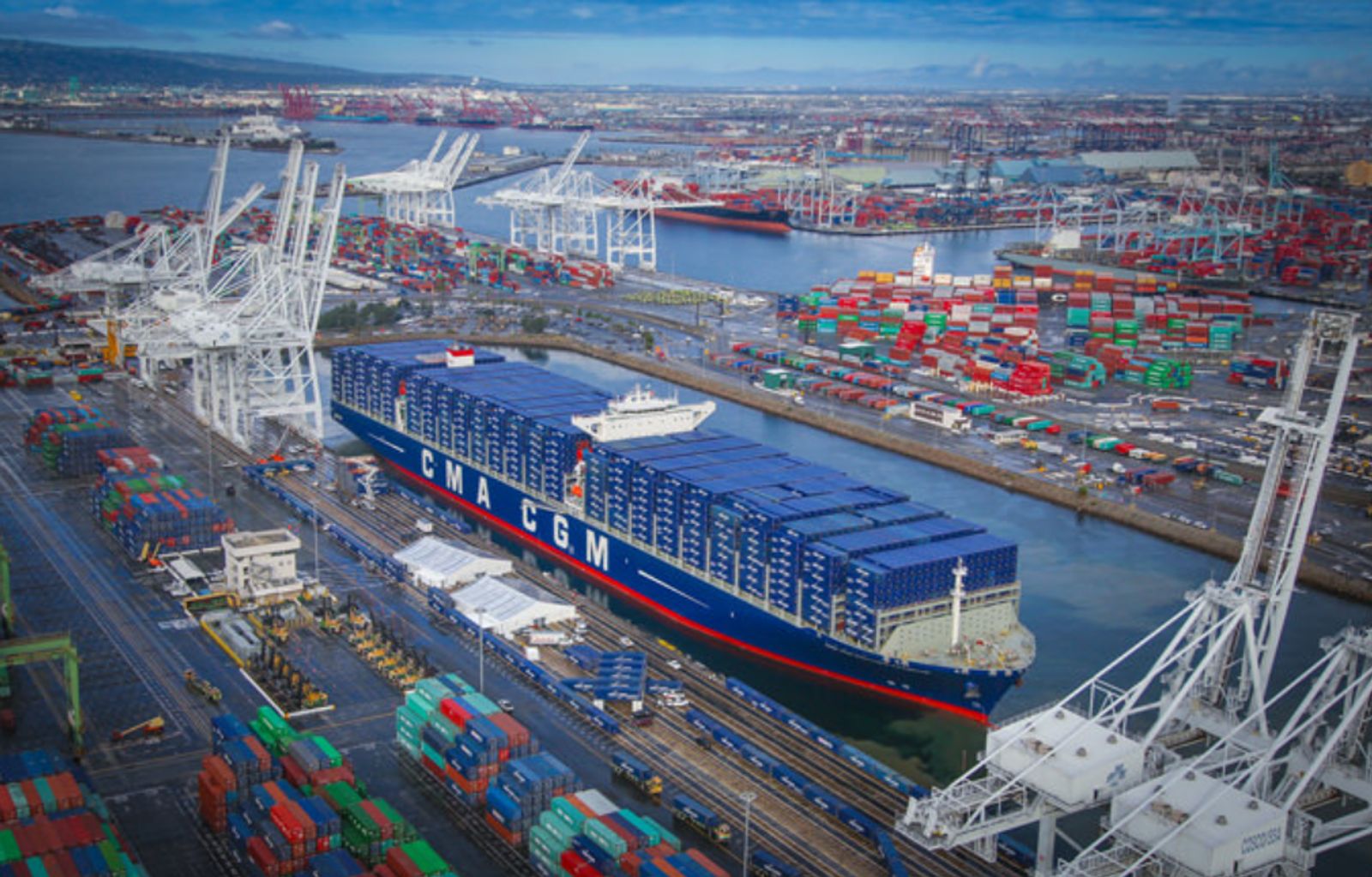
CMA CGM is conducting its first large-scale test transit following two years of ongoing security crisis in the Red Sea. The movement of two megamax-class vessels operating on Ocean Alliance's NEU4 and NEU5 services toward the Suez Canal indicates that line operators are evaluating cautiously reopening the route.
Analyst Linerlytica reported that the 17,859 TEU CMA CGM Benjamin Franklin operating on the NEU4 service is progressing toward the Suez on its Europe outbound eastbound backhaul return to the Mediterranean. Similarly, the 23,112 TEU CMA CGM Sorbonne on the NEU5 service is heading toward the Mediterranean in a similar fashion.
These two vessels mark the first entry of Ocean Alliance's megaships into the conflict zone in two years, and carriers are believed to be testing whether the Red Sea route can be carefully brought back into service in a controlled manner.
Cautious Return: "A Test, Not a Full Return"
While container lines generally continue to stay away from the Red Sea, CMA CGM's move is not yet being interpreted as a full-scale return.
According to industry sources, test voyages are being used to:
measure new risk levels on the route,
evaluate insurance costs,
test the effectiveness of naval corridors,
assess the operational feasibility of Suez transits
Other Ocean Alliance members — COSCO, OOCL and Evergreen — have yet to signal a return to the region.
Why Did CMA CGM Launch Tests?
According to industry analysts:
1) Transit Costs and Cape of Good Hope Route Pressure
The cost and duration burden of Cape of Good Hope circumnavigations has become significantly more pronounced, particularly on empty return legs (eastbound backhaul).
2) EU Naval Corridors More Effective
Patrol capacity from the European Union and certain international security forces has increased in the second half of 2025.
3) Trade Ceasefire and Pause in Houthi Attacks
While the Houthis' announcement of a temporary pause in attacks does not render the region entirely safe, it has enabled some lines to conduct controlled test returns.
Risks Remain High
Although the movement of two megaships toward Suez appears encouraging, analysts emphasize that risk remains substantial:
Marine insurance premiums remain very high,
Signs of Houthi rearming persist,
Naval corridors in the Bab el-Mandeb do not provide complete protection,
A single incident could force routes back to Cape of Good Hope routing.
For this reason, these transits are regarded as "exploratory in nature."
Impact on Asia–Europe Trade
If the Red Sea route can be reopened safely:
Transit times could be reduced by 10–14 days,
Fuel and freight costs could decline,
The cargo balance at European transhipment hubs could shift,
Global schedule disruptions from Cape of Good Hope routing could diminish.
However, a full return is also noted to potentially trigger sudden capacity congestion and increased congestion at European ports.
Key Takeaways
CMA CGM routed two megaships on the Suez/Red Sea corridor as a test.
Benjamin Franklin (17,859 TEU) and Sorbonne (23,112 TEU) are returning to the Mediterranean and proceeding toward Suez.
This movement represents the first megaship transit in two years.
Reasons for test voyages: insurance, security, naval corridors and cost optimization.
Risk remains high; this is a trial, not a full return.
Author: SedatOnat.com
Your feedback would make us happy.
We wish you happy reading in advance.

