

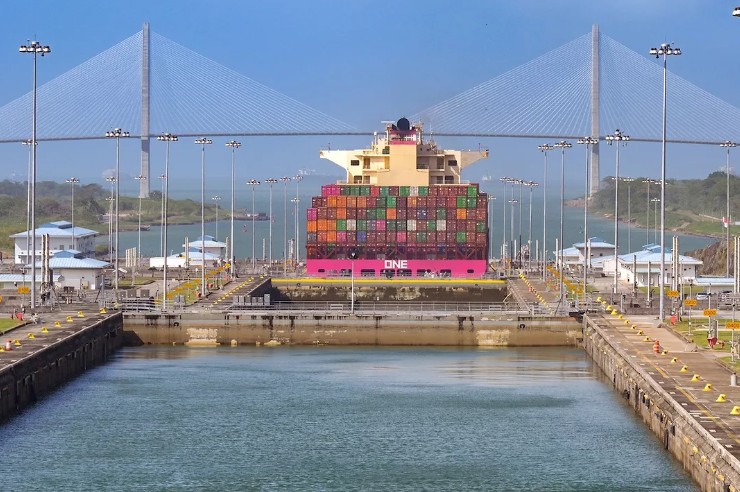
The sale process for two strategic ports at the Atlantic and Pacific entrances to the Panama Canal is creating a new flashpoint for global trade and geopolitical balance. According to information reported by SupplyChainBrain, China is demanding a controlling stake in the $22.8 billion sale of these ports on behalf of state-controlled shipping company Cosco. This demand has become a factor that effectively blocks the sales process.
The process began with a preliminary agreement reached in March between U.S.-based investment giant BlackRock and Swiss container shipping operator MSC. The agreement envisioned the acquisition of ports located at both ends of the Panama Canal and long operated by CK Hutchison. This move came to the fore following intense pressure exerted by U.S. President Donald Trump.
The Trump administration, in the early months of 2025, argued that China's influence over these ports posed a national security risk and stated that U.S. influence over the Panama Canal needed to be strengthened. Trump even explicitly stated that the U.S. could reclaim control of the Panama Canal if necessary. These remarks exerted serious diplomatic pressure on both the Panama administration and port operators.
Following months of negotiations and discussions with Panama Canal authorities and the Trump administration, it was announced that the ports would be sold to a consortium led by BlackRock. However, CK Hutchison stated in an announcement in August that it would be difficult to complete the agreement before 2026. This announcement revealed that the process was already progressing on fragile ground.
China's entry into the picture at the final stage has made the balance even more complex. According to The Wall Street Journal, Beijing is threatening to block the deal unless Cosco is given a majority stake. China's stance goes beyond its earlier expectation of equal partnership. Thus, the sales process has been driven into a practical deadlock between the parties.
Statements from Washington are quite clear. The White House, in a statement on December 15, said "Chinese control over the Panama Canal is unacceptable." This statement demonstrated that the U.S. views these ports not only as commercial assets but also as a strategic infrastructure element. From the U.S. perspective, the Panama Canal holds a critical position in terms of global trade flows as well as military and geopolitical balance.
On the Chinese side, the matter is not being treated solely as a port operations issue. In a statement to the Wall Street Journal, a senior Chinese official indicated that control of the Panama Canal ports would be used as a bargaining chip in upcoming U.S.–China trade negotiations. This approach reveals that the port sale has become part of a broader trade and power struggle between the two nations.
The overall picture shows that the ports surrounding the Panama Canal have been placed at the center of major power competition, far beyond global logistics networks. The ultimate outcome of the sales process will shape not only port ownership but also spheres of influence in global maritime shipping and the balance of control over trade routes.
Key Points
China is demanding a controlling stake for Cosco in the Panama Canal port sale.
The sales process was advancing under the leadership of BlackRock and MSC.
CK Hutchison stated that it would be difficult to complete the agreement before 2026.
The U.S. views Chinese control as a national security risk.
The issue has become a strategic bargaining point in U.S.–China trade negotiations.

