

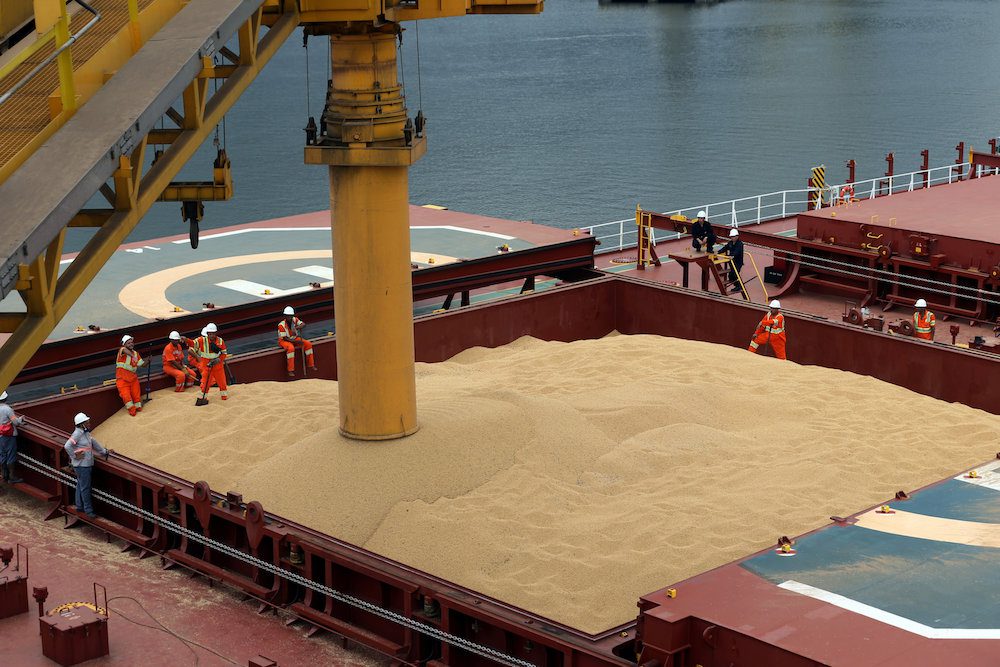
Chinese soybean importers have rapidly increased their purchases of shipments from Brazil as global market prices have fallen and the trade thaw between the U.S. and China takes effect. According to representatives of three major trading firms who spoke to Reuters, Chinese buyers have booked 10 shipments of Brazilian soybeans for December 2025 delivery and 10 additional shipments for the March–July period.
The primary driver of this activity is that South American soybeans have become more price-competitive compared to the U.S. market. Long pressured by high tariffs, Chinese buyers had turned to Brazil due to heavy tariffs imposed on U.S. soybeans. However, recent price dynamics have shifted the balance in favor of South America once again.
A representative from a Chinese oilseed crushing firm explained the situation as follows:
"Brazil is currently cheaper than U.S. Gulf. Buyers are taking advantage of the opportunity."
This price advantage has strengthened short-term stockpiling opportunities for crushers and feed producers in China.
A New Chapter in U.S.–China Agricultural Trade
Behind the price movement lies an agricultural trade agreement that emerged from the Donald Trump–Xi Jinping meeting held in South Korea last week. The U.S. administration announced that China would:
Purchase at least 12 million tons in the final two months of 2025,
Purchase at least 25 million tons annually between 2026–2028
of U.S. soybeans.
Although this information was officially disclosed by Washington, Beijing has not yet issued a clear statement regarding tariff reductions. A representative from another major trading firm issued this warning:
"We heard it from the U.S., but we cannot make decisions without confirmation from China."
Whether China will remove the additional tariff on U.S. soybeans is shaping up as the most critical factor determining short-term trading strategies.
Despite this uncertainty, China's state-owned company COFCO made its first purchase last week, acquiring three cargoes from the U.S. new crop.
Price Balance Favors Brazil
Brazilian soybeans for December shipments are selling at Chicago January futures +2.25 to +2.30 USD/bushel premium, while U.S. Gulf-origin cargoes are at +2.40 USD/bushel levels. Even this small difference makes Brazil advantageous in million-ton scale trade.
Chicago futures reacted to the activity:
Soybean futures prices rose nearly 1 percent,
The market reached a 15-month high.
According to traders, the main reason for this is heightened expectations of global demand as China signals its return to the U.S. market.
Fragile Balance in Global Trade
These developments underscore the strategic importance of soybeans in the global supply chain.
The U.S. continues its price-setting role through high export capacity.
Brazil can quickly respond to demand shifts with its competitive cost structure and large supply reserves.
China continues to diversify its supplies by leveraging price sensitivity in both the U.S. and Brazilian markets.
On the trade front, the critical factor in the near term will be whether China removes the tariffs it has applied to U.S. imports. Such a move could trigger significant price volatility in both South American and U.S. futures markets.
5. Key Takeaways:
China purchased 20 Brazilian cargoes due to price advantage.
Following the U.S.–China meeting, Washington announced large-scale purchase commitments.
No official statement from China on tariff reductions yet.
Brazilian prices have fallen below U.S. Gulf-origin products.
Chicago futures prices reached a 15-month high.
Author: SedatOnat.com

