

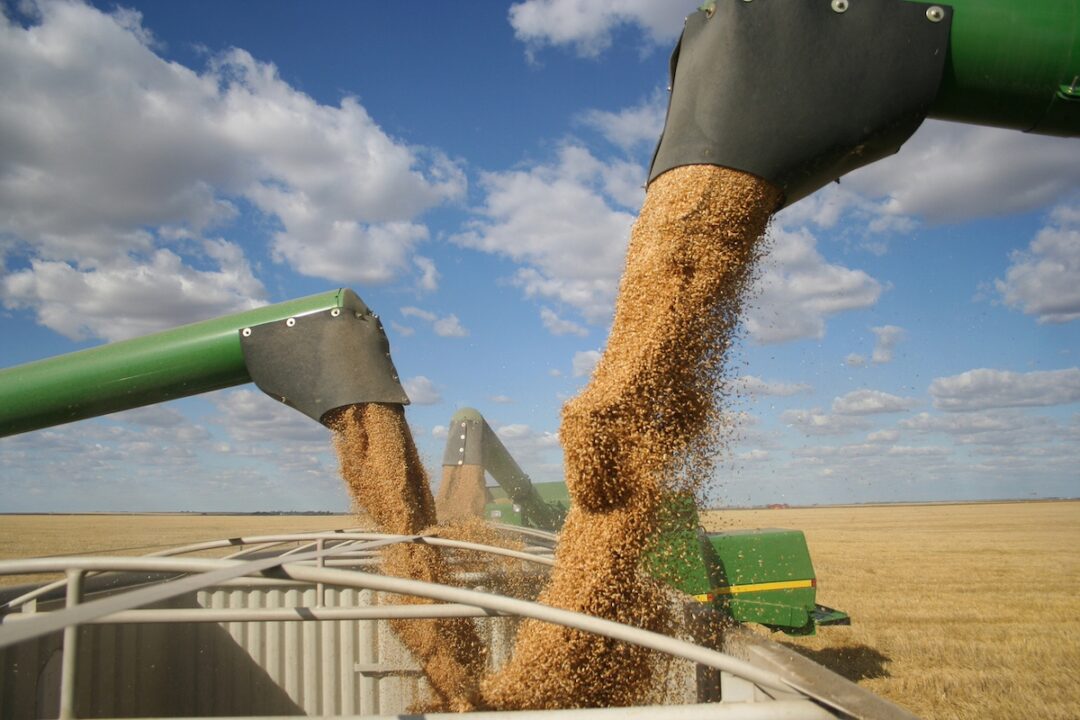
In retaliation for tariffs imposed by the United States on imported goods, China has implemented additional customs duties on agricultural products imported from the U.S. Under these measures, chicken, wheat, and corn imports from the U.S. face a 15% additional tariff, while soybeans, pork, beef, and fruits are subject to a 10% additional tariff.
\nThe U.S. began applying a 10% tariff on all products of Chinese origin in February, which it then increased to 20% in March. In response, China announced additional tariffs on U.S. agricultural products. A spokesman for China's Foreign Ministry stated that China would continue fighting to the end in the ongoing trade war with the U.S.
\nChina is the largest export market for U.S. agricultural products. In 2022, soybeans accounted for nearly half of U.S. agricultural exports to China. U.S. livestock and poultry exports to China fell from $1.7 billion in 2012 to $155 million in 2022.
\nThese tariffs have negatively affected the U.S. agricultural sector. As exports of soybeans, corn, and wheat declined, U.S. farmers' incomes decreased. Similar effects were seen in animal products such as pork and beef.
\nGlobal trade balances have begun to shift. As China reduced imports from the U.S., countries such as Brazil and Argentina increased their production to meet China's rising demand. A supply surplus of agricultural products emerged in the U.S. domestic market, leading to price declines. Farmers' profit margins narrowed and financial difficulties increased. The U.S. government activated support programs for farmers to mitigate the negative impacts.
\nChina's applied tariffs were not limited to agricultural products alone. Fifteen U.S. companies were prevented from purchasing Chinese products without special permission.
\nAdditionally, ten U.S. companies were completely prohibited from operating in China.
\nThe long-term effects of this trade war remain uncertain. While creating pressure on both economies, global trade volumes have contracted. Experts believe that the parties finding a solution through negotiations would be more beneficial for both their own economies and the global economy.
\nKey Points:
\n- \n
China has implemented additional customs duties on agricultural products imported from the U.S.
\n An additional 15% tariff has been imposed on chicken, wheat, and corn products, and a 10% additional tariff on soybeans, pork, beef, and fruits.
\n This step was taken as retaliation for tariffs applied by the U.S. on products of Chinese origin.
\n China is the largest export market for U.S. agricultural products.
\n The tariffs have caused a decline in income for U.S. farmers and led to supply surpluses in the domestic market.
\n China has imposed trade restrictions on certain U.S. companies.
\n While the long-term effects of the trade war remain uncertain, global trade volumes have contracted.
\n
---
\n\n-------------------
\n\nWe would be delighted to receive your feedback.
\nWe wish you happy reading from the start.

