

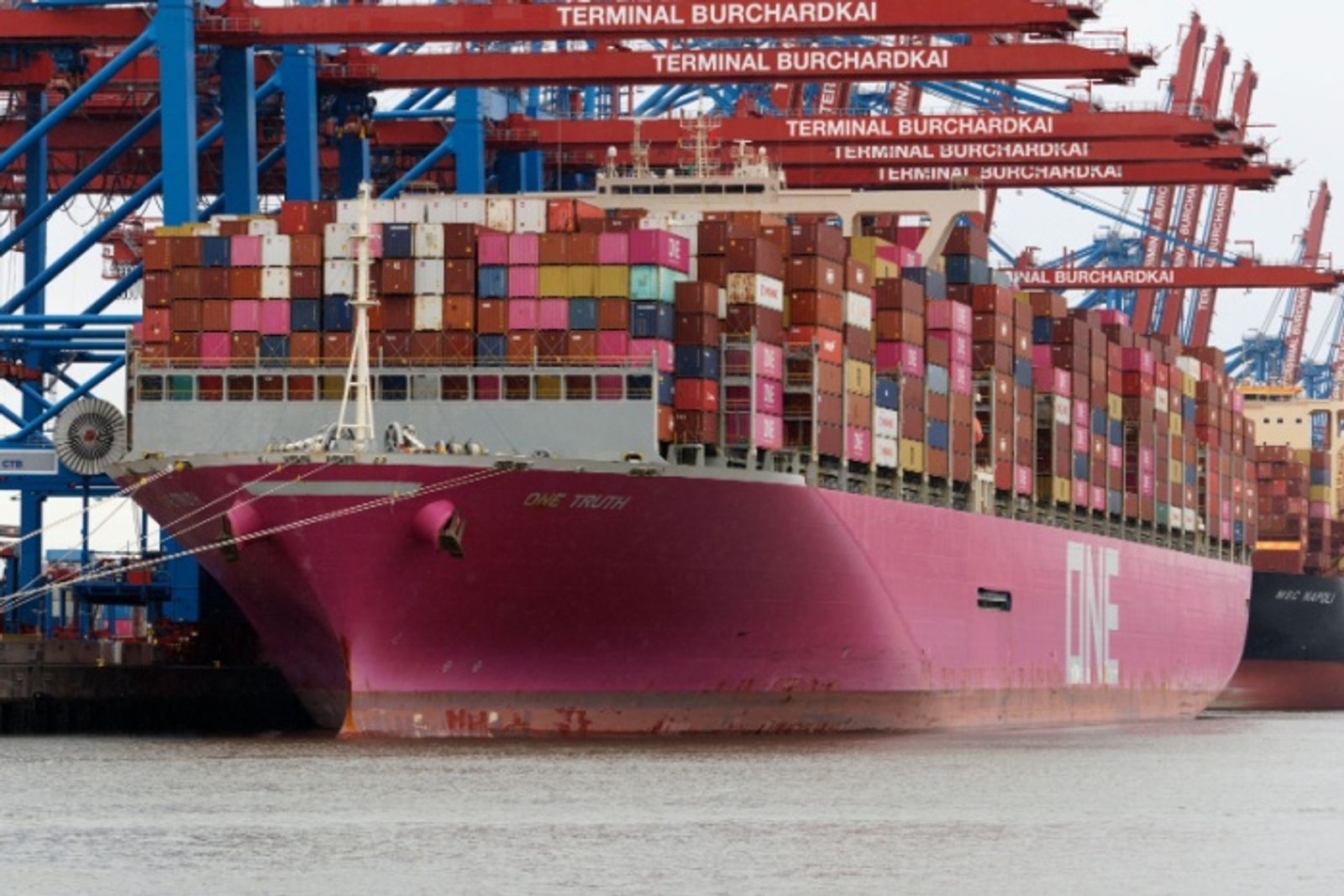
Persistent congestion in European ports clearly reveals that the region's major ports suffer from insufficient buffer capacity in both marine terminals and internal logistics networks. According to Kuehne + Nagel's SeaExplorer visibility tool, Europe's three main import gateways — Rotterdam, Antwerp, and Hamburg — remain in the "severely disrupted operations" category.
\nChantal McRoberts, advisory director at Drewry Supply Chain Advisors, notes that the root cause of congestion is Europe's major port network's poor elasticity against high volumes. The current modest improvement does not signify lasting relief; ports struggle both to digest accumulated workload and to manage seasonal transitions.
\nLack of buffer capacity renders the system fragile
\nMcRoberts summarizes capacity challenges in the European port system across three key points:
\n1. Terminals lack adequate storage and staging areas
\nWhen vessels arrive with larger-than-expected volumes, buffer areas for short-term container storage fill rapidly. This slows discharge and loading processes.
\n2. Hinterland transport (Northern Europe rail and barge networks) operates under severe strain
\n- \n
Insufficient train slots,
\n Barge delays,
\n Driver and truck shortages
\n
push port exits to bottleneck point.
\n3. System lacks flexibility against volume fluctuations
\n"The arrival of even a slightly larger vessel immediately squeezes the system," McRoberts says.
\nCongestion repeats as demand waves arrive
\nThe congestion cycle experienced in European ports throughout 2025 unfolded as follows:
\n- \n
Early summer saw intensity drop due to vessel schedule adjustments and blank sailing impacts.
\n September–October saw cargo volumes rise again on Asia–Europe lanes.
\n Terminal shelf systems and hinterland capacity could not absorb the new volume.
\n
Result: a "relief–congestion" cycle repeating.
\nMcRoberts notes that current recovery stems only from ports' efforts at load shifting and accelerating delayed vessel clearances.
\nThe solution is not only capacity investment: load distribution is essential
\nAccording to experts, European ports face difficulty expanding within their own limits; these terminals are already surrounded by dense urban areas. Thus, the solution lies not merely in increasing capacity, but in distributing load more widely across regional ports.
\nRecommended strategies:
\n- \n
Greater utilization of secondary ports (Gdansk, Zeebrugge, Wilhelmshaven, Koper, etc.)
\n Strengthening feeder networks
\n Accelerating rail and barge investments
\n Digitizing port–hinterland synchronization
\n
While major ports will continue to serve their primary gateway role, bringing surrounding ports into operation can ease congestion.
\nOutlook: Cargo flows will become more volatile
\nAs 2026 approaches, supply chain cycles will face increased volatility due to:
\n- \n
tariffs,
\n vessel route changes,
\n growing vessel sizes,
\n block train capacity constraints
\n
and other factors.
\nUnless European ports develop a "buffer space approach" to absorb this volatility, recurring congestion is inevitable.
\nKey Takeaways:
\n- \n
Rotterdam, Antwerp, and Hamburg are in "severely disrupted" status.
\n The core problem in European ports: buffer capacity shortage.
\n Congestion is structural, not seasonal.
\n Solution: More balanced distribution of cargo to secondary ports.
\n Hinterland infrastructure (rail–barge) is a critical bottleneck.
\n
----------
\n\n--------------------
\nAuthor: SedatOnat.com
\n--------------------
\n\n
