

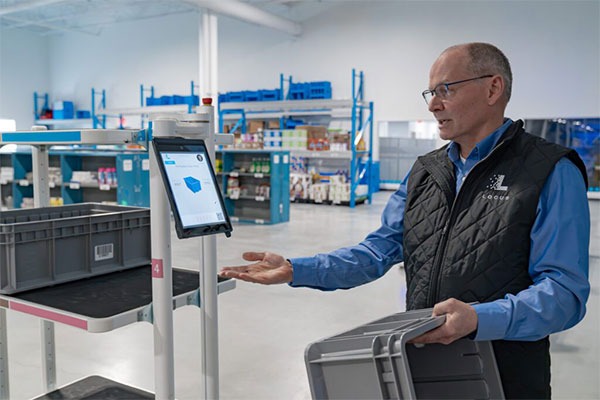
As e-commerce volumes continue to surge, the warehouse labor force is not expanding at the same pace. Warehouse and distribution centers operating across the United States are struggling to fill hundreds of thousands of open positions. According to a 2024 study published by Descartes, 76% of supply chain and logistics operations are experiencing severe labor shortages; with the heaviest impact felt in warehouse operations. 56% of these facilities report direct staffing gaps.
This situation represents far more than an operational challenge for businesses—it translates directly into lost revenue. The Instawork 2024 State of Warehouse Labor Report reveals that 43% of companies operating warehouse and distribution centers experienced revenue loss last year due to staffing shortages. Labor gaps create slower fulfillment rates, escalating operational costs, and mounting pressure on existing teams.
E-Commerce Growth Outpaces Available Workforce
According to U.S. Census Bureau data, e-commerce sales reached $304.2 billion in the second quarter of 2025. This growth forces fulfillment centers to operate with higher speed and accuracy. However, warehouse work—physically demanding, repetitive, and shift-based—struggles to attract labor.
The situation is particularly critical at warehouses near major ports. Instawork data shows these facilities operating at 95% capacity; yet 52% of them identify their biggest challenge as "finding reliable and skilled labor." Companies are spending more on recruitment and training than a decade ago; still, positions remain unfilled.
Seasonality and Physical Risks Deepen the Crisis
Peak seasons—year-end holidays and major promotional periods—push warehouses far beyond normal capacity. As temporary worker sourcing becomes harder, intensifying competition drives wages higher and increases turnover rates. This burden on full-time employees leads to higher error rates and delivery delays.
Additionally, the physical risks inherent in warehouse work make the labor shortage chronic. Rich Ives, Insurance Executive at Travelers, highlights three sharpening trends over the past decade:
rising retirement ages,
increasing employee turnover rates,
lengthening recovery periods following workplace injuries.
This dynamic erodes productivity while driving up insurance and healthcare costs.
Solution: Warehouse Robotics and Automation
Under these conditions, warehouse robotics is no longer "optional" in the sector—it has become a standard solution. The global warehouse automation market is expected to reach $59.52 billion by 2030. Modern automation solutions combine autonomous mobile robots (AMRs), robotic picking arms, automated guided vehicles (AGVs), AI-powered routing, and AS/RS (Automated Storage and Retrieval Systems).
AMRs in particular take on high-volume, repetitive tasks in warehouses, freeing workers to focus on higher-value activities. These systems integrate with existing WMS (Warehouse Management Systems) infrastructure, reducing manual error rates and increasing throughput.
Flexibility and Scalability Advantages
Today's warehouse robots differ from legacy fixed automation systems by offering mobile, flexible, and phased deployment models. Rather than overhauling an entire facility, companies can introduce automation step by step. AMR fleets can be scaled up or down according to seasonal demand.
On the financing side, robots-as-a-service (RaaS) and leasing models are gaining prominence. This enables companies to adopt automation without large upfront CAPEX. With maintenance, software updates, and service handled by the provider, operations benefit from a predictable OPEX model.
Worker Perspective and Operational Gains
Automation is not displacing the workforce—it is supporting it. 58% of workers and 55% of unions view automation positively. 43% of companies using automation report reduced workloads and improved morale.
Robots handle heavy lifting and repetitive motions, reducing workplace injuries and enabling workers to take on less strenuous and safer tasks.
Overall Assessment
Warehouse robots have become essential tools for ensuring the sustainability of fulfillment operations in the face of e-commerce growth and persistent labor shortages. Automation—with its speed, accuracy, safety, and scalability advantages—is preparing warehouses for the future.
Key Takeaways:
76% of logistics operations experience labor shortages.
56% of warehouses report direct staffing gaps.
43% of companies experienced revenue loss due to labor shortages.
The global warehouse automation market will reach $59.5 billion by 2030.
AMR, AGV, AI routing, and AS/RS systems are core solutions.
Automation boosts worker satisfaction and safety.
Author: SedatOnat.com
We would be delighted to hear your feedback.
Wishing you happy reading.

