

Germany Issues First Operating License for TSB Magnetic Levitation Train: "Transrapid Trauma" Officially Overcome
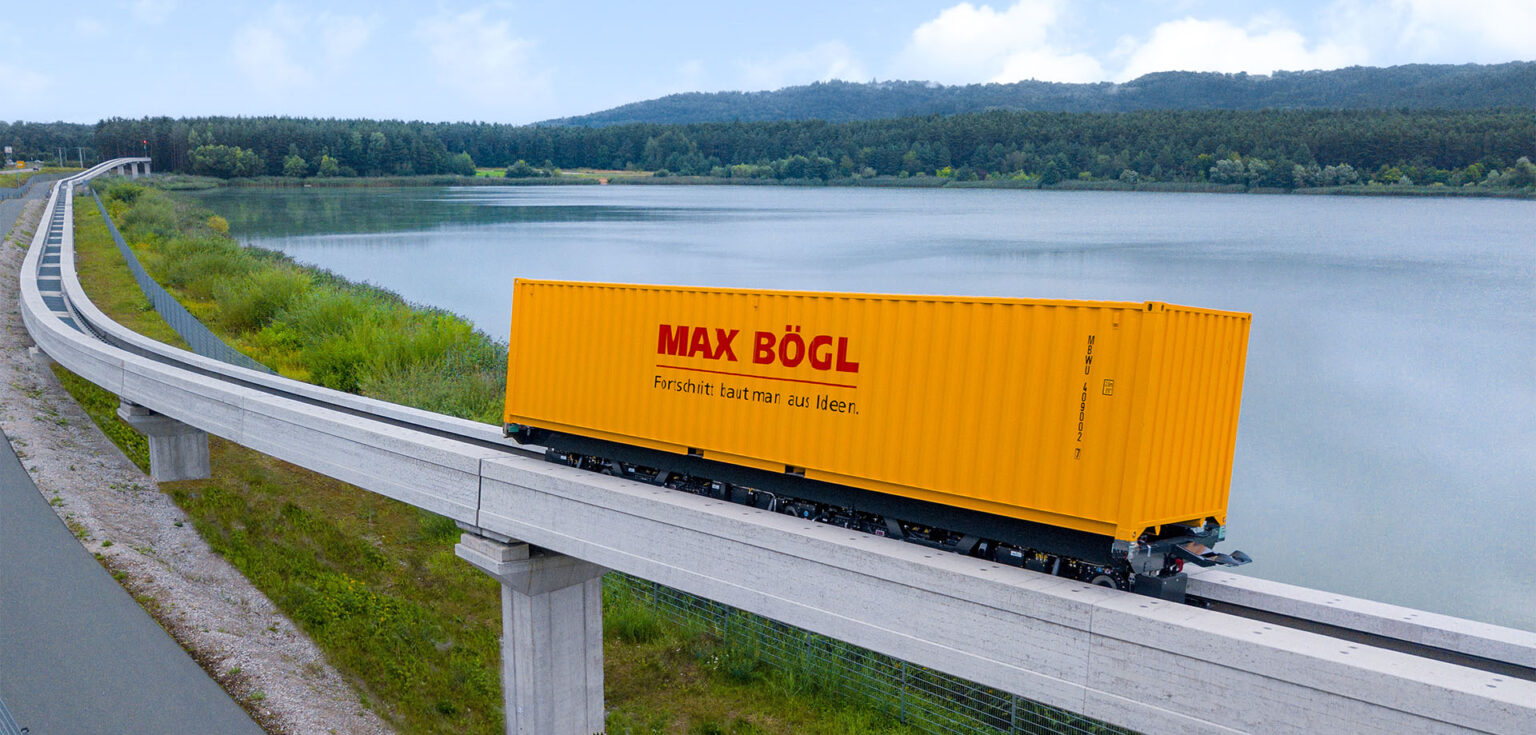
Europe's long-standing regulatory barriers to maglev (magnetic levitation) technology have been overcome through a historic decision from Germany. The Federal Railway Authority (EBA) announced that it has granted a full operating license for passenger transport to Transport System Bögl (TSB). This license confirms that TSB technology meets Germany's stringent safety and technical standards, and marks a turning point for maglev research in Europe, which has stalled since the cancellation of Transrapid projects.
With the EBA's approval, TSB Betriebs GmbH can now legally operate as a railway infrastructure company. This distinction, mandated by German railway law, fulfills the requirement that infrastructure managers and operating units be independent from one another. TSB has thus evolved from a mere technology provider into a market-ready transport system compliant with infrastructure and operations models.
A New Generation of Maglev Beyond Transrapid
TSB's most significant distinction is its focus not on speeds exceeding 400 km/h like the previous-generation high-speed Transrapid, but on the short-to-medium distance urban mobility segment. The system, with an operating speed of 150 km/h, is optimized for commuter corridors such as airport connections, university shuttle routes, suburban-to-urban links, or fairground connections.
Max Bögl Group CEO Stefan Bögl described this license as "a first in Europe":
"This confirms that our technology is not just a vision, but a market-ready solution for the mobility of the future."
This statement demonstrates that the company's decade-long research and development efforts on modular maglev lines have gained official recognition.
Key Technical Characteristics of TSB Architecture
The TSB system differs distinctly from conventional rail systems and earlier maglev designs:
Speed: 150 km/h, operating within the low-to-medium speed efficiency band.
Driverless Operation (GoA4): Provides fully automatic driving capability with metro-level service reliability.
Propulsion: Linear motor technology is embedded in the guideway; the vehicle houses all propulsion equipment and magnetic levitation mechanisms within its body "enveloping" the guideway.
Infrastructure: Prefabricated concrete tracks enable rapid deployment, operating more quietly and requiring less maintenance compared to steel rail systems.
Noise & Routing: Low noise emissions and tighter turning radius enable adaptation to urban environments.
This approach makes TSB a more scalable, modular, and city-focused solution, independent of the massive costs encountered by high-speed maglev projects.
Next Step: Nuremberg Pilot Project
Following the license, attention has turned to where Germany's first commercial maglev line will be built. The most advanced discussions are being conducted in the city of Nuremberg. Feasibility studies for a TSB urban line connecting the city's university campus, trade fair center (Messe), and Klinikum Süd—locations generating high passenger demand—are ongoing. The license grant may accelerate decision-making processes by the city council and federal authorities.
Experts describe the absence of a commercial maglev line in Germany, a nation positioned as a technology leader in this field, as a "Transrapid trauma." The TSB license is being interpreted as the most concrete evidence that Germany is prepared to overcome this innovation gap in the sector.
Significance for European Transport Policy
The EU's Fit for 55 and Green Mobility programs encourage the addition of low-noise, low-emission next-generation solutions to existing urban transport infrastructure. The TSB system:
reduces carbon footprint through electric and automatic operations,
fills a complementary role on medium-distance routes where metro and LRT capacity is insufficient,
creates advantages for urban expansion projects due to its rapid constructability in new urban areas.
With the TSB license, Europe is expected to shift toward "maglev 2.0"—the new generation of low-to-medium-speed magnetic systems.
Key Points:
The EBA granted TSB maglev system an operating license for passenger transport.
TSB became Europe's first commercial maglev system to receive a license.
150 km/h speed, GoA4 full automation, linear motor, and prefabricated concrete tracks are among the core features.
The license paves the way for a potential pilot line in Nuremberg.
The decision is viewed as a critical threshold in the rebirth of European maglev projects since Transrapid.
Author: SedatOnat.com
We would be delighted to hear your feedback.
Wishing you happy reading.

