

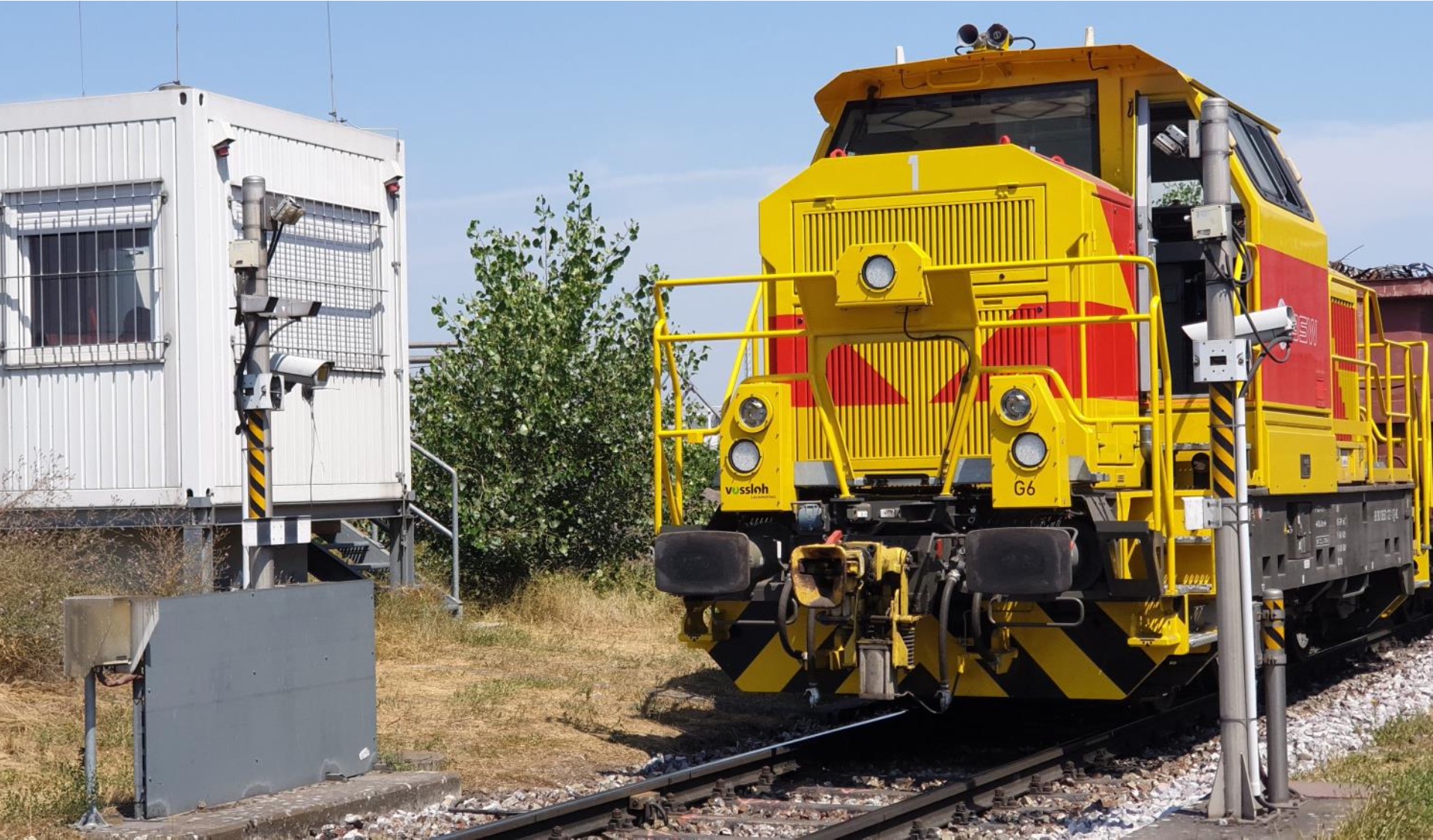
Automatic identification and inspection of railway wagons plays a critical role in enhancing operational efficiency and ensuring safety in rail transport. Himmelsbach GmbH, with 25 years of experience in this field, holds a leading position in the sector with its AI-powered solutions.
The company's automatic identification and inspection systems initially began with the recognition of UIC wagon numbers, and the number of recognizable elements has increased significantly with the integration of artificial intelligence 15 years ago. These systems have the capacity to record from nearly every angle in temperatures ranging from -40 to 60 degrees Celsius, day and night. Today, they provide services across a broad spectrum—from inspecting wheels and brake blocks to checking whether tank wagon domes are closed and determining the type of metal scrap being transported. Additionally, technology for creating 3D images of wagons has been deployed in recent years.
Michael Himmelsbach, general manager of Himmelsbach GmbH, notes that the widespread adoption of 5G technology has provided significant advantages, particularly in remote regions of the world. He states that systems can now be operated with just a 230-volt power connection, and all other operations can be performed wirelessly.
The company also provides software interfaces for accessing and processing collected data in the main systems used by railway companies. For example, by integrating with Schenck Process systems, the company handles identification while they perform weighing operations. XML-based interfaces are commonly used for these integrations.
A basic Himmelsbach GmbH installation includes components such as standard cameras, housing, LED flashes, and laser distance sensors. The main components are manufactured by the company itself. A simple setup consisting of cameras placed on the left and right sides of the rails, poles, cabin, and software interface costs approximately €40,000. More complex gateway systems can cost up to twice this amount.
In 2023, the company completed at least 6 new installations at various refineries and steel mills. It also completed its first installation in Thailand that year. However, due to the war in Ukraine, the company suspended its operations in Russia, and the fate of its installations in the Donbas region remains uncertain.
Himmelsbach GmbH has completed approximately 140 installations worldwide. Notably, two systems operate on the intercontinental Marmaray suburban line in Istanbul, one on each the European and Asian shores.
Key Points:
Himmelsbach GmbH has 25 years of experience in automatic identification and inspection of railway wagons.
The company's AI-powered systems can operate across wide temperature ranges and in different lighting conditions.
Integration of 5G technology enables systems to operate more flexibly and wirelessly.
Himmelsbach GmbH has completed approximately 140 installations worldwide, including systems on the Marmaray line in Istanbul.
The company provides XML -based software interfaces for processing collected data, enabling integration with other industrial systems.
Your feedback would be greatly appreciated.
Wishing you happy reading.

