

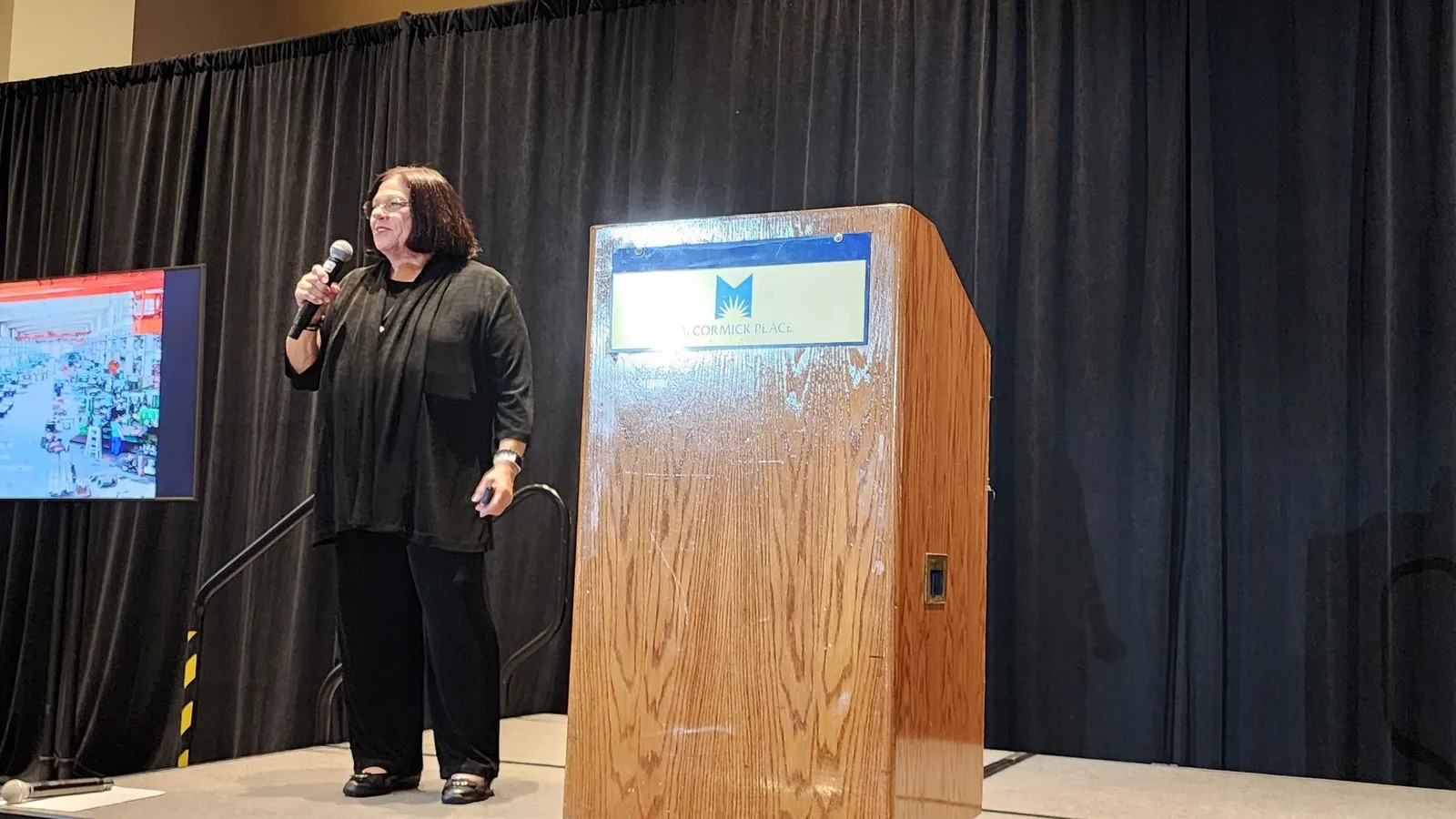
The long-debated "reshoring" agenda in the United States has gained renewed importance as of 2025. However, Rosemary Coates, Director of the Reshoring Institute, says this transformation lies somewhere between "yes and no" — it is partially possible, but a large-scale and rapid return is not realistic.
Coates recalls that in the 1990s and early 2000s, American companies operated with the goal of "getting to China as quickly as possible," which became a reflex across the sector. Few firms at that time gave thought to long-term strategy, risk, or infrastructure. While the trend began to reverse after the 2012 elections and China discussions, the real turning point emerged with the US-China trade wars.
C-suite white paper: "We want to manufacture in the US, but only if the economics allow"
In 2025, the Reshoring Institute conducted interviews with 18 major US company executives and identified these common trends:
CEOs have halted investment and hiring; they do not want to move without clarity on the trade environment.
All of them would prefer to manufacture in the US, but say it is not possible without cost advantages.
Tariff costs will inevitably be passed on to consumers.
All executives are evaluating Mexico as an alternative to China.
The "China +1/+2" model is now the new standard.
According to Coates, one of the fastest growing trends is movement toward Mexico. Both Chinese and American companies are setting up manufacturing facilities in Mexico to benefit from USMCA advantages. The wage differential is striking: hourly wages in San Diego stand at $17.25, while in Tijuana they are $2.59.
The type of manufacturing that can return to the US: not low-skill labor, but sophisticated production
According to Coates, the manufacturing that can feasibly return to the US is not labor-intensive sectors like footwear, textiles, or low-budget electronics assembly — sectors that traditionally employ workers for long shifts at low wages.
Manufacturing in the US must be based on a modern model:
Robotics and automation
3D printing
AI-based production scheduling systems
MES systems
High-precision machinery
In Coates' words:
"Manufacturing in the US is clean, automation-supported, based on shorter working hours, and generally requires higher skill levels."
For this reason, footwear or small electronics manufacturing cannot realistically return to the US; however, advanced machine manufacturing, chip assembly, precision metal processing, and automation-heavy production can make a comeback.
Critical infrastructure the US lacks: factories, workforce, transportation, energy
Coates lists the most critical obstacles facing the US as follows:
1. Skill shortage
The US does not face a labor shortage so much as a skills gap.
Particularly:
welders
robot operators
electrical technicians
machinery specialists
are in insufficient supply.
2. Factory shortage
The US lacks "the land and infrastructure suitable for building thousands of new factories."
Building a new factory requires:
roads, bridges, ports, logistics capacity
high energy demand
and the US electrical grid cannot handle the current load.
3. Energy infrastructure
Next-generation production lines require high energy intensity; the US grid needs 10–15 years of investment to support this.
4. Logistics weaknesses
In some US regions, transportation to a port can take 3 days — which is not competitive for global supply chains.
Which products can be manufactured in the US, and which cannot?
The Reshoring Institute evaluates whether a product can be manufactured in the US based on BOM analysis.
If more than 50% of a product's cost is labor, US manufacturing is not economically viable.
Therefore:
high labor-intensity products → China, Vietnam, Mexico
machine-intensive manufacturing → US or Mexico
Coates' examples:
Footwear, small electronics: will not return
Textile weaving facilities: feasible through automation
High-technology manufacturing: ideal target for the nation
Key Takeaways:
A complete transformation of US manufacturing is not possible, but a strong resurgence in sophisticated manufacturing can occur.
CEOs want US manufacturing, but cost calculations are decisive.
Mexico is the strongest alternative with low labor costs and USMCA advantages.
The US's greatest obstacles are: skills gap, factory infrastructure, energy capacity, logistics weakness.
Labor-intensive manufacturing will not return; automation-focused production can.
For reshoring, robotics + 3D printing + AI + automation are critical.
Author: SedatOnat.com
We would be delighted to receive your feedback.
We wish you happy reading in advance.

