

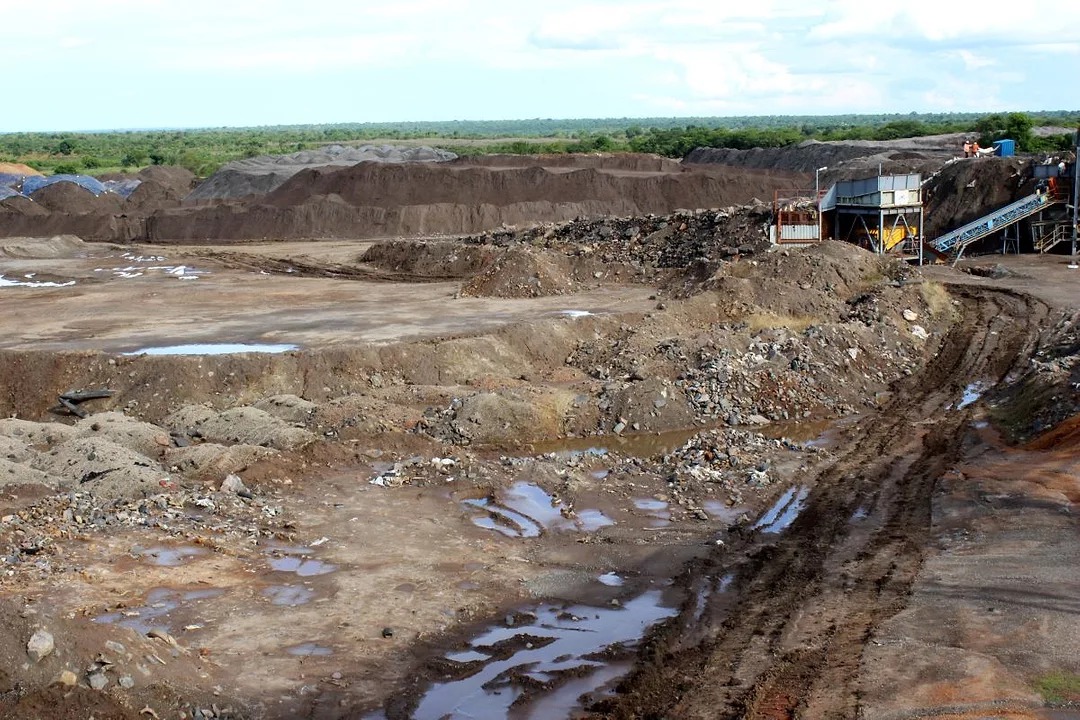
The United States is taking one of its most aggressive economic and geopolitical steps in Africa in late 2025 to secure its critical minerals supply chain. The U.S. International Development Finance Corporation (DFC) has announced plans for financing totaling over $1 billion to transform both mining production and export infrastructure in the Democratic Republic of the Congo (DRC). This financing is aimed at establishing supply security for strategic minerals that rank among U.S. national security priorities.
The DFC is working on two main projects:
1. Copper-Cobalt Partnership Granting the U.S. "First Refusal" Rights in Critical Minerals
The DFC plans to provide financing for a new copper–cobalt venture established between Congo's state mining company Gecamines SA and Switzerland-based Mercuria Energy Trading. The venture represents one of the most critical links in the global battery metals supply chain:
Cobalt: A key component of electric vehicle batteries.
Copper: Essential for energy transmission, defense electronics, and high-technology infrastructure.
Gecamines announced that this partnership will provide U.S. industries with right of first refusal. In other words, U.S. companies will have priority purchasing rights on critical minerals produced by this new venture. This right creates a strategic advantage for the U.S. against China's extensive mining influence in Congo.
2. Congo's New Trade Gateway to the Atlantic: Lobito Corridor and Railway Rehabilitation
The U.S. also aims to strengthen the Lobito Corridor logistics line extending to Angola's Atlantic coast. Congo's mineral exports, currently directed predominantly southward (Zambia) or eastward (Tanzania), will be redirected westward—toward the Atlantic—through the new strategic agreement. This is critical for the U.S. because westward-oriented logistics provide access to a geography where Chinese influence is more limited.
The DFC is offering financing exceeding $1 billion to Portugal-based Mota Engil for the rehabilitation and operation of the Dilolo–Sakania railway line. This line completes the critical missing link connecting Congo's mining regions to Angola's Lobito Port. The project will create faster and more secure export flows between regional countries, providing an alternative to China's dominant Belt-and-Road connections.
U.S. Strategic Rationale: Attempting to Decouple China from the "Critical Minerals" Chain
President Donald Trump has made supply security for critical minerals one of the highest national priorities for 2025–2026. As part of this effort, the U.S. is signing successive new agreements with African countries.
Today, more than 70 percent of global cobalt processing capacity is in the hands of Chinese companies. The primary motivation for the U.S. to enter these joint development projects with the DRC is to loosen China's dominant influence in mineral supply and free American defense industry and high-technology sectors from dependence.
Transformative Impact for Congo
The DRC currently supplies a large portion of global production in numerous critical minerals, including copper, cobalt, lithium, tantalum, and manganese. Enhancing the country's westward export capacity both reduces Congo's logistics dependence and creates an important incentive to attract private sector investments to the region.
Geopolitical Implications
The DFC's financing commitment represents a new chapter in the U.S.-China competition over Africa's mineral resources. The U.S. gaining early-stage access to Congo's mining supply chain will have long-term strategic consequences for rare metals and the battery supply chain.
Key Points:
The U.S. plans financing exceeding $1 billion to secure Congo's critical minerals supply chain.
The Gecamines–Mercuria partnership will provide the U.S. with right of first refusal on critical minerals.
The Dilolo–Sakania railway line connecting to the Lobito corridor is to be financed by the U.S.
The U.S. goal is to reduce China's dominance in critical minerals.
Congo's westward (Atlantic-oriented) exports could transform regional logistics.
Author: SedatOnat.com
We would be pleased to receive your feedback.
Wishing you happy reading.

