

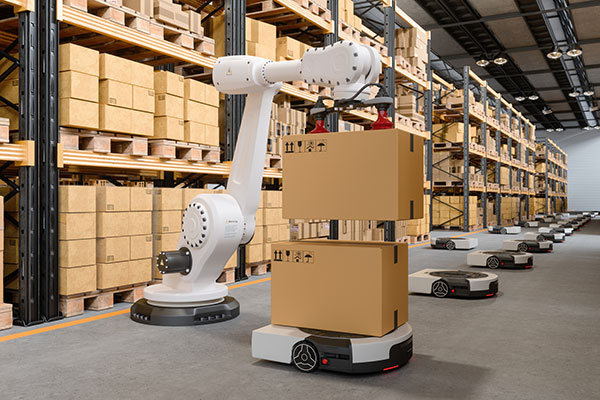
The U.S. industrial sector is preparing for the most comprehensive automation wave in decades. According to new research published by RobCo, 95% of industrial companies operating in the U.S. plan to deploy new automation solutions by 2028. The research encompasses 400 senior executives from different sectors including manufacturing, construction, engineering, and healthcare, and demonstrates that automation is becoming the default operating model rather than an exception.
The fundamental drivers behind this transformation include labor shortages, reshoring, and federal incentives. Companies note that with rising domestic production targets, the existing workforce is insufficient to meet this growth. Automation is being positioned as a strategic tool to fill this gap.
Current State: Robots Are No Longer on the Sidelines
According to the research, approximately one-third of U.S. companies currently use robots actively. However, what is truly striking is how rapidly this proportion will increase. Among participants:
54% are currently testing robots or planning to deploy them in the near term.
47% are using AI-powered automation solutions.
94% have connected their machines to digital systems at least partially and are monitoring production with data.
These figures show that automation is not limited to physical robots alone; it is a multi-layered transformation progressing alongside digitalization, data integration, and artificial intelligence.
Tangible Benefits: Productivity and Resource Utilization
Companies already using automation are satisfied with the results. More than half of participants report that through automation they have achieved:
higher productivity,
time savings,
lower error rates
Additionally, many companies report that automation provides waste reduction and improves material and energy utilization rates. This indicates that automation serves not only to address labor challenges but also to support sustainability and cost control objectives.
Labor Shortage: The Primary Driver
One of the strongest factors behind the push toward automation is persistent labor shortage. According to Deloitte projections, the U.S. will need 3.8 million new industrial workers in the coming years. However, there is a risk that 1.9 million of this need will go unmet.
Faced with this situation, companies view automation not as a layoff tool but as a prerequisite for sustaining operations. According to the research:
43% of companies report that after automation, employee workload decreased and morale improved.
58% of workers,
55% of unions,
take a positive view of automation. These figures demonstrate that social acceptance of automation has increased significantly compared to previous periods.
Cost Barrier and New Financing Models
Although automation demand is high, upfront cost remains a significant barrier. Companies report that:
47% cite high initial costs as slowing their investments,
27% experience a shortage of skilled workforce to install and manage systems.
To overcome these barriers, companies are turning to alternative solutions instead of traditional machine purchase models:
leasing,
state and federal grants,
robots-as-a-service (RaaS) models
are rapidly gaining traction.
RobCo CEO and co-founder Roman Hölzl summarizes this transformation with these words:
"Modern robot-as-a-service models significantly lower the barriers to entry into automation."
According to Hölzl, monthly or usage-based payment models allow companies to test new technologies without tying up large amounts of capital. With maintenance, software updates, and service support handled by the provider, downtime risk is reduced and projects can be implemented more quickly.
Toward 2028: Strategic Significance
The RobCo research reveals that automation is no longer an "optional" investment but has become a fundamental condition for competitive survival. When U.S. manufacturing revival targets, labor shortages, and productivity pressures converge, automation will move to the center of industrial operations over the next three years.
Overall Assessment
By 2028, automation, robots, and artificial intelligence in U.S. manufacturing will be the norm, not the exception. For companies, the question is no longer "Should we transition to automation?" but rather "How quickly and through which model should we transition?"
Key Takeaways:
95% of U.S. industrial companies plan automation by 2028.
54% are testing robots or will deploy them soon.
47% are using AI-powered automation.
The U.S. faces a 1.9 million industrial labor shortage risk.
Automation is largely welcomed by workers and unions.
Robot-as-a-service and leasing models are rapidly expanding.
Author: SedatOnat.com
We would be delighted to receive your feedback.
Wishing you happy reading in advance.

