

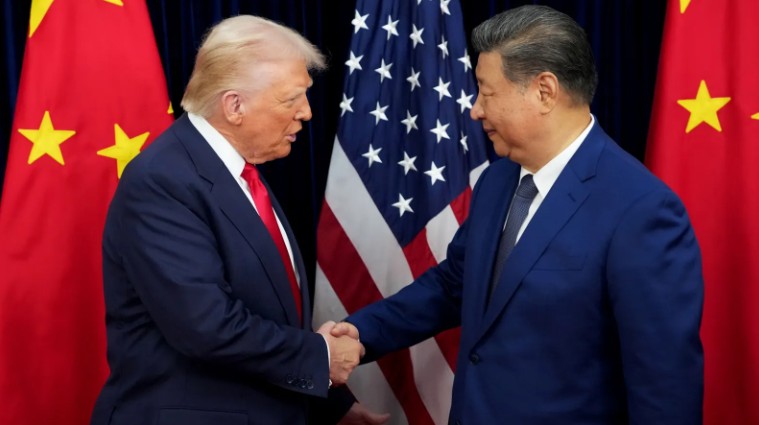
The United States and China, following months of negotiations and mutual trade sanctions, have reached an agreement on tariffs, export controls, and logistics investigations. On the morning of October 30, 2025, at a summit held at Gimhae Air Base in Busan, U.S. President Donald Trump and Chinese State President Xi Jinping announced a trade ceasefire agreement between the two countries.
Key provisions of the agreement
The most significant element of the agreement is the U.S. reduction of certain tariffs on imports from China. In remarks to journalists, Trump stated that customs duties on import items linked to fentanyl trafficking have been reduced from 20% to 10% and that the decision takes effect immediately.
A spokesman for China's Ministry of Commerce confirmed the reduction while disclosing that the U.S. will also suspend reciprocal tariffs applied to Chinese products for an additional year.
Nonetheless, U.S. Trade Representative Jamieson Greer emphasized that the total tax burden on Chinese goods will remain at approximately 47%:
"Certain Section 301 and Section 232 tariffs remain in place. The general average is between 45-47%, and for some products, this rate can reach as high as 100%."
Easing of investigations and export restrictions
The U.S. announced it will suspend its Section 301 investigation into China's maritime and logistics sectors for one year. This investigation had caused tensions between the two countries due to special fees and inspection measures applied by the U.S. to China-linked vessels at American ports.
Following this step, China announced it will lift its own retaliatory fees and port restrictions for the same period.
Additionally, China decided to defer the rare earth elements export restrictions it announced earlier this month for one year. In return, the U.S. will temporarily suspend export restrictions announced in September targeting companies with over 50% Chinese ownership, citing national security risks.
Agricultural and energy commitments
In a post on Truth Social, Trump stated that China has agreed to purchase "massive amounts of soybeans, sorghum, and other agricultural products" and begin a process to increase American energy imports. However, China's Ministry of Commerce stated that these commitments have not been formally confirmed and that negotiations are ongoing.
Both countries noted that the provisions of the agreement will be renegotiated annually and regular reviews will be conducted as needed.
Diplomatic messages from the summit
The agreement was finalized during the Trump–Xi meeting held at the Asia-Pacific Economic Cooperation (APEC) summit. This meeting represented the first face-to-face contact following escalating trade tensions throughout 2025.
During his remarks at the meeting, Xi Jinping noted that it is normal for the two countries to "naturally have differences of opinion under different circumstances" and added:
"In a sea full of winds and waves, it is our responsibility to keep the China–U.S. relations ship on the right course. Cooperation will ensure this giant vessel moves forward safely."
Global impact and market expectations
Economists note that this ceasefire will provide short-term relief on global supply chains, though full normalization will require a longer-term process. The suspension of restrictions, particularly on rare earth elements and high-technology components, is viewed as a positive development for U.S. manufacturing and the defense industry.
However, given that tariffs have not been fully eliminated and trade disputes have not been fundamentally resolved, analysts characterize this agreement as a "limited ceasefire."
The Trump administration's move is also viewed as a strategy to relieve economic pressure from U.S. farmers and the industrial sector ahead of the 2026 elections.
Key Points:
The U.S. has reduced certain tariffs on imports from China from 20% to 10%.
Reciprocal tariffs and Section 301 investigation have been suspended for one year.
China has deferred rare earth export restrictions for one year.
The U.S. has suspended the 50% ownership rule restricting exports to China-linked companies.
China has pledged to purchase large quantities of agricultural and energy products from the U.S.
The parties will renegotiate agreement terms annually.
The agreement was announced at the Trump–Xi summit in Busan and has created temporary relief in global supply chains.
Author: SedatOnat.com
Your feedback would make us happy.
Wishing you good reading in advance.

