

Bloomberg News reports that Chinese analysts expect the US to relax its recently enacted comprehensive export restrictions. The projections have intensified following trade talks scheduled ahead of a summit in South Korea this week between Chinese President Xi Jinping and US President Donald Trump.
Last weekend, US Treasury Secretary Scott Bessent announced during the ASEAN Summit in Malaysia that a preliminary agreement draft has been completed for submission to the two countries' leaders. The draft covers subjects such as tariffs, shipping fees, fentanyl trade, and export restrictions. Bessent also stated that he believed China would "delay for one year" the export restrictions on rare earth elements it recently implemented.
Expectations of "mutual concessions"
Beijing sources assess that the US could suspend the new export control rules announced on September 29 in exchange for this delay. The regulation in question subjects Chinese companies on Washington's "entity list" as well as their affiliates to the same restrictions. This rule particularly prevents Chinese tech giants like Huawei Technologies Co. from having indirect access to US-origin semiconductor products.
Beijing-based consulting firm Hutong Research stated in its analysis that "In Kuala Lumpur, the Beijing administration wants to create a quid pro quo mechanism whereby the suspension of the 'affiliates rule' is exchanged for a delay in rare earth restrictions." According to the analysis, the Trump administration will first pause implementation, then relax the regulation, while China will use this delay as "insurance" against the risk of the US backing down.
Noteworthy commentary from academics
Wu Xinbo, Director of the Fudan University Center for American Studies, stated that these talks will not be limited to tariff reductions alone, and progress can be made on export and technology restrictions. Wu said, "In this process, China expects progress not only on tariff exemptions, but also on technology transfer, the BIS 50% rule, and export controls."
Analysts point out that if Xi's talks with Trump only yield a limited "tariff ceasefire," disappointment could ensue. This is because rare earth elements are viewed as China's strongest commercial leverage in the global supply chain. For the US to demonstrate flexibility in this area, significant counter-concessions would need to be on the table.
Background and strategic importance
The BIS rule that went into effect on September 29 brought companies that are at least 50% owned by those on the blacklist under the same sanctions framework. This situation seriously complicated the indirect export to China of products such as artificial intelligence chips, semiconductor manufacturing equipment, and advanced technology products.
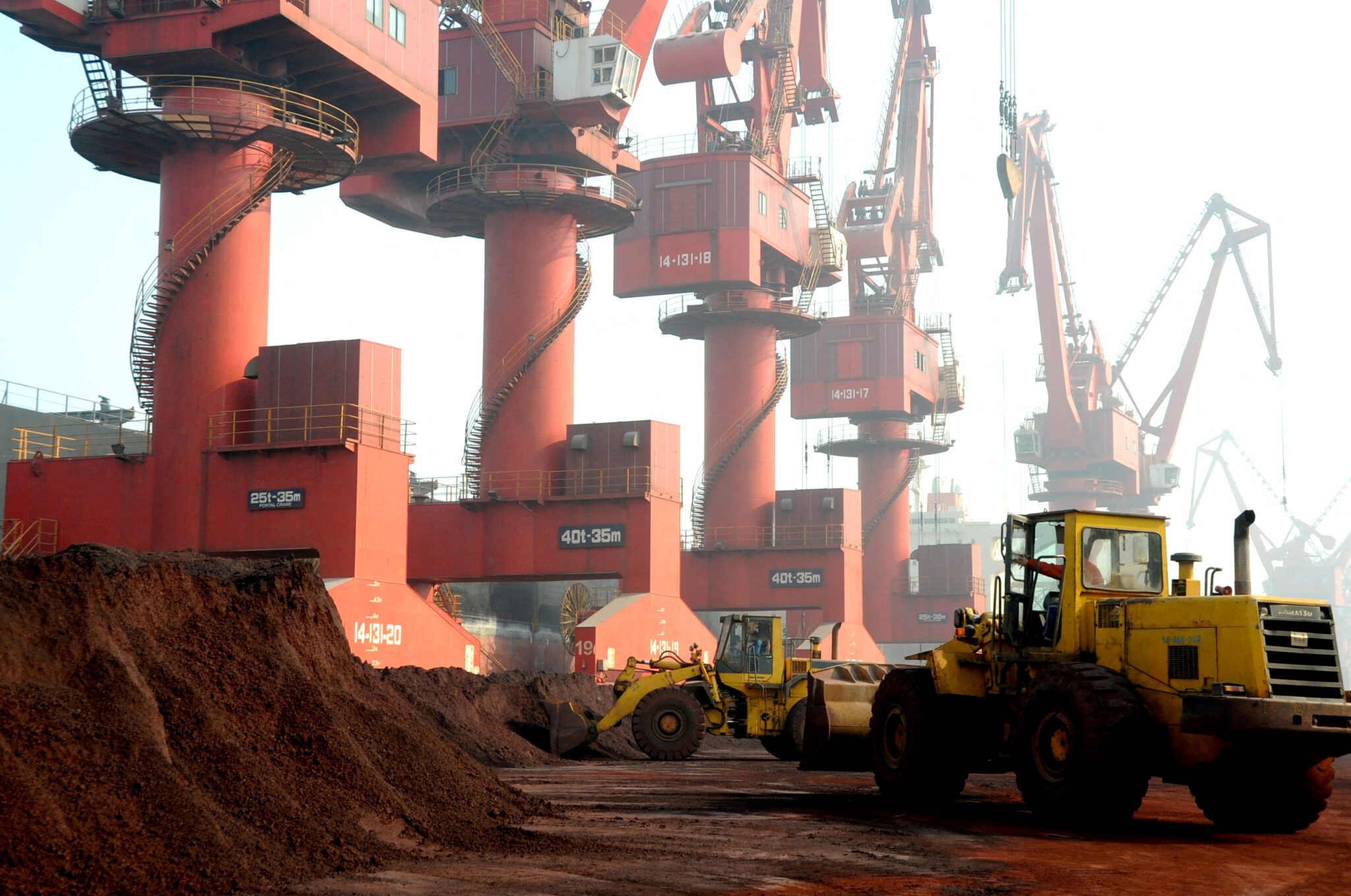
Beijing assessed this move as a step that damaged the balance created during US-China trade talks held in Madrid, and in response, it activated global control regulations on all products containing rare earth elements. These metals are at the heart of US manufacturing, from chips to electric vehicles. Following China's supply stoppage, some US factories were forced to halt production earlier in the year.
Previous precedents and political dimension
A similar situation occurred previously in June 2025. After China agreed to resume rare earth shipments, the Trump administration withdrew threats of restrictions on semiconductor design software, jet engine parts, and nuclear material sales.
However, according to experts, using such trade regulations as negotiation tools is a controversial approach, particularly among national security circles. Nonetheless, it is noted that Congress showed strong resistance to such measures during the Trump era, with intra-party opposition remaining at low levels, especially ahead of the election year and budget discussions.
In this context, the Xi-Trump meeting is not merely a trade negotiation, but also could represent a temporary truce in the technology war. Considering both sides' mutual dependence on energy, rare earth, and high-tech supply chains, any possible easing that emerges could provide temporary relief in global production chains.
Key Takeaways:
Chinese analysts expect the US to ease export restrictions.
US-China leaders will meet in South Korea this week.
Possible compromise: China will delay rare earth export restrictions by 1 year; the US will stop implementation of the "affiliates rule."
The new BIS 50% rule prevents firms like Huawei from gaining indirect access to US products.
Rare earth elements hold strategic importance for US industry.
A similar concession exchange occurred in June 2025.
Analysts note the agreement could represent a temporary ceasefire in the technology war.
Author: SedatOnat.com

