

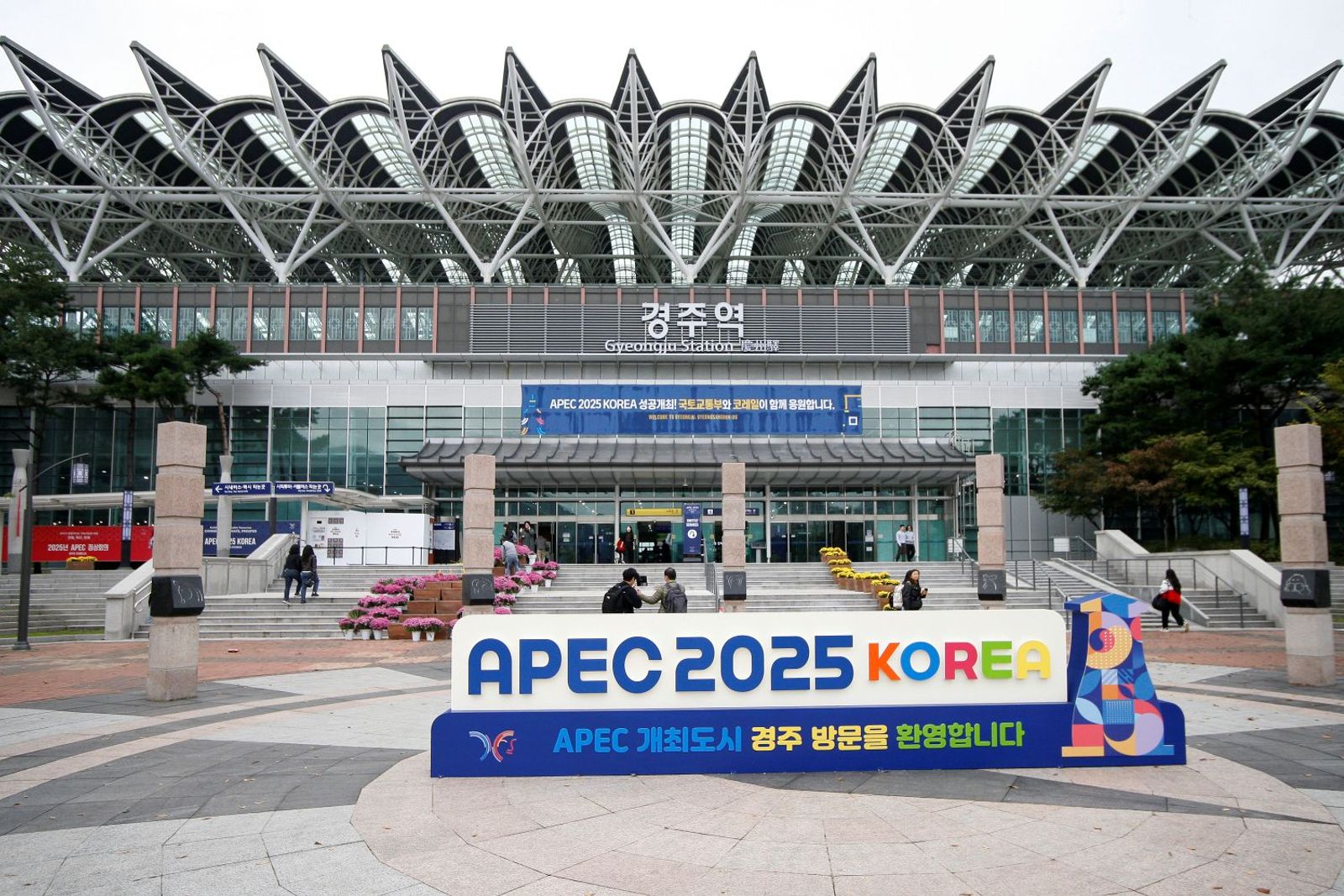
The United States and China have agreed to suspend reciprocal port fees for one year as part of efforts to ease trade tensions. The decision was announced during a meeting between US President Donald Trump and Chinese State President Xi Jinping on the sidelines of the Asia-Pacific Economic Cooperation (APEC) Summit held in South Korea on October 30, 2025.
\nThis development is being regarded as a key component of the comprehensive trade agreement being negotiated between the two countries. The agreement's overall objective is to ease escalating trade tensions that have accumulated over the past two years, including those related to tariffs, export controls, maritime investigations, and port charges.
\nScope of the Agreement
\nChina's Ministry of Commerce announced in an official statement that port fees applied to US-made, US-controlled, or US-flagged vessels in Chinese ports will be suspended for one year. Similarly, the US will remove port charges imposed on Chinese-made or Chinese-operated vessels.
\nThis decision represents a freeze on retaliatory port fees and control measures that have been applied in the maritime sectors of both countries over the past year. However, the ministry's statement did not provide clear information on when the suspension will take effect or a refund process for previously paid fees.
\nEasing Trade War Tensions
\nThe suspension of port fees is part of a "mini ceasefire" package announced at the end of October in the US-China trade war. This package also includes measures such as tariff reductions, deferral of export controls on rare earth elements, and the US halting its Section 301 investigation into China-linked companies.
\nTrump stated via Truth Social that the agreement is "fair, reciprocal, and economically win-win." A spokesperson for China's Ministry of Commerce said that both sides are advancing toward "restoring trade balance and building mutual trust."
\nSectoral Impact
\nThis decision represents a significant cost reduction for US and China-based shipping companies operating in international maritime transportation. According to experts, the suspension of port fees could reduce costs for container shipping companies operating on the Asia-Pacific route by 5–10 percent in the short term.
\nHowever, uncertainties remain. The effective start date and refund mechanism have not yet been clarified. Additionally, whether the one-year suspension period will be extended will be decided at annual review meetings to be held between the two countries.
\nSignificance of APEC Discussions
\nThe meeting between Trump and Xi in South Korea represents the most comprehensive in-person meeting in trade negotiations throughout 2025. During this meeting, the parties also made progress on issues such as agricultural purchases, energy cooperation, rare earth materials, and export restrictions.
\nDuring the meeting, Xi Jinping stated:
\n"As two major economies, it is natural that we have different views. However, these differences can be resolved through cooperation and dialogue. Keeping the trade ship on the right course is a shared responsibility of both our nations."\n
Experts characterize the suspension of port fees as "politically symbolic but economically relieving." This development is expected to increase stability in maritime transportation and reduce uncertainty in the global freight market.
\nKey Points:
\n- \n
The US and China have suspended reciprocal port fees for one year.
\n The decision is part of the trade ceasefire package announced during the APEC Summit in South Korea.
\n Fees applied to US-flagged vessels in Chinese ports and to Chinese-flagged vessels in US ports have been removed.
\n The effective start date and refund mechanism have not yet been announced.
\n The removal of port fees will provide short-term relief in maritime transportation costs.
\n The measure is part of the broader US-China trade ceasefire announced at the end of October.
\n According to experts, this decision is an important signal toward restoring confidence in trade relations.
\n
----------
\n\n--------------------
\nAuthor: SedatOnat.com
\n--------------------
\n\nYour feedback would be greatly appreciated.
\nWishing you happy reading.
\n
