

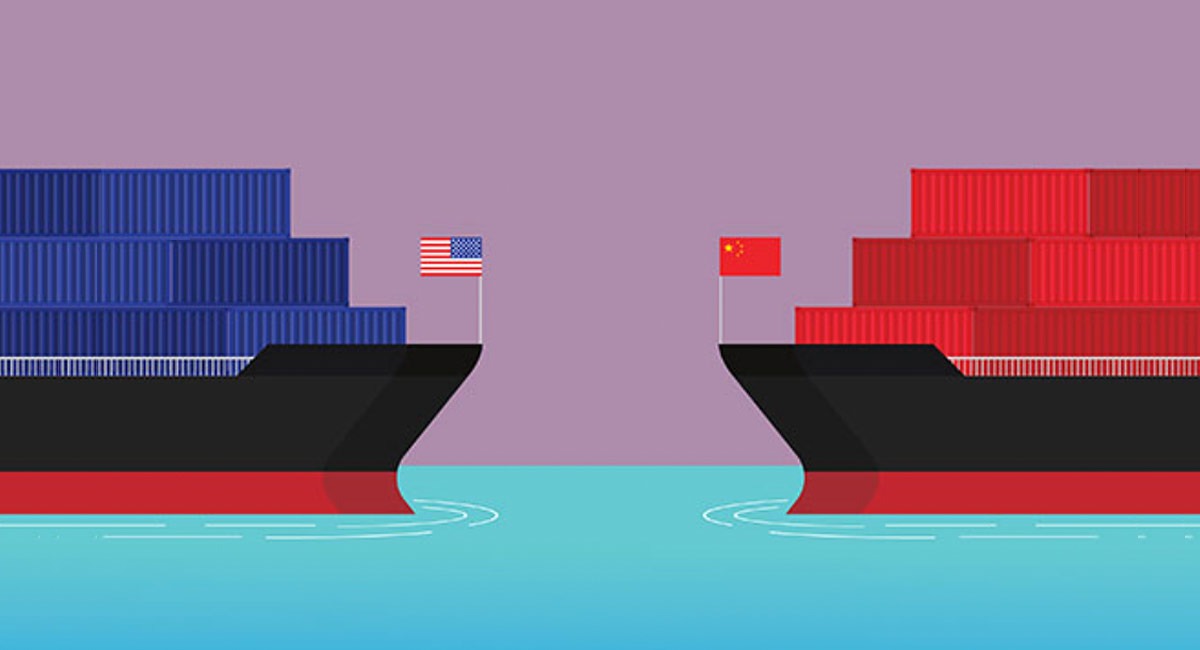
The waves of blank sailings that defined much of 2025 on major transpacific shipping routes between China and the US are finally beginning to subside. According to project44 data, voyage cancellations that peaked in the spring months due to tariffs have retreated sharply in recent weeks, with carriers shifting to more balanced capacity management.
Throughout 2025, freight flows in both the China → US and US → China directions exhibited extreme volatility due to importers front-loading orders to avoid tariff increases and carriers making aggressive cuts to rebalance supply and demand.
An 82–83 percent decline from spring peaks
China → US blank sailing rates have fallen 82 percent compared to peak levels in April.
Cancellations in the US → China direction have retreated 83 percent from their May highs.
This dramatic decline demonstrates that carriers have transitioned to more stable scheduling following the severe capacity constraints of the first half of the year.
Why was 2025 so volatile?
Transpacific routes, which typically experienced monthly cancellations between 10 and 32 during 2024, effectively entered "swing mode" in 2025.
The reasons:
Tariff shocks – New tariff announcements from the US administration
Front-loading – Importers bringing cargo forward
Carrier capacity miscalculation – Anticipation of demand weakness
Expectations of new tariffs in September – Creating a second minor spike
However, the new wave anticipated in October never materialized. Following the US–China trade ceasefire, carriers withdrew cancellation plans.
From the project44 report:
"Planned blank sailing figures are tracking low as we move into November."
Conditions remain more turbulent on other routes
While the China–US lane shows improvement, significant volatility continues on other global trade corridors:
US East Coast → South Asia: Blank sailings increased 186 percent
Asia → Canada: Blank sailings rose 80 percent
US West Coast → Europe: Blank sailings increased 60 percent
These increases suggest that demand for US exports remains weak and some countries are purchasing less cargo due to tariffs or economic slowdowns.
Q4 2025: More stable than expected
2025 was expected to be the most volatile year on record, but as we enter the final weeks of the year, the picture is more balanced:
Carriers have recalibrated capacity according to the new tariff regime.
The US–China ceasefire has eased market pressures by reducing cancellation plans.
Demand has stabilized as importers conducted heavy front-loading throughout the year.
project44 assessment:
"Planned blank sailing rates are tracking low as we move into November. Carriers have adapted to the new environment."
Industry takeaway: "The storm has passed, but the waters remain choppy"
The overall trend suggests stabilization as 2026 approaches. However:
Tariffs remain complex,
Carriers continue to revise capacity strategies,
Any new escalation in trade tensions could spark fresh volatility.
Nevertheless, blank sailing data confirms that the worst of 2025 has passed.
Key Takeaways:
China–US blank sailing rates have declined 82–83 percent from peaks.
October proved calmer than expected; November shows low planned cancellations.
The US–China ceasefire was the primary driver in reducing voyage cancellations.
Significant volatility persists on other routes (particularly South Asia and Canada corridors).
Carriers gradually adapted to the new tariff regime throughout 2025.
News Source: https://www.supplychain247.com/article/blank-sailings-ease-as-tariff-pressure-shifts
Author: SedatOnat.com

