

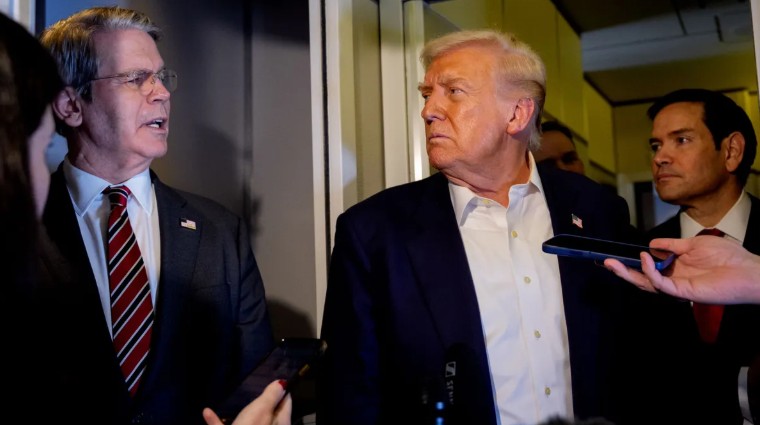
The United States signed a series of agreements strengthening trade relations in Southeast Asia, while simultaneously signaling a softening in trade tensions with China. The agreements concluded with Malaysia, Thailand, Cambodia, and Vietnam both establish reciprocal tariff rates and grant U.S. exporters access to new markets.
The agreements were announced during the ASEAN Summit in Malaysia. The White House announced that, following talks held over the weekend, it signed formal trade agreements with Malaysia and Cambodia, and framework deals with Thailand and Vietnam.
Under these agreements, tariffs on goods imported from the U.S. have been established, while market access has been expanded for industrial, agricultural, and high-technology products from the U.S. by the respective countries. Additionally, pursuant to a Presidential Executive Order signed by Trump in September, countries signing agreements are subject to a 0% tariff rate on certain products.
Trade Ceasefire with China on the Agenda
U.S. Treasury Secretary Scott Bessent and Chinese Vice Premier He Lifeng agreed on a new tariff agreement framework between the two countries during talks at the Malaysia summit. In a statement to CBS News, Bessent said, "We held discussions across a wide range of issues, from rare-earth magnets to agricultural products, and the fentanyl crisis."
Under this framework, the 100% additional tariffs scheduled to take effect on November 1 will be cancelled. China has also decided to postpone export restrictions on rare-earth elements for one year. Additionally, both parties agreed to extend the 90-day pause on retaliatory tariffs initiated in the spring.
Final approval was left to talks between Trump and Chinese President Xi Jinping on Thursday at the APEC Summit in South Korea.
Vietnam: Market Access and Digital Commerce-Focused Cooperation
The U.S.–Vietnam framework agreement aims to provide U.S. exporters with broader market access. The U.S. will continue to apply a 20% reciprocal tariff rate on goods imported from Vietnam. Vietnam committed to eliminating tariffs on industrial and agricultural products imported from the U.S. and to granting import permits for remanufactured goods.
The parties will cooperate on zero tariffs in digital commerce, acceptance of vehicles meeting U.S. security standards, reduction of non-tariff barriers, and strengthening supply chain resilience.
Thailand: Tariff Elimination and Agricultural Product Purchases
Under the U.S.–Thailand framework agreement, the U.S. will maintain a 19% reciprocal tariff rate. Thailand agreed to eliminate tariffs on 99% of goods, reduce restrictions on industrial and agricultural products, and eliminate digital commerce barriers.
Additionally, Thailand committed to purchasing $2.6 billion annually in U.S. agricultural products (corn, soybean meal, etc.) and acquiring 80 U.S.-manufactured aircraft.
Malaysia: 220 Billion Dollar Trade and Investment Agreement
The reciprocal trade agreement concluded with Malaysia encompasses both tariff rates and investment commitments. Malaysia will immediately eliminate tariffs on certain products and gradually reduce them over 5 to 9 years for others.
Malaysia also committed to $70 billion in capital investment in the U.S., purchasing $150 billion in U.S. semiconductors, aerospace, and data center equipment. Additionally:
Annual purchase of 5 million tons of LNG (liquefied natural gas),
Purchases of coal and telecommunications services valued at $204 million,
Purchase of 30 aircraft with 30 additional options.
The agreement includes comprehensive provisions on digital commerce, intellectual property protection, worker rights, and supply chain security.
Cambodia: Broad Market Access and Tariff Transparency
The U.S.–Cambodia trade agreement includes elements such as elimination of tariffs, termination of quotas, regulatory transparency, environmental and labor protections.
The U.S. will maintain reciprocal tariff rates for Cambodian goods below 19%, and apply 0% tariffs on certain products.
Cambodia committed to providing non-discriminatory and qualified market access for U.S. goods, as well as eliminating import licenses and other trade barriers.
The agreement will take effect within several weeks, and either party may withdraw with six months' written notice.
Key Highlights:
The U.S. signed new trade agreements with Malaysia, Thailand, Vietnam, and Cambodia.
Progress was made toward a trade ceasefire with China; new tariffs were suspended.
Vietnam provided market access in digital commerce and agricultural products.
Thailand eliminated 99% of tariffs and plans to purchase 80 aircraft from the U.S.
Malaysia made commitments in a 220 billion dollar investment and purchase agreement.
Cambodia eliminated quotas and tariff barriers for U.S. products.
The new agreements also cover areas such as digital commerce, intellectual property, and supply chain resilience.
Author: SedatOnat.com

