

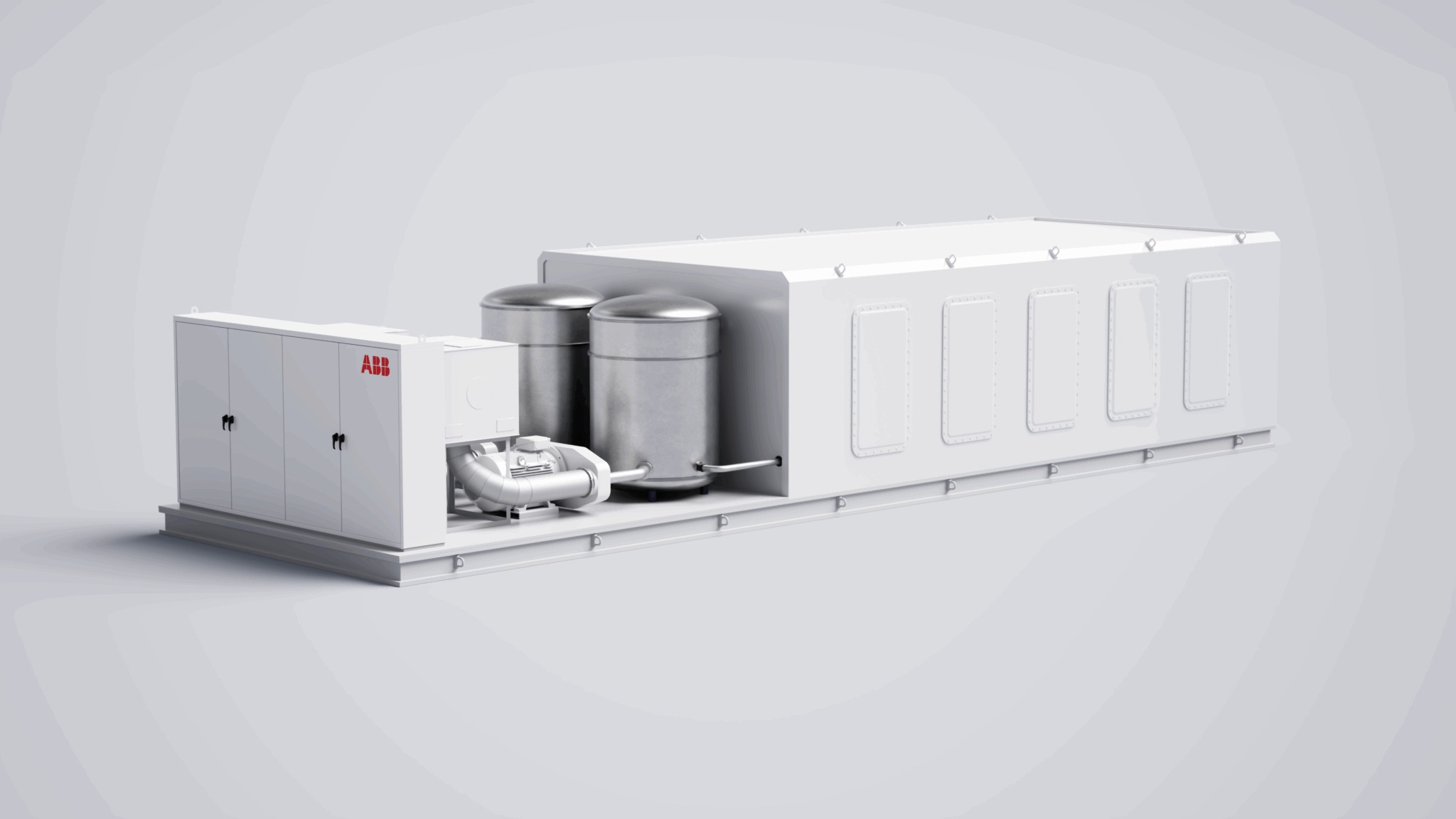
In line with decarbonization targets in the maritime sector, fuel cells are assuming an increasingly strategic role. In this context, ABB and HDF Energy have signed a Joint Development Agreement (JDA) to develop high-power fuel cell units for maritime applications. The agreement aims to pave the way for the use of hydrogen fuel cells at megawatt scale in large vessels.
\nThe collaboration builds on the foundation established by a Memorandum of Understanding (MoU) signed between the parties in 2020. With the new agreement, fuel cells are intended to move beyond pilot projects and become a commercially viable technology. According to the plan, pilot installations are expected to take place in 2028–2029, with series production to commence from 2030 onwards. This timeline reflects a trajectory parallel to the maturation process of alternative fuel technologies in shipping.
\nThe fuel cell unit to be developed is being designed with a capacity suitable for use in large seagoing vessels such as container feeder ships and liquefied hydrogen carriers. This represents a significant expansion of the application scope for fuel cells, which have so far been largely confined to small and medium-sized marine vessels. The project enables hydrogen-based power generation to become a power source that supports or complements main propulsion systems.
\nUnder the collaboration, HDF Energy is responsible for the design and manufacture of large-scale fuel cell units. ABB brings its expertise in power converters, power management systems, and electrical and control integration to the project. The parties work together on technical specifications, conceptual design, and commercial opportunities. This structure delivers not only an equipment development process but also an end-to-end systems integration approach.
\nOne of the most significant advantages that fuel cells offer in shipping is their potential for emission reduction. Particularly when green hydrogen is used as fuel, the carbon footprint approaches nearly zero. The high-power unit to be developed enables replacement of diesel auxiliary genset systems used on existing vessels with hydrogen fuel cells. This transition presents a critical opportunity not only for newly built ships but also for retrofitting existing fleets.
\nAt the technical core of the project lies the ABB Onboard DC Grid™ power system. This system enables the fuel cell unit to integrate seamlessly with other power sources such as battery energy storage systems (BESS). As a result, the operational range and flexibility of hybrid power systems improve. Fuel cells play a role not only in meeting steady loads but also in balancing fluctuating energy demands.
\nBeyond that, the developed unit is not limited to ship applications alone. Its use as an auxiliary power source within shore power and charging infrastructure at ports is also under consideration. Particularly in ports with limited grid capacity, fuel cells position themselves as an important support tool for meeting peak power demands. This approach creates a more integrated electrification ecosystem between shipping and port infrastructure.
\nHDF Energy CEO Hanane El Hamraoui emphasizes that this collaboration offers a practical and scalable solution for decarbonizing the maritime sector. ABB Marine & Ports President Rune Braastad notes that significant progress has been made for some time in developing applicable fuel cell solutions for large vessels, and this agreement advances the process one step further.
\nOverall, the ABB and HDF Energy collaboration demonstrates the potential for fuel cells to transition from being an auxiliary technology in shipping to becoming a key component of the main power architecture. This step shows that decarbonization targets in shipping are increasingly grounded on a more realistic technical and commercial foundation.
\nKey Points
\n- \n
ABB and HDF Energy have signed an agreement to develop megawatt-scale fuel cells for maritime use.
\n Pilot implementations are planned for 2028–2029, with series production to commence in 2030.
\n Fuel cells are being designed with capacity suitable for use in large seagoing vessels.
\n The use of green hydrogen aims to significantly reduce emissions in shipping.
\n ABB Onboard DC Grid™ provides integration and flexibility in hybrid power systems.
\n
----------
\n\n--------------------
\nAuthor: SedatOnat.com
\n--------------------
\n\nWe would be delighted to hear your feedback.
\nWishing you pleasant reading.
\n
