

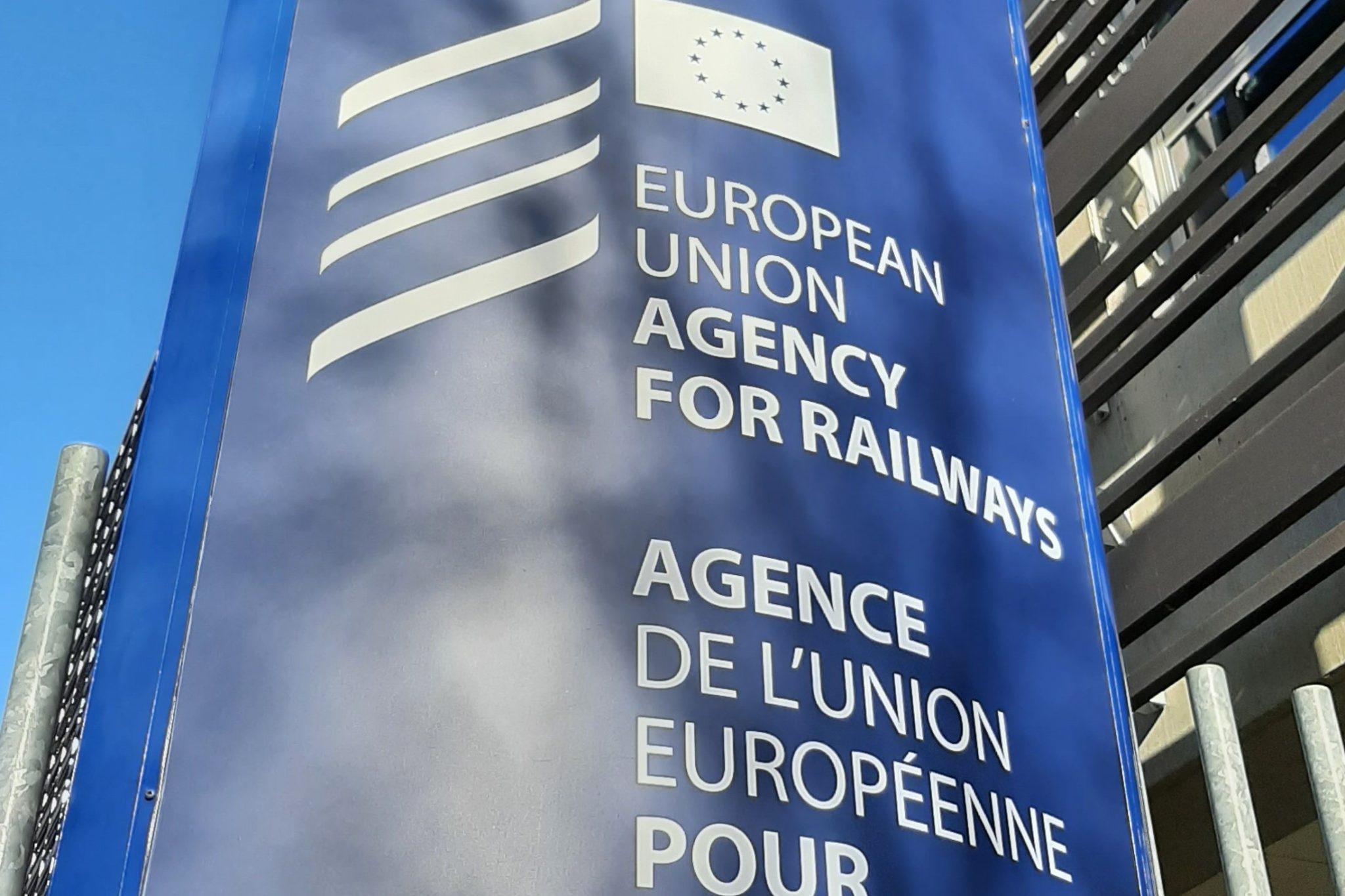
The European Commission has published its institutional assessment of the European Union Agency for Railways (ERA). According to the report, ERA is viewed as a relevant, necessary, and strategic institution in the European railway sector. The agency's contributions to EU-wide interoperability, single railway market, and safety improvements are explicitly confirmed.
\nHowever, the Commission emphasizes that ERA's current performance does not fully meet the EU's long-term expectations, particularly noting that the pace of harmonization has proven insufficient, with reforms progressing slowly due to certain national-level barriers.
\nERA's Strengths
\nAccording to the Commission, ERA's most important contributions to the sector are:
\n- \n
Advancing common rules toward the Single European Railway Area (SERA) objective,
\n Creating a central framework for common safety methods (CSM) and safety certification processes,
\n Developing interoperability within ERTMS and technical specifications (TSI),
\n Facilitating information sharing between national authorities,
\n Serving as a reference institution for accident investigations, safety culture, and risk-based regulation.
\n
The Commission report notes that ERA's technical capacity and expert pool are strong. It also states that the expansion of the agency's authority with the Fourth Railway Package has provided a more consistent safety and certification regime across the EU.
\nAreas Where Expectations Were Not Met
\nThe Commission notes that ERA's results have not fully reached the expected impact level, with three key issues standing out:
\n1) National Implementation Barriers
\nAlthough EU countries have adopted ERA standards, in the implementation process:
\n- \n
national exemptions,
\n bureaucratic differences,
\n additional requirements in certification processes
\nare causing harmonization to slow down. \n
ERA should assume a more proactive "effective governance" role in reducing these barriers.
\n2) Slower-than-Expected Progress on Interoperability
\nNotably:
\n- \n
ERTMS field deployment,
\n removal of national systems,
\n TSI compliance rate
\nare not progressing at the desired pace. \n
According to the Commission, "EU railways remain fragmented," and ERA needs stronger coordination mechanisms.
\n3) Limited Impact on Market Dynamism
\nThe single European railway market has failed to reach the intended level of competition. The Commission states that ERA should more aggressively support:
\n- \n
data transparency,
\n process simplification,
\n barrier reduction to entry
\n
Conclusion: 'Positive but Needs to Accelerate'
\nWhile the EU Commission assessment confirms ERA's importance, it notes that the institution is "progressing in the right direction but moving slowly." For ERA to achieve its 2030 targets:
\n- \n
stronger binding cooperation with national authorities,
\n tighter monitoring mechanisms,
\n data-driven policy development,
\n accelerated programs in ERTMS and TSI implementation
\nare needed. \n
ERA's future performance is stated to directly affect the speed of European railway market integration.
\nKey Takeaways:
\n- \n
The EU Commission rated ERA as a "relevant and necessary" institution.
\n However, progress on interoperability and single market objectives lags expectations.
\n National implementation differences are slowing the process.
\n A stronger coordination role from ERA in ERTMS and TSI work is expected.
\n Accelerating the agency's performance is critical for the EU's 2030 railway targets.
\n
----------
\n\n--------------------
\nAuthor: SedatOnat.com
\n--------------------
\n\nWe would be pleased to receive your feedback.
\nWishing you happy reading.
\n
