

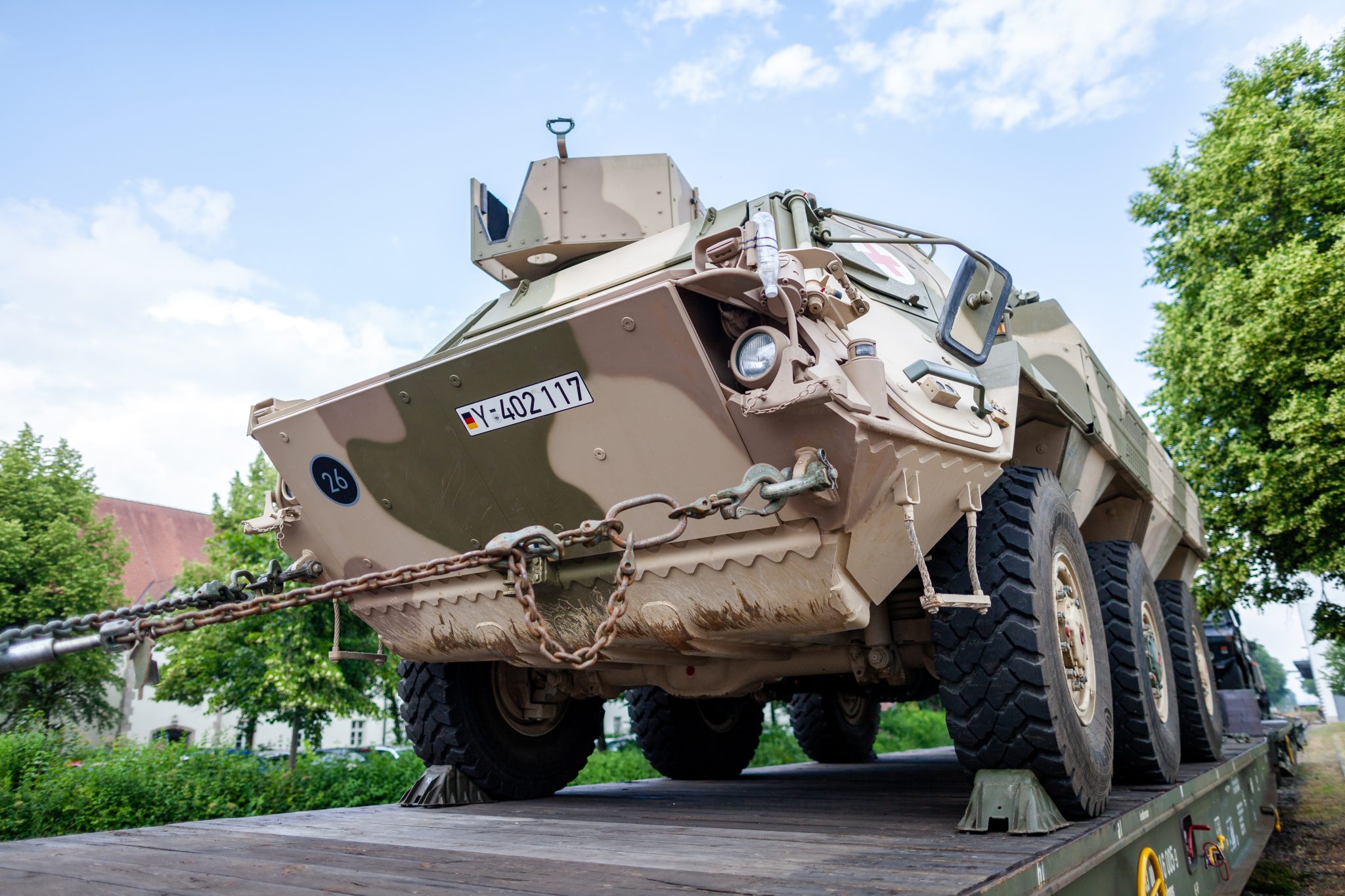
The European Commission has introduced a new Military Mobility Package designed to enable the rapid and bureaucracy-free transport of military vehicles, equipment, materiel, and personnel across EU borders, marking a significant milestone in defense logistics. The proposed regulation represents a concrete component of what is frequently referred to in public discourse as the "military Schengen" objective, aiming to accelerate military mobility within the EU much as the Schengen Zone facilitates the free movement of people.
Rail freight plays a central role in the package. The reason is clear: The vast majority of heavy equipment, armored vehicles, and high-volume materials can be transported most efficiently by rail in terms of security, capacity, and carbon emissions. Following the Ukraine War, enhanced coordination between NATO and the EU has made the integration of military logistics with civil infrastructure even more critical.
Why is Military Mobility necessary?
The cross-border transfer of military assets within the EU currently remains subject to:
national permits,
differing security regulations,
administrative delays at borders,
infrastructure incompatibilities.
This situation can lead to serious delays in collective defense planning for both NATO and the EU. The Commission's new package aims to eliminate these obstacles by providing a new framework, particularly for NATO rapid response forces that must be deployable within 7 hours and for heavy equipment transport.
Rail: The backbone of military logistics
The new regulation aims to make EU railways "ready, scalable, and technically compatible" for military transport. Within this scope:
1. Dual-use investments in rail infrastructure
Critical corridors in the TEN-T network will be technically strengthened for military vehicle transport:
higher axle load capacity,
wider loading profiles,
military compatibility on bridges and tunnels,
dedicated loading areas at terminals and wharves.
These investments will benefit not only defense but also mean increased capacity for civilian freight transport and the elimination of bottlenecks.
2. Standardization and simplification of permit procedures
Member states are preparing to transition to uniform procedures for military train transit. As a result:
loading schedules,
hazardous material markings,
night service permits,
rapid slot allocation
will proceed much more quickly. This will create a more predictable environment for rail freight in terms of cargo planning and capacity allocation.
3. A beneficial spillover effect: Rising rail freight demand
Military mobility doctrine typically requires transporting large volumes of vehicles, ammunition, and equipment by rail. This situation can:
increase specialized wagon production capacity,
accelerate investment in heavy freight trains,
create new revenue streams for railway operators.
Furthermore, the investments made to improve military traffic will have direct positive effects on civilian intermodal transport.
A critical question for the sector: Will civilian capacity shrink?
Some actors in the rail freight sector worry that there could be capacity constraints for civilian freight during periods of concentrated military transport. However, the Commission states that the new regulation aims to create additional capacity and that the priority is to accelerate military movements without hindering civilian commerce.
For this reason, the package aims to build "optimized dual-use corridors" rather than introduce "new constraints."
Overall impact: Security + Logistics + Modal Shift
The Military Mobility Package aligns directly with the EU's objectives beyond defense, including:
logistics resilience,
critical infrastructure security,
energy independence,
modal shift to rail.
For this reason, the package is viewed by the rail freight sector not as a threat but as a strategic growth opportunity.
Key Takeaways:
The package aims to accelerate military mobility within the EU ("military Schengen").
Rail is designated as the primary mode for heavy equipment and high-volume transport.
Military-compatible "dual-use" investments will be made on the TEN-T network.
Permit procedures will be simplified; transit times will drop from weeks to hours.
Rail freight will benefit from capacity increases, infrastructure improvements, and new revenue streams.
The package is aligned with modal shift and logistics resilience objectives.
Author: SedatOnat.com

